🕌 Religion & Faith
Live
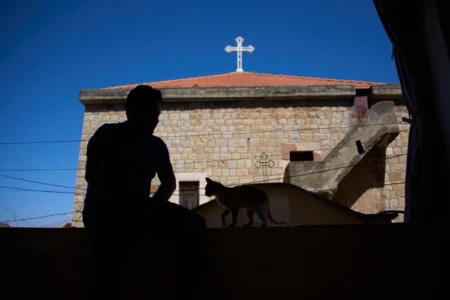
2 Christian communities navigate life in southern Lebanon, in photos
In the predominantly Christian towns of Marjayoun and nearby Qlayaa in southern Lebanon, daily life continues in the shadow of a war that devastated many surrounding Shiite villages during months of …
Crux Now — 17 June 2026
Text:
36
0
0
In the predominantly Christian towns of Marjayoun and nearby Qlayaa in southern Lebanon, daily life continues in the shadow of a war that devastated m
Read Full Story at Crux Now →
⚡ Quickyla Analysis
Original editorial context — not sourced from the article above
The enduring presence of Christian communities in southern Lebanon—particularly in Marjayoun and Qlayaa—offers a quiet but profound counterpoint to the dominant narrative of sectarian division and conflict that has long shaped the region. These towns, nestled in the predominantly Shiite south, stand as living reminders that Lebanon’s mosaic of faiths has not yet fully unraveled, despite decades of political instability and sporadic violence. Their survival amid the broader devastation of nearby villages, many of which were struck by cross-border clashes and economic collapse, underscores a fragile coexistence that defies the region’s more commonly cited narratives of sectarian homogenization.
This resilience is not accidental. Southern Lebanon has long been a microcosm of Lebanon’s delicate sectarian balance, where power-sharing agreements and historical ties have allowed minority groups like Christians to maintain a foothold even in areas dominated by other sects. Marjayoun, in particular, has historical significance as a Christian stronghold dating back to the Ottoman era, when it served as a refuge for displaced communities. Today, its relative stability—even as neighboring areas face ruin—suggests that local governance, communal networks, and perhaps even informal understandings with dominant factions have helped buffer these towns from the worst of the conflict.
Yet the broader question remains: how long can such enclaves endure in a country where economic collapse, political paralysis, and regional tensions continue to erode the foundations of pluralism? The war in Gaza and the ongoing clashes between Israel and Hezbollah have already displaced hundreds of thousands, further straining Lebanon’s already fragile social fabric. If these pressures intensify, the Christian communities of the south could find themselves caught between escalating hostilities and the broader exodus of Lebanon’s dwindling minorities. Their fate may hinge on whether Lebanon’s political class can prevent further fragmentation—or whether the country’s sectarian fault lines finally snap under the weight of external and internal crises.
For now, their daily routines—captured in the quiet scenes of markets, churches, and family gatherings—offer a fleeting glimpse of what Lebanon once was. But the question lingers: is this merely a temporary reprieve, or the last embers of a once-vibrant pluralism struggling to survive?
Sources

🕌 Religion & Faith
Defense Department rejiggers list of recognized religions after backlash, narrows it to 30

🕌 Religion & Faith
Odiong guilty in Texas: Questions remain for several Church leaders

🕌 Religion & Faith
Trump’s latest attack on Leo XIV isn’t really about the pope

🕌 Religion & Faith
Pope Leo XIII updates just war theory
🕌 Religion & Faith
Photos of the Week: Ebola responses, end of Hajj
🕌 Religion & Faith
High hopes, many challenges for Bangladesh’s first Indigenous Catholic MP

