🕌 Religion & Faith
Live
A Russian barrage in Ukraine kills 11 and damages a landmark cathedral
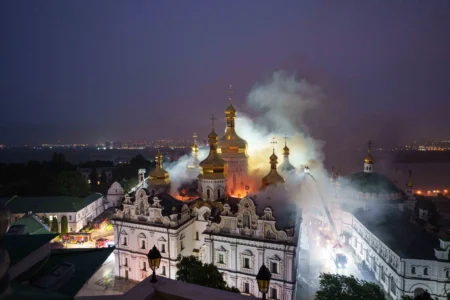
A cathedral in one of the oldest and most sacred landmarks in Eastern Orthodox Christianity was set ablaze early Monday as Russia bombarded Ukraine’s biggest cities, killing 11 people.
Crux Now — 16 June 2026
Text:
29
0
0
A cathedral in one of the oldest and most sacred landmarks in Eastern Orthodox Christianity was set ablaze early Monday as Russia bombarded Ukraine’s
Read Full Story at Crux Now →
⚡ Quickyla Analysis
Original editorial context — not sourced from the article above
The deliberate targeting of a cathedral in Ukraine’s most intense bombardment in months underscores a disturbing escalation in Russia’s war strategy—not merely as a military campaign, but as an assault on cultural and historical identity. The 11 lives lost in the strike, along with the destruction of a landmark that has stood for centuries, signal a deliberate campaign to erase symbols of Ukrainian heritage, particularly those tied to Eastern Orthodox Christianity. This tactic mirrors Russia’s earlier destruction of cultural sites in Syria and Chechnya, where churches, mosques, and ancient ruins were reduced to rubble under the pretext of counterinsurgency. For Ukraine, such attacks are not collateral damage but a calculated effort to sever the nation’s spiritual and historical ties to its past, reinforcing Moscow’s narrative that Ukraine is an artificial construct without its own legitimate traditions.
The cathedral in question holds particular significance as one of the oldest continuously operating Eastern Orthodox churches, a testament to the region’s religious and architectural legacy. Its destruction in a single night of shelling reflects the broader pattern of Russia’s air campaign, which has increasingly focused on civilian infrastructure and cultural landmarks in recent months. Unlike the early phase of the war, when strikes targeted military logistics, today’s bombardment seems designed to inflict maximum psychological and symbolic damage, exploiting the deep emotional resonance of religious sites. This shift aligns with Russia’s broader wartime propaganda, which frames Ukraine’s resistance as a Western-backed deviation from Orthodox and Slavic unity—a narrative that justifies the erasure of Ukrainian identity.
What remains unclear is whether this attack signals a new phase of intensified strikes or a desperate escalation amid stalled military progress. Western intelligence suggests Russia’s forces are struggling to sustain momentum, yet the targeting of non-military sites could indicate a willingness to escalate further, especially as Ukraine’s Western allies face political fatigue. The international response will be telling: will sanctions tighten, or will the focus remain on battlefield support? For Ukraine, the path forward involves not just physical reconstruction but the preservation of its cultural narrative in the face of systematic destruction. The world’s reaction to this latest outrage may determine whether such tactics are met with defiance or complicity.
Sources

🕌 Religion & Faith
Defense Department rejiggers list of recognized religions after backlash, narrows it to 30

🕌 Religion & Faith
Odiong guilty in Texas: Questions remain for several Church leaders

🕌 Religion & Faith
Trump’s latest attack on Leo XIV isn’t really about the pope

🕌 Religion & Faith
Pope Leo XIII updates just war theory
🕌 Religion & Faith
Photos of the Week: Ebola responses, end of Hajj

🕌 Religion & Faith
High hopes, many challenges for Bangladesh’s first Indigenous Catholic MP

