After 20 years, scientists finally shrink a powerful laser onto a chip
Researchers at EPFL have developed a chip-scale ultrafast laser that performs on par with traditional tabletop femtosecond lasers. The innovation could make advanced laser technologies far smaller, c…
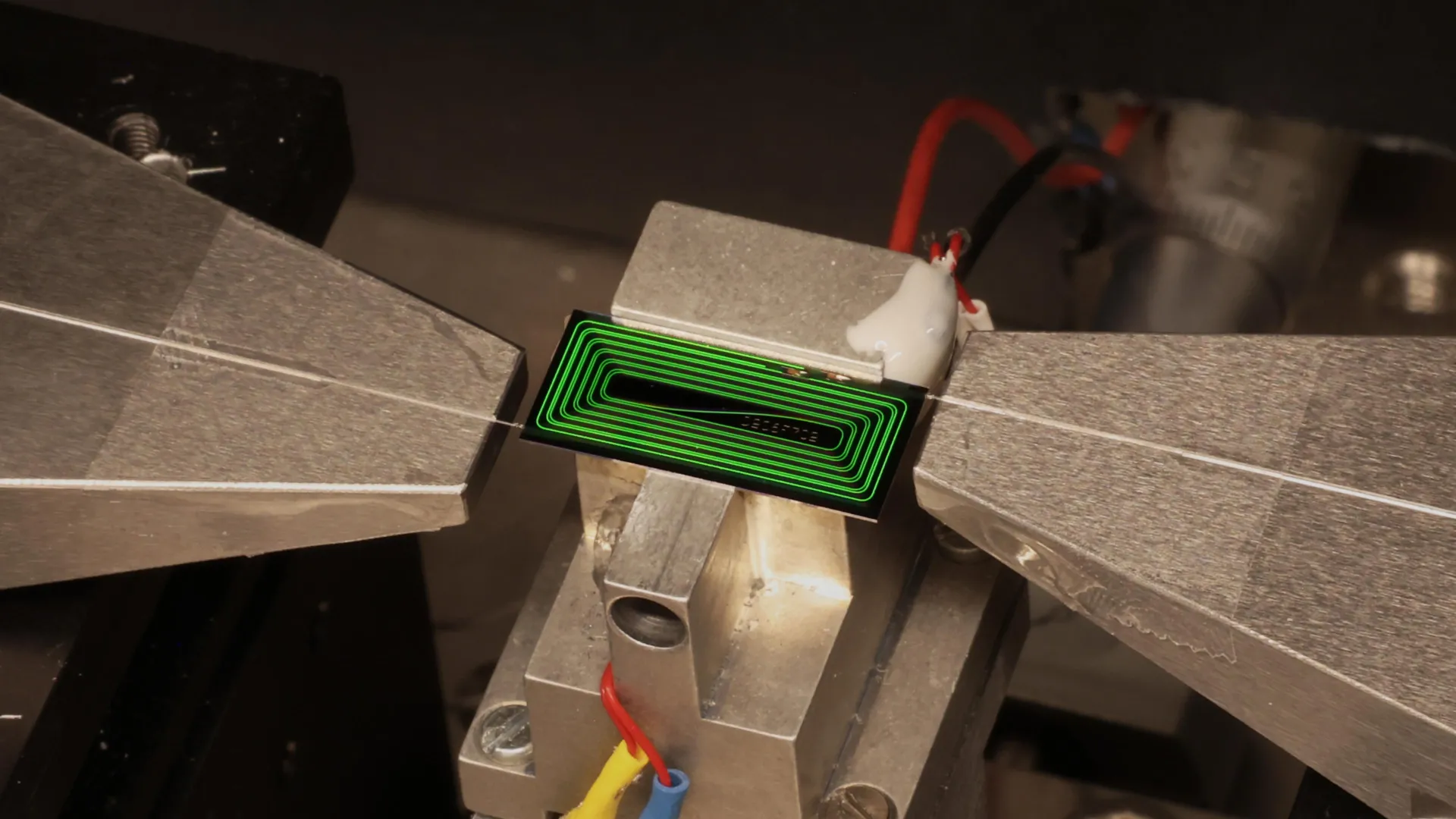
Researchers at EPFL have developed a chip-scale ultrafast laser that performs on par with traditional tabletop femtosecond lasers. The innovation coul
Read Full Story at ScienceDaily →Why This Matters
The miniaturization of ultrafast lasers challenges the long-standing trade-off between performance and portability, opening doors to wearable medical devices, ultra-precise industrial sensors, and even quantum computing components previously confined to laboratory environments. By shattering the size barrier without sacrificing femtosecond-level precision, this breakthrough could democratize access to cutting-edge laser applications that were once limited to elite research institutions and high-budget industries.
Background Context
Ultrafast lasers, which emit pulses lasting mere quadrillionths of a second, have been a cornerstone of scientific and industrial progress since their development in the 1990s, enabling breakthroughs in eye surgery, material cutting, and optical communications. However, their reliance on bulky, power-hungry setups has restricted their use to fixed laboratory or factory settings, with even compact versions typically requiring dedicated optical tables and extensive cooling systems.
What Happens Next
Expect a surge in applications where space and energy efficiency are critical, from endoscopic surgical tools that deliver real-time tissue analysis to ultra-stable atomic clocks for GPS-independent navigation. The technology’s integration into silicon photonics could accelerate the development of large-scale, low-cost optical computing systems, while also raising new questions about thermal management and long-term reliability in mass-produced devices.
Bigger Picture
This innovation aligns with a broader shift toward "lab-on-a-chip" technologies, where entire systems are condensed into millimeter-scale platforms, mirroring trends in electronics miniaturization that powered the digital revolution. It also underscores the accelerating convergence of photonics and semiconductor manufacturing, a fusion that could redefine industries from telecommunications to renewable energy within the next decade.







