AI boom means US is now ‘investing more’ in fossil-fuel power than China
The U.S. is now investing more in fossil-fuel power than China due to AI-driven demand for data centers, reversing China’s long-standing dominance. Analysts warn this shift could increase global carb…
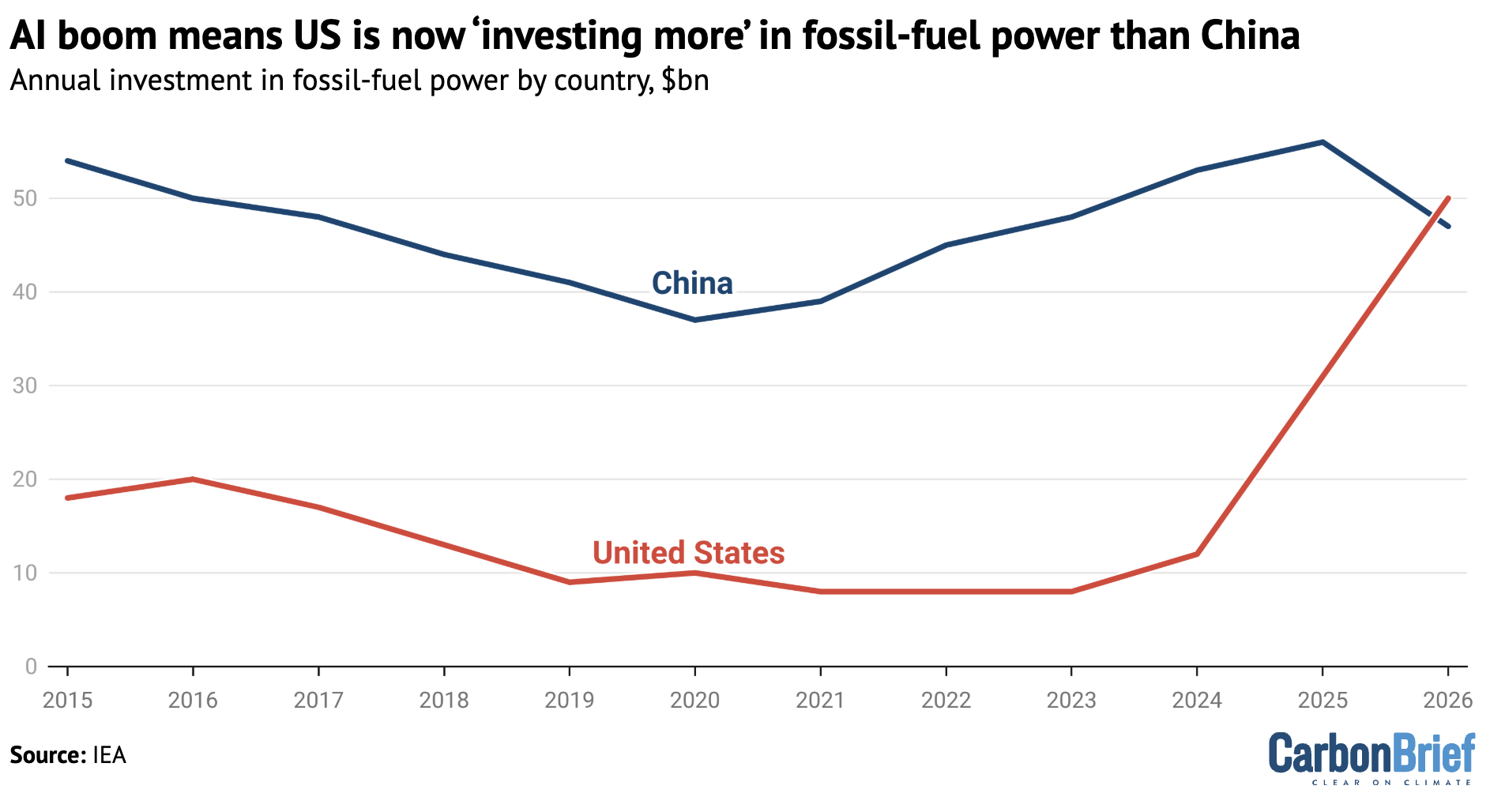
The rapid expansion of artificial intelligence infrastructure is reshaping energy investment priorities in the United States, with new analysis showin
Read Full Story at Carbon Brief →Why This Matters
The surge in U.S. fossil-fuel investments signals a paradox in the global energy transition, where the very technology driving decarbonization—AI—is now accelerating carbon-intensive infrastructure. This reversal challenges long-held assumptions about the U.S. and China's roles in the energy transition, forcing a reckoning with whether AI's voracious energy demands will outpace efforts to green the grid. The shift also underscores how industrial policy is being reshaped by geopolitical competition, with fossil fuels becoming a battleground for economic dominance.
Background Context
For years, China led global investment in fossil-fuel power as part of its rapid industrialization, while the U.S. focused on renewables under pressure to meet climate goals. The AI revolution has inverted this dynamic, with U.S. utilities scrambling to meet surging power demand from data centers—many fueled by coal and gas—while China ramps up renewables to offset its own AI-driven energy crunch. This divergence highlights how technological disruption can upend even the most entrenched energy paradigms.
What Happens Next
Expect a scramble among U.S. policymakers to balance AI growth with decarbonization, potentially accelerating nuclear and carbon capture projects while extending the lifespan of fossil plants. China, meanwhile, may double down on grid upgrades and energy storage to prevent a similar fossil fuel rebound. The biggest wildcard is whether AI's energy demands stabilize or continue escalating, which could force a global reset on climate strategies.
Bigger Picture
This trend reveals a deeper fracture in the energy transition: the tension between the immediate needs of digital infrastructure and the long-term goals of sustainability. It also exposes how geopolitical rivalries are now playing out in energy markets, with fossil fuels becoming a tool of economic leverage rather than just a relic of the past. The convergence of AI and fossil fuels may redefine 21st-century energy politics, making this a critical inflection point for climate action.