🌍 World News
Live
AI will create more jobs for humans, not replace them, Amazon founder Bezos says
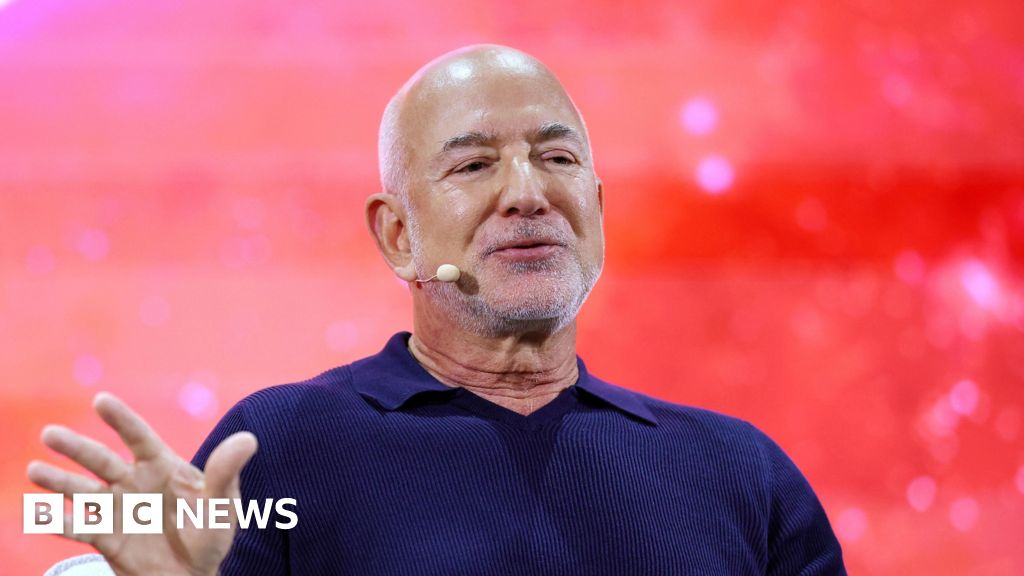
AI will lead to more need for workers rather than make people redundant, Amazon founder Jeff Bezos predicted during an appearance at a tech conference in Paris. Bezos pushed back against growing con…
BBC World News — 17 June 2026
Text:
20
0
0
AI will lead to more need for workers rather than make people redundant, Amazon founder Jeff Bezos predicted during an appearance at a tech conference
Read Full Story at BBC World News →
⚡ Quickyla Analysis
Original editorial context — not sourced from the article above
The assertion by Jeff Bezos that artificial intelligence will generate more jobs than it eliminates is a striking counterpoint to the widespread anxiety about mass automation displacing workers. While dystopian narratives dominate public discourse—fueled by headlines about robots replacing cashiers or software automating white-collar tasks—Bezos’ perspective aligns with a growing body of research suggesting AI may act as a job *creator* rather than a job *destroyer*. This isn’t just corporate spin; history shows that technological revolutions, from the Industrial Revolution to the rise of the internet, have ultimately expanded employment by enabling new industries and roles that didn’t previously exist. The key difference now is the pace of change. AI is not merely augmenting existing tasks but accelerating the creation of entirely new categories of work, from AI trainers and ethicists to specialized technicians maintaining complex systems.
Yet the debate hinges on whether society can adapt quickly enough. The transition won’t be seamless. Workers displaced by automation in manufacturing or customer service may struggle to pivot to emerging sectors like green energy or AI governance without targeted retraining programs. Governments and corporations will need to collaborate on reskilling initiatives, lest inequality deepen between those who can leverage AI for productivity and those left behind. Bezos’ optimism also glosses over potential disruptions in creative fields, where AI-generated content challenges traditional labor models, or in high-stakes sectors like healthcare, where over-reliance on algorithms could erode trust.
What remains unclear is how policymakers will strike a balance between innovation and protection. Will universal basic income or wage subsidies become necessary to cushion the blow of structural shifts? Meanwhile, the concentration of AI development in a handful of tech giants risks exacerbating power imbalances, raising questions about who controls these tools and who benefits from the jobs they create. One thing is certain: Bezos’ prediction won’t settle the debate, but it underscores a critical inflection point. The future of work may depend less on whether AI eliminates jobs and more on whether humanity can harness it to build an economy that works for everyone.
Sources

🌍 World News
Man fleeing police attacked by alligator before continuing his getaway, Louisiana authorities say
🌍 World News
US crude exports hit record high in May as Iran war tightens global oil supplies

🌍 World News
Agitators outside Delaney Hall set up organized logistics operation before Newark protests began

🌍 World News
French doctors sound alarm over drinking water pollution

🌍 World News
Iran, Kuwait, Bahrain hit: Is the war in the Gulf escalating again?

🌍 World News
Four people trapped in flooded cave in Laos pulled to safety

