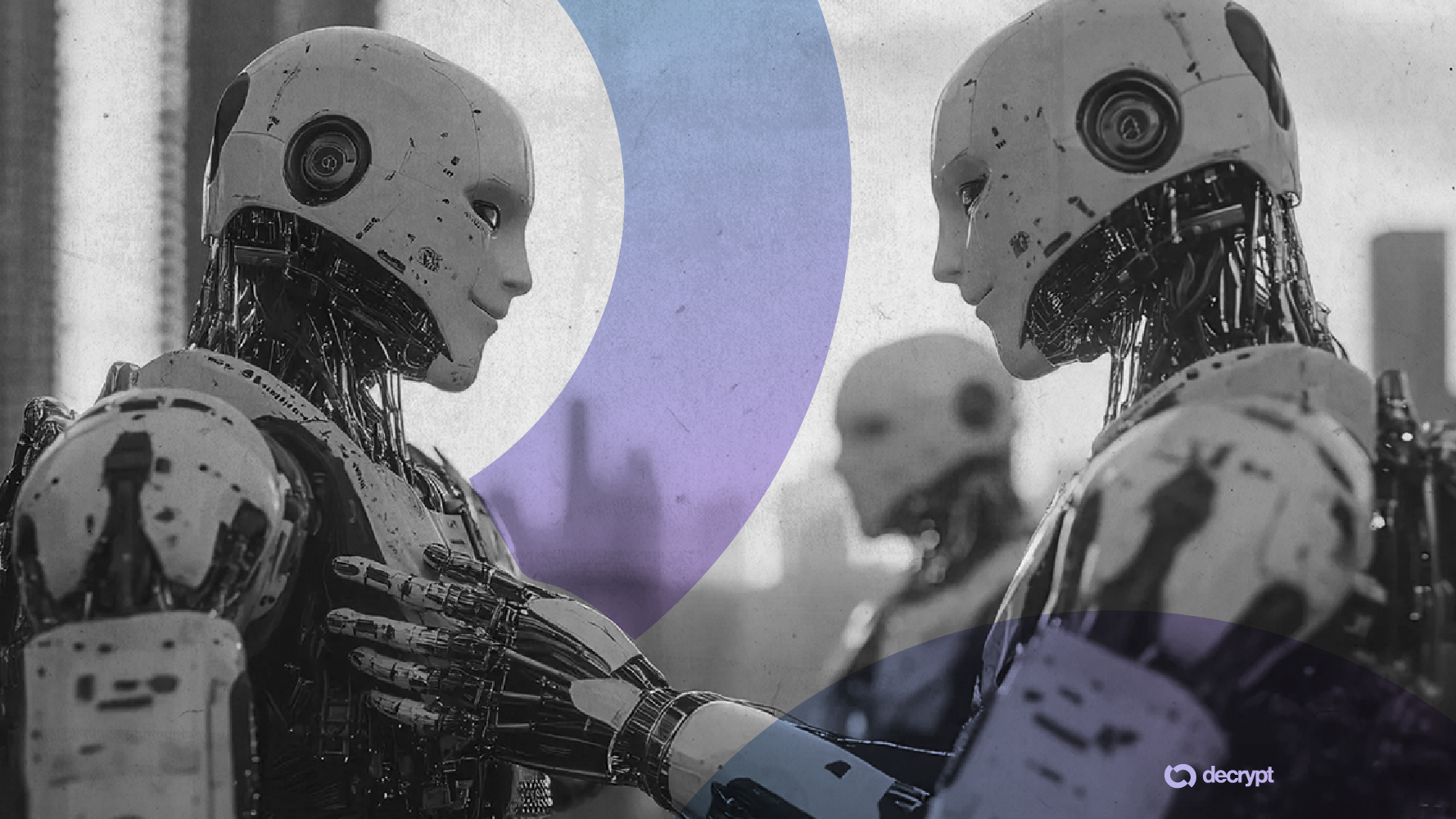
Alibaba Is Building Qwen-Robot: The Operating System for the Robot Economy
The Chinese company is doubling down on its "embodied AI" bet.
Decrypt — 16 June 2026
Text:
10
0
0
The Chinese company is doubling down on its "embodied AI" bet. This report comes from Decrypt. The story centres on Alibaba Is Building Qwen-Robot: T
Read Full Story at Decrypt →
⚡ Quickyla Analysis
Original editorial context — not sourced from the article above
Alibaba’s move to develop Qwen-Robot represents more than just another corporate foray into artificial intelligence—it signals a critical inflection point in the global race to dominate the emerging "robot economy." Embodied AI, where intelligence is embedded in physical systems rather than confined to digital interfaces, is rapidly transitioning from laboratory curiosity to commercial reality. By positioning Qwen-Robot as an operating system for this new ecosystem, Alibaba is not merely competing with tech giants like Nvidia, Tesla, or Meta; it’s staking a claim to define the foundational software layer that will power everything from warehouse robots to household assistants. This matters because the first company to establish a standardized OS for robotics could set industry-wide protocols, locking in developers, manufacturers, and users—much like Windows did for personal computing in the 1990s.
The background here is layered with geopolitical and technological nuance. China’s 14th Five-Year Plan explicitly prioritizes "intelligent manufacturing" and "new-generation AI," and Alibaba’s Qwen-Robot project aligns with Beijing’s broader push to reduce reliance on foreign semiconductor and software stacks. Yet this isn’t just a state-driven initiative; it reflects a convergence of China’s manufacturing scale, its vast domestic market for robotics, and the country’s aggressive investment in AI talent and infrastructure. At the same time, Alibaba’s cloud and e-commerce dominance gives it a unique advantage: it can leverage real-world data from logistics, retail, and smart home devices to train models that generalize beyond controlled environments.
What remains unclear is whether Qwen-Robot will achieve the kind of interoperability needed to become a de facto standard, or if it will remain a proprietary solution constrained by hardware partnerships. The robotics industry is still fragmented, with no dominant OS emerging despite years of attempts. Meanwhile, questions linger about safety, regulation, and the ethical implications of increasingly autonomous machines operating in shared spaces. Will Alibaba’s approach prioritize openness, or will it mirror its e-commerce playbook—creating a walled garden that favors its ecosystem?
One thing is certain: the robot economy isn’t waiting. As costs fall and capabilities rise, the demand for coordinated, intelligent systems will only grow, and the company that can seamlessly bridge the physical and digital worlds may well shape the next era of automation.
Sources
📈 Markets & Finance
Sam Altman says OpenAI's top token spender uses 100 billion tokens a month — and they're not even the world leader

📈 Markets & Finance
Intel, AMD, Micron shares sink as Broadcom results spark semiconductor sector sell-off

📈 Markets & Finance
This Smart‑Money Legend Won Big on Intel. The Rest of His Portfolio Might Be Even More Revealing
📈 Markets & Finance
A new NJ bill would hand pet owners up to $900 in tax credits — and your state could be next

📈 Markets & Finance
MGM Resorts stock jumps as Barry Diller's People Inc. makes bid to take over the company
📈 Markets & Finance
Addressing Investor Transparency, Updates from Euronet Worldwide’s (EEFT) First Analyst Day in a Decade


