🌍 World News
Live
All detainees from immigration facility 'Alligator Alcatraz' have been transferred
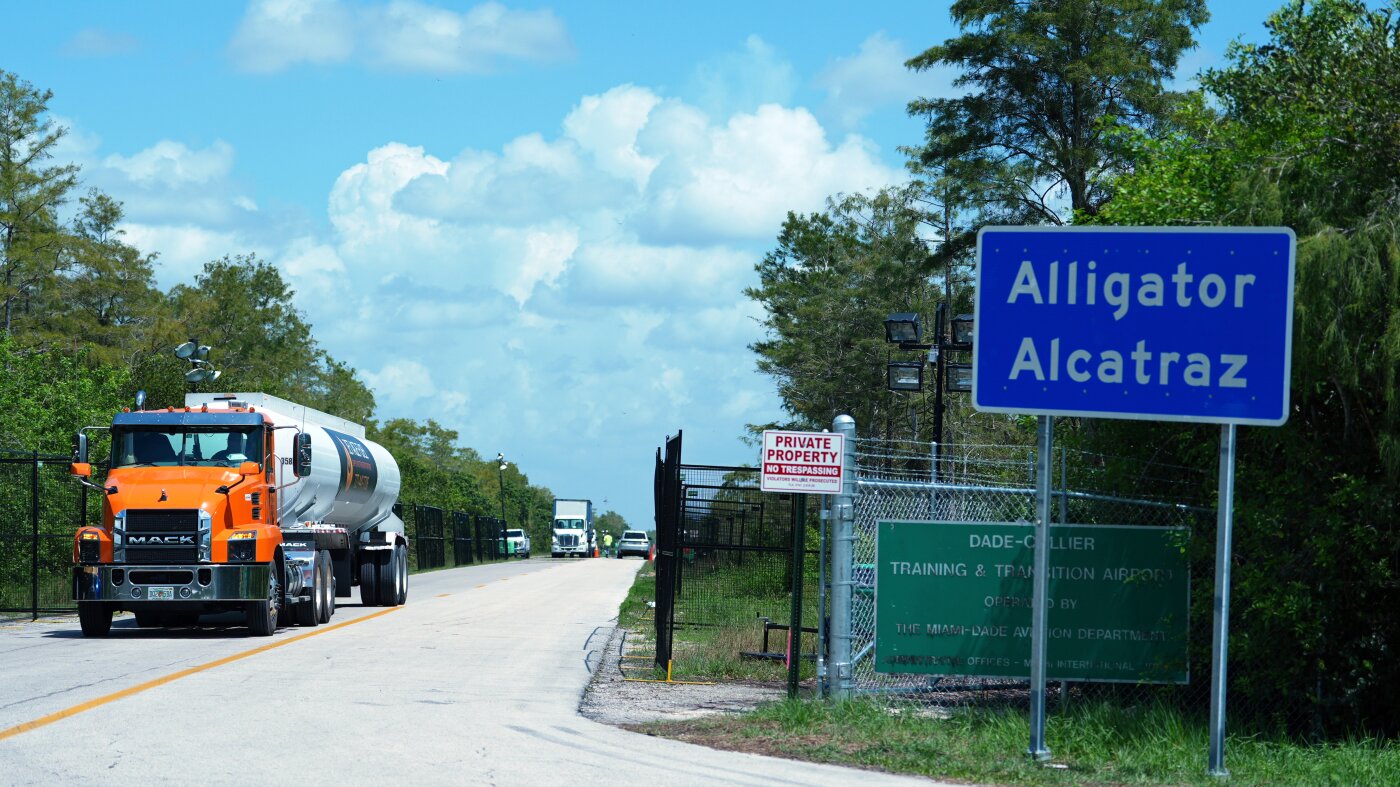
FILE - Trucks come and go from the "Alligator Alcatraz" immigration detention center in the Florida Everglades, Aug. 28, 2025, in Collier County, Fla. Rebecca Blackwell/AP hide caption MIAMI — All d…
NPR News — 18 June 2026
Text:
27
0
0
FILE - Trucks come and go from the "Alligator Alcatraz" immigration detention center in the Florida Everglades, Aug. 28, 2025, in Collier County, Fla.
Read Full Story at NPR News →
⚡ Quickyla Analysis
Original editorial context — not sourced from the article above
The shuttering of the "Alligator Alcatraz" immigration detention center in Florida’s Everglades marks more than just the closure of a single facility—it signals a shift in how the U.S. handles immigration enforcement in remote, high-security settings. The facility, notorious for its isolation and harsh conditions, has long been criticized by immigrant rights groups as a symbol of punitive detention rather than humane processing. Its closure, now complete with the transfer of all detainees, raises immediate questions about where the government will house those previously held there and whether conditions will improve. More broadly, the move reflects growing scrutiny over the use of isolated, quasi-penal facilities for immigration purposes, a practice that has drawn comparisons to historical abuses in carceral systems.
The facility’s nickname—evoking both its swampy surroundings and the notorious Alcatraz prison—hints at its reputation as an extreme outlier in detention infrastructure. Unlike urban processing centers, "Alligator Alcatraz" operated in a region where escape would be nearly impossible, but where medical and legal access for detainees was severely limited. Its closure may indicate an acknowledgment, even if reluctant, that such facilities do not align with evolving standards for detention conditions. However, without clear transparency about the new locations for these detainees, concerns linger about whether transfers are simply relocating problems rather than solving them.
Looking ahead, the focus will likely shift to whether this signals a broader retreat from remote detention centers or merely a tactical pivot. Immigration advocates will demand accountability for past abuses, while authorities may cite logistical challenges or security concerns as reasons for maintaining isolation-based detention elsewhere. The case also underscores a larger trend: the increasing militarization of border enforcement and the normalization of carceral approaches to migration, despite mounting evidence that detention does not deter migration and often exacerbates humanitarian crises. As the government reassesses its detention footprint, the fate of these detainees will serve as a bellwether for whether justice or expediency will guide future policy.
Sources

🌍 World News
Man fleeing police attacked by alligator before continuing his getaway, Louisiana authorities say
🌍 World News
US crude exports hit record high in May as Iran war tightens global oil supplies

🌍 World News
Agitators outside Delaney Hall set up organized logistics operation before Newark protests began

🌍 World News
French doctors sound alarm over drinking water pollution

🌍 World News
Iran, Kuwait, Bahrain hit: Is the war in the Gulf escalating again?

🌍 World News
Four people trapped in flooded cave in Laos pulled to safety

