🌱 Environment
Live
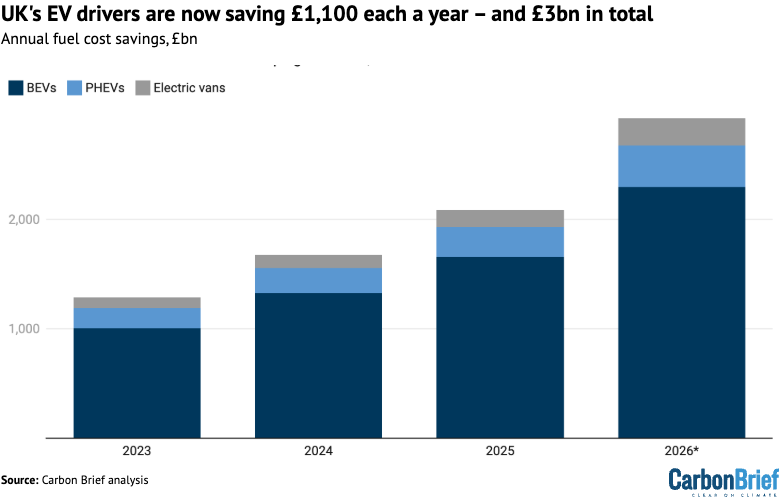
Analysis: UK’s EV drivers are now saving £1,100 each a year – and £3bn in total
Amid reports that the government could weaken the UK’s electric vehicle (EV) targets, Carbon Brief... The post Analysis: UK’s EV drivers are now saving £1,100 each a year – and £3bn in total appeared…
Carbon Brief — 15 June 2026
Text:
29
0
0
Amid reports that the government could weaken the UK’s electric vehicle (EV) targets, Carbon Brief... The post Analysis: UK’s EV drivers are now savi
Read Full Story at Carbon Brief →
⚡ Quickyla Analysis
Original editorial context — not sourced from the article above
The revelation that UK electric vehicle drivers are collectively saving £3 billion annually—an average of £1,100 per driver—underscores a quiet but pivotal shift in the country’s energy and transport landscape. While the headline figures are striking, their broader significance lies in what they reveal about the accelerating economic benefits of decarbonisation before policy decisions threaten to stall progress. The savings stem from lower running costs compared with petrol and diesel cars, but they also reflect broader market transformations, including falling battery prices and the gradual decarbonisation of the UK’s electricity grid. For policymakers, these figures present a compelling case for maintaining, if not strengthening, the push toward electrification—even as voices in government question whether the current trajectory is too ambitious.
What many readers may not realise is how uneven these benefits are distributed. Early adopters of EVs—often wealthier households in urban areas with home charging—have reaped the most savings, while rural drivers without off-street parking or reliable public charging face higher barriers to entry. The £3 billion total also masks the fact that these savings are largely concentrated in the last few years, as the cost of electricity relative to petrol has fallen and more affordable EV models have entered the market. Meanwhile, the UK’s charging infrastructure, though improving, still lags in some regions, creating a patchwork of accessibility that could widen social inequalities if left unaddressed.
Looking ahead, the story raises critical questions about the sustainability of these savings. If the government weakens its EV targets, as hinted, the long-term cost advantages could erode as petrol prices remain volatile and second-hand EV markets mature. Another open question is whether the grid can handle the increased demand without driving up costs or undermining the carbon benefits of electrification. This dilemma ties into a broader trend: the tension between short-term economic pressures and the long-term imperative of climate action. As the UK grapples with its energy transition, the EV savings figures serve as both a benchmark and a warning—proof that progress is possible, but not guaranteed.
Sources

🌱 Environment
Erin Brockovich criticizes Microsoft data center secrecy in Utah

🌱 Environment
Rescues in eastern Syria after the Euphrates River bursts its banks

🌱 Environment
Trump’s EPA Unlawfully Cancelled Environmental Justice Grants, Judge Rules

🌱 Environment
Indonesians mark 20 years since mud volcano eruption swallowed up entire communities in East Java

🌱 Environment
Biden’s Clean Drinking Water Plan Is Being Rebranded as MAHA

🌱 Environment
Heat is Killing Wildlife Across the Animal Kingdom. A New Forecasting Tool May Help

