💰 Business
Live
Anthropic to meet White House over AI tool suspension
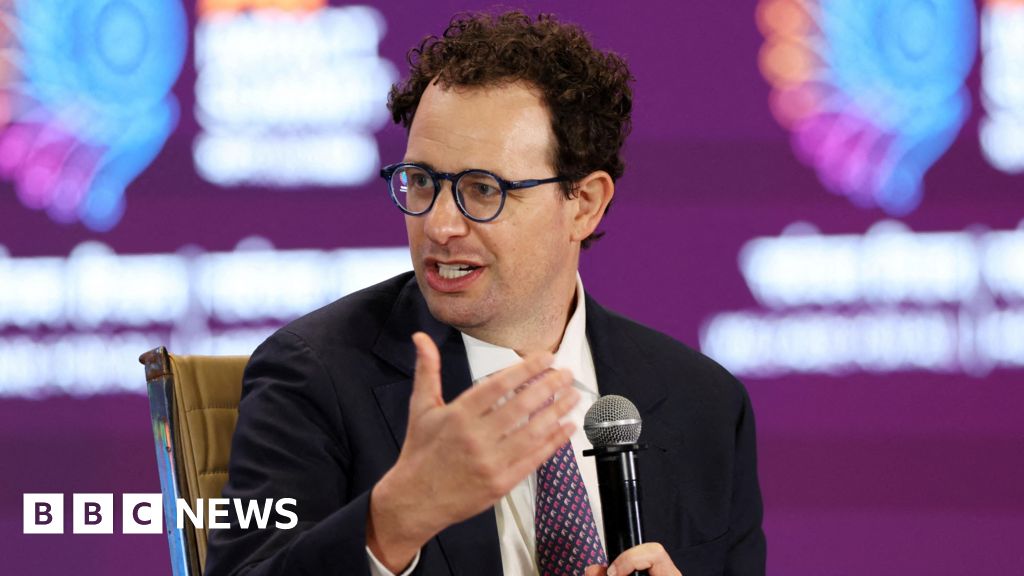
Bosses at the artificial intelligence (AI) firm Anthropic are set to meet senior White House officials amid fresh national security concerns over the company's latest release. The meeting is set to …
BBC Business — 15 June 2026
Text:
30
0
0
Bosses at the artificial intelligence (AI) firm Anthropic are set to meet senior White House officials amid fresh national security concerns over the
Read Full Story at BBC Business →
⚡ Quickyla Analysis
Original editorial context — not sourced from the article above
The scheduled meeting between Anthropic and White House officials underscores the intensifying scrutiny of AI governance, where the balance between innovation and national security is becoming increasingly precarious. Anthropic, a leading AI lab known for its safety-focused approach, now finds itself at the center of a debate that transcends corporate policy—it reflects broader anxieties about AI’s dual-use potential. The suspension of one of its tools ahead of the meeting suggests that even firms committed to ethical AI development face dilemmas over deployment, particularly when their technologies could be exploited for malicious purposes. This isn’t just about a single company; it’s about whether the voluntary frameworks guiding AI development are sufficient in an era where state actors and non-state groups are rapidly weaponizing these tools.
The timing of this meeting is telling. As AI systems grow more sophisticated, U.S. policymakers are grappling with how to regulate them without stifling domestic innovation—a challenge compounded by competitive pressures from China. The White House’s engagement signals that the administration is prioritizing national security in AI policy, likely seeking assurances that Anthropic’s safeguards are robust enough to prevent misuse. Yet questions linger about the enforceability of such agreements. Will voluntary commitments suffice, or will Congress soon impose stricter mandates?
Another layer of complexity involves Anthropic’s competitors. If the company faces restrictions, others may follow suit—or, conversely, exploit gaps in oversight to gain market advantage. The broader trend here is the fragmentation of global AI governance, where differing national approaches could lead to a patchwork of regulations that hinder cross-border collaboration while failing to address systemic risks.
What remains unclear is whether this meeting will result in concrete policy changes or merely set the stage for future negotiations. The outcome could influence how AI firms approach transparency, how regulators define "high-risk" applications, and whether the U.S. shifts toward a more prescriptive regulatory model. In an industry where speed often outpaces policy, the Anthropic-White House dialogue may well set the tone for the next phase of AI governance.
Sources

💰 Business
How 'confused' AI rollout hurts firms and baffles staff
💰 Business
OpenAI let ChatGPT aid and abet mass shooters, Florida lawsuit claims
💰 Business
AI giant Anthropic announces plans to list on US stock market

💰 Business
Caribbean hot sauce producers warn of shortages and higher prices

💰 Business
Bill debt soars but many don't know help is available

💰 Business
Japan raises interest rate to highest since 1995

