Arizona reservoir nearly vanishes after snowpack collapse triggers massive fish kill
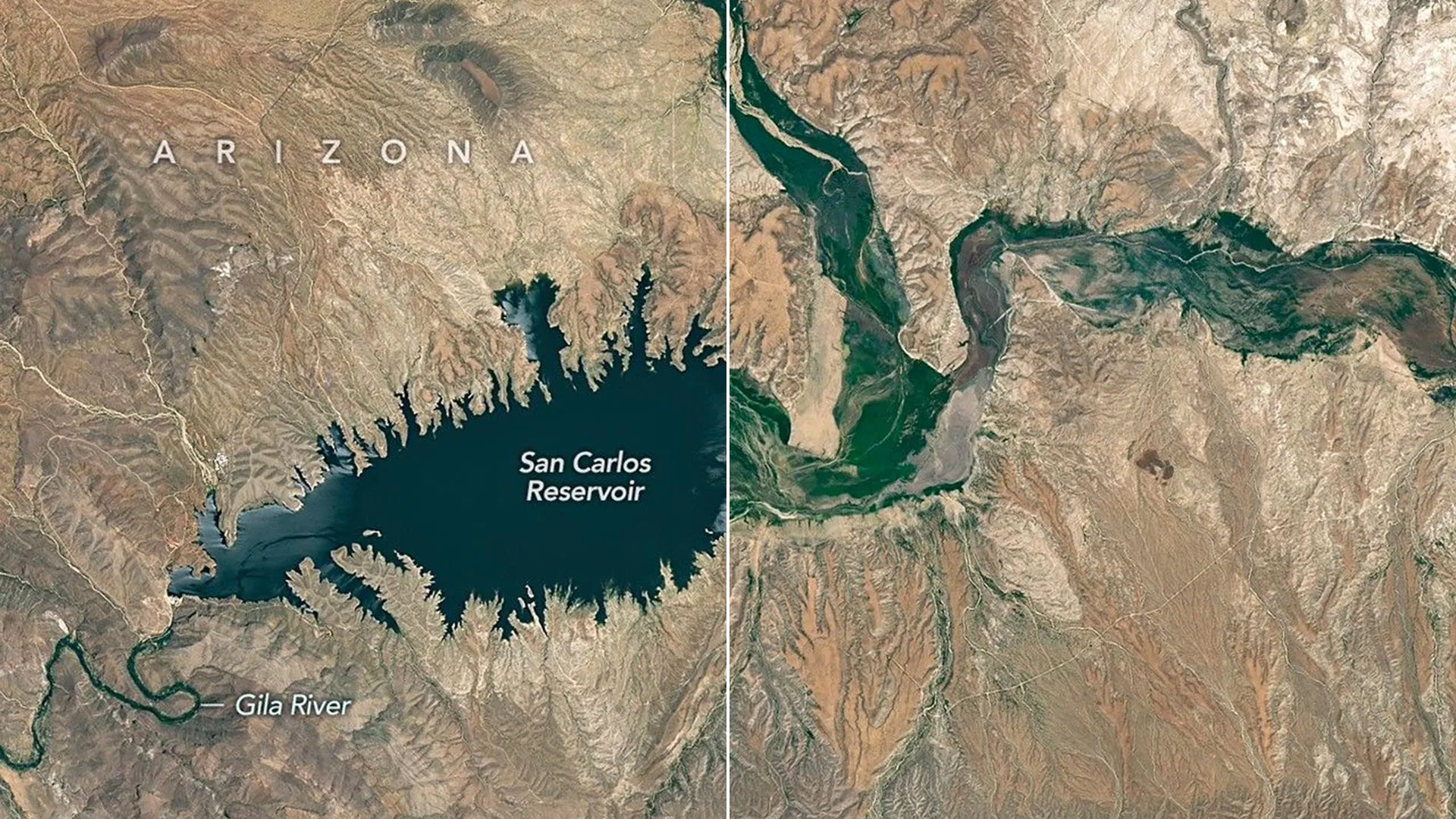
A historic lack of snow in the Gila River watershed has left Arizona’s San Carlos Reservoir less than 1% full, triggering a massive fish kill and an indefinite closure. Despite the bleak conditions, …
ScienceDaily — 18 June 2026
Text:
16
0
0
A historic lack of snow in the Gila River watershed has left Arizona’s San Carlos Reservoir less than 1% full, triggering a massive fish kill and an i
Read Full Story at ScienceDaily →
⚡ Quickyla Analysis
Original editorial context — not sourced from the article above
The near-total desiccation of Arizona’s San Carlos Reservoir is more than a local ecological disaster—it’s a stark illustration of how climate change is rewriting the rules of water management in a region already straining under extreme aridity. The reservoir’s collapse, driven by a precipitous drop in snowpack across the Gila River watershed, underscores the fragility of water infrastructure in the American West, where snowmelt has long been the backbone of seasonal water supply. What makes this event particularly alarming is its speed: a single season of historically low snowfall has reduced a once-reliable body of water to a cracked mudflat, exposing the inadequacy of contingency plans for a climate that no longer behaves predictably. This is not an isolated incident but a warning shot for the Colorado River system, where similar dynamics are playing out upstream, threatening to unravel decades of water-sharing agreements.
Behind the headlines lies a deeper crisis in water governance. Arizona’s reliance on a patchwork of legal entitlements—many dating back to the early 20th century—has left it vulnerable to the cascading effects of drought. The San Carlos Reservoir, built in the 1920s to support irrigation and tribal water rights, was never designed for the volatility of today’s climate. Now, as snowpack failures become more frequent, the state faces a reckoning: either invest heavily in adaptive infrastructure or confront the collapse of ecosystems and economies that depend on these reservoirs. The fish kill, while devastating for local anglers and wildlife, is merely the most visible symptom of a broader breakdown in water distribution.
Looking ahead, the immediate question is whether Arizona can act swiftly enough to prevent similar collapses elsewhere. Will the state accelerate investments in groundwater recharge, desalination, or pipeline diversions to buffer against future snowpack failures? Or will it double down on crisis management, scrambling to secure water rights amid growing competition? The answers will shape not just Arizona’s future but the viability of water-dependent communities across the West as climate change erodes the very foundations of their water security.
Sources

🔬 Science
'Astonishing': James Webb telescope spots the most chemically primitive galaxy in the ancient universe

🔬 Science
El Niño Is Underway

🔬 Science
Astronomers gaze into the 'Crystal Ball Nebula' and see a vision of our dying sun — Space photo of the week

🔬 Science
Bacteria uncover distinct strategy to import rare sugar polymers, crystal structures show

🔬 Science
NASA Awards Contract for Johnson Space Center Infrastructure

🔬 Science
Repairing DNA damage: Scientists discover a surprising new benefit of melatonin

