🏛️ Politics
Live
Assisted dying returns to parliament as MP urges peers to 'finish the job'
A fresh attempt to legalise assisted dying in England and Wales has been launched, with the MP behind the plan telling the BBC she wanted to "finish the job". Lauren Edwards, the Labour MP for Roche…
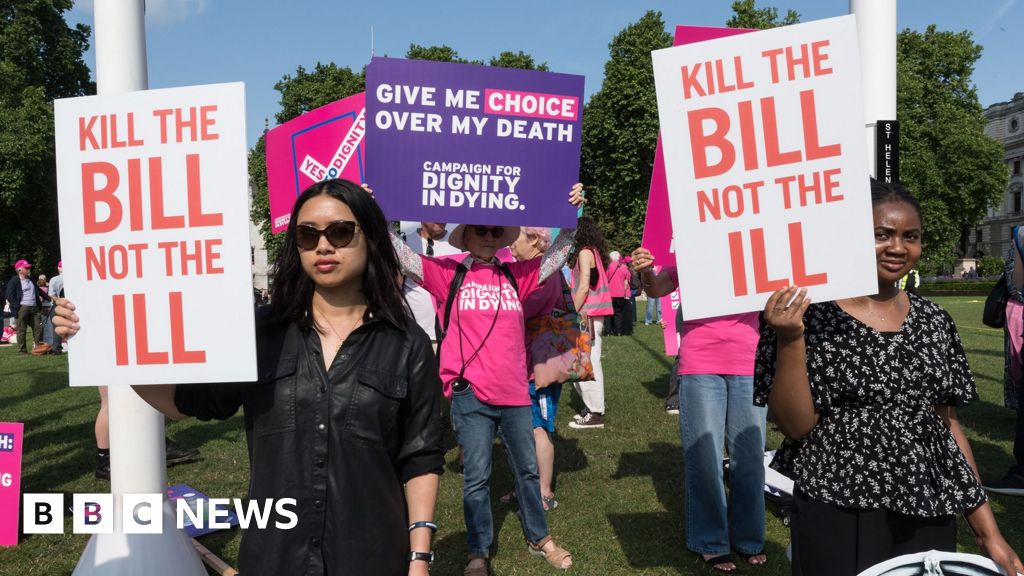
BBC Politics — 14 June 2026
Text:
21
0
0
A fresh attempt to legalise assisted dying in England and Wales has been launched, with the MP behind the plan telling the BBC she wanted to "finish t
Read Full Story at BBC Politics →
⚡ Quickyla Analysis
Original editorial context — not sourced from the article above
The renewed push to legalize assisted dying in England and Wales marks a pivotal moment in a decades-long debate that has gained fresh urgency amid shifting public attitudes and legal precedents elsewhere. While the UK has historically taken a cautious approach—unlike countries such as Canada, Spain, and several Australian states—public opinion has steadily shifted in favor of reform. Polls consistently show majority support for legislation that would allow terminally ill adults to end their lives with medical oversight, reflecting broader societal recognition of patient autonomy in end-of-life care. The reintroduction of this bill by a Labour MP signals not just political persistence but a recognition that the moral and ethical dimensions of this issue can no longer be ignored in a healthcare system straining under the pressures of an aging population and rising chronic illness.
What makes this attempt particularly significant is its timing. The legalization of assisted dying in neighboring jurisdictions, combined with high-profile cases in the UK—such as that of broadcaster Tony Nicklinson, who sought the right to die after a paralyzing stroke—has kept the issue in the public eye. Legal challenges and parliamentary debates have framed assisted dying as a question of human rights, forcing lawmakers to confront the tension between preserving life and relieving unbearable suffering. Yet progress has been stymied by deep-seated concerns over safeguards, potential for abuse, and the risk of a "slippery slope" where vulnerable individuals feel coerced into ending their lives.
The path forward remains uncertain. Previous bills have stalled due to opposition within both houses of parliament and from medical bodies like the British Medical Association, which has historically opposed assisted dying on ethical grounds. Legalization in other countries has required rigorous safeguards—such as independent assessments, waiting periods, and psychiatric evaluations—but critics argue these measures are still insufficient to prevent misuse. Meanwhile, the rise of palliative care advocacy groups, which emphasize improving end-of-life support rather than changing the law, adds another layer of complexity to the debate.
If this bill gains traction, it could trigger a national conversation unlike any seen before, one that forces the UK to reconcile its progressive social values with its traditional caution in matters of life and death. The outcome may well hinge on whether lawmakers can move beyond ideological divides to address the practical realities of suffering and dignity at the end of life.
Sources

🏛️ Politics
Secretary of State Marco Rubio faces questions about Iran war on Capitol Hill

🏛️ Politics
"Fujimori never again!" Protesters fill streets of Lima ahead of Peru presidential elections

🏛️ Politics
US not 'turning back' on Asia allies, but expects them to boost defence, says Hegseth

🏛️ Politics
Trump: Reports US, Iran stopped speaking ‘false and erroneous’

🏛️ Politics
Pence: There’s ‘clearly” been an effort to ‘rewrite’ Jan. 6 history

🏛️ Politics
Washington, Silicon Valley brace for AI job losses

