🔬 Science
Live
Astronaut Jessica Meir Assists With Hardware Updates for NASA’s Cold Atom Lab
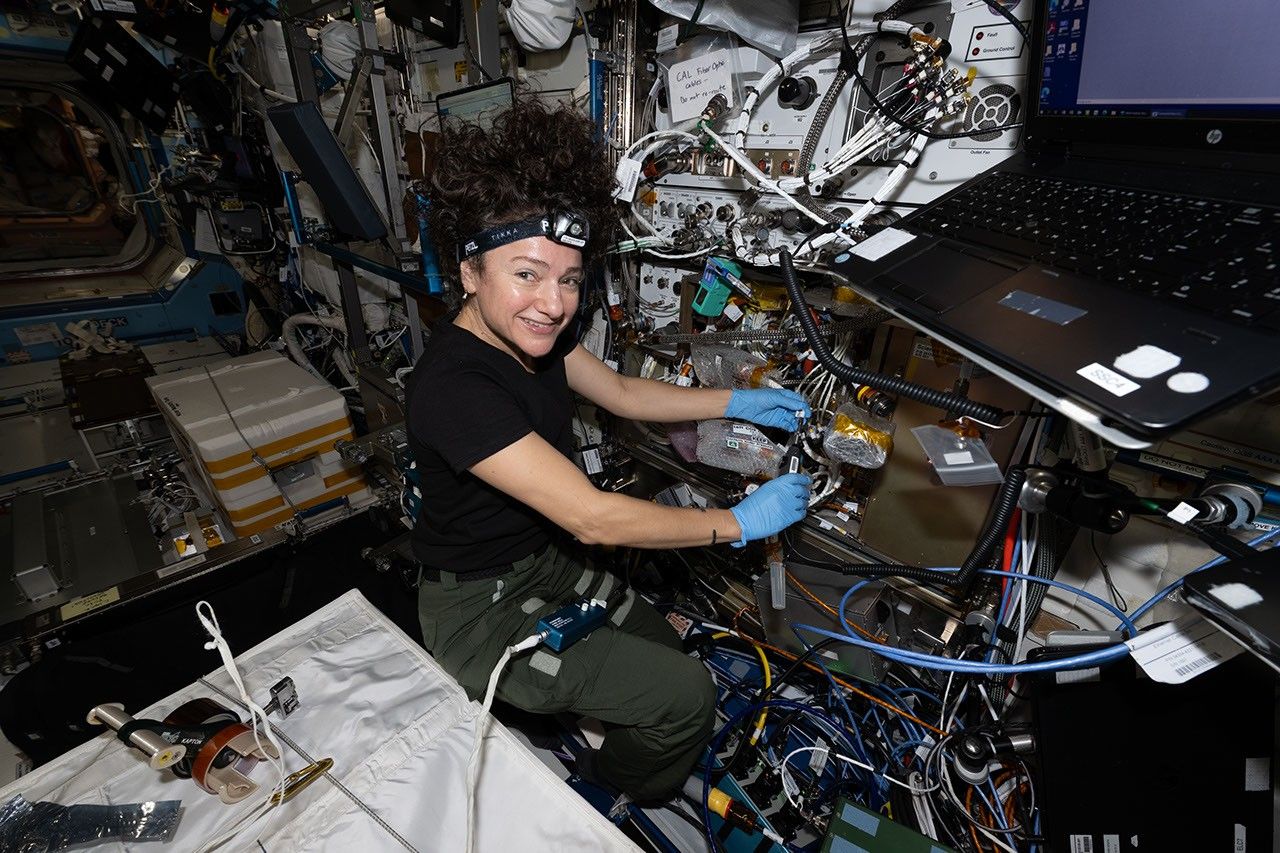
Description NASA astronaut Jessica Meir inspects optical fibers while installing hardware updates to the agency’s Cold Atom Lab, or CAL, aboard the International Space Station on May 8, 2026. About t…
NASA — 16 June 2026
Text:
19
0
0
Description NASA astronaut Jessica Meir inspects optical fibers while installing hardware updates to the agency’s Cold Atom Lab, or CAL, aboard the In
Read Full Story at NASA →
⚡ Quickyla Analysis
Original editorial context — not sourced from the article above
Jessica Meir’s work aboard the International Space Station to upgrade NASA’s Cold Atom Lab (CAL) represents more than just routine maintenance—it underscores a critical frontier in fundamental physics and the future of space-based research. The Cold Atom Lab, operational since 2018, is the first facility of its kind to create ultra-cold quantum gases in microgravity, allowing scientists to observe quantum phenomena that are nearly impossible to replicate on Earth. These conditions could unlock new insights into quantum mechanics, matter at near absolute zero, and even the behavior of fundamental forces. Meir’s role in installing hardware updates ensures the lab continues to function at peak efficiency, but the broader significance lies in how such experiments bridge the gap between theoretical physics and practical applications, from advancing quantum computing to refining navigation systems that rely on ultra-precise atomic clocks.
What many readers may not realize is the technical complexity behind maintaining such a facility in orbit. The Cold Atom Lab relies on laser cooling and magnetic traps to slow atoms to near standstill, but its hardware is subject to degradation over time due to radiation, thermal cycles, and the harsh environment of space. Upgrades like those Meir performed often involve recalibrating optical systems, replacing components prone to wear, and implementing software patches to improve data collection. These efforts are akin to performing open-heart surgery in zero gravity—a testament to the ingenuity required when innovation must coexist with the unforgiving constraints of spaceflight.
Looking ahead, the success of these upgrades raises fresh questions about the scalability of quantum experiments in space. Could the Cold Atom Lab eventually pave the way for larger, more ambitious missions, such as deploying quantum sensors to study dark matter or gravitational waves? Meanwhile, the broader trend of commercializing low Earth orbit—evidenced by the growing number of private missions and international collaborations—suggests that facilities like CAL may soon become more accessible to non-NASA researchers. As nations and companies increasingly vie for a foothold in space, the ability to conduct high-precision physics in microgravity could become a strategic advantage, not just a scientific curiosity. Meir’s work, then, is a small but pivotal step toward a future where the mysteries of the quantum world are unraveled not just in Earth-bound labs, but among the stars.
Sources

🔬 Science
'Astonishing': James Webb telescope spots the most chemically primitive galaxy in the ancient universe

🔬 Science
El Niño Is Underway

🔬 Science
Astronomers gaze into the 'Crystal Ball Nebula' and see a vision of our dying sun — Space photo of the week

🔬 Science
Bacteria uncover distinct strategy to import rare sugar polymers, crystal structures show

🔬 Science
NASA Awards Contract for Johnson Space Center Infrastructure

🔬 Science
Repairing DNA damage: Scientists discover a surprising new benefit of melatonin

