🔬 Science
Live
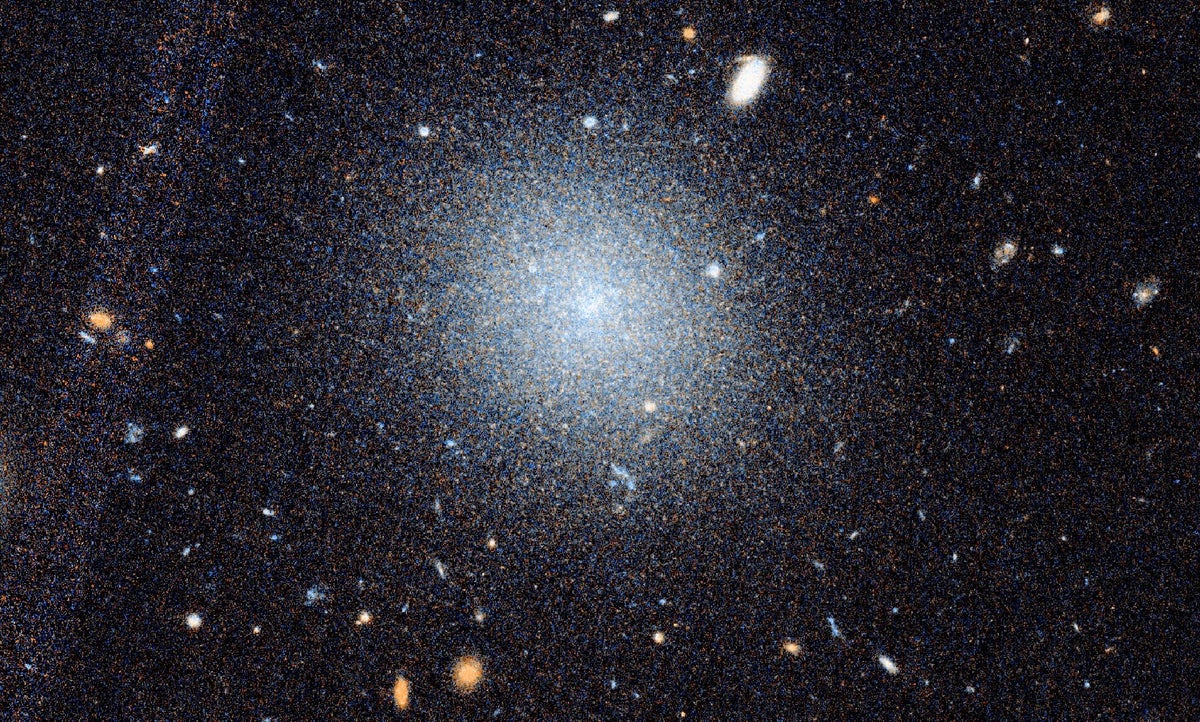
Astronomers discover another galaxy seemingly devoid of dark matter
Astronomers discover another galaxy seemingly devoid of dark matter A galaxy appears to be missing the invisible substance thought to hold these objects together, further challenging long-held assum…
Scientific American — 17 June 2026
Text:
20
0
0
Astronomers discover another galaxy seemingly devoid of dark matter A galaxy appears to be missing the invisible substance thought to hold these obje
Read Full Story at Scientific American →
⚡ Quickyla Analysis
Original editorial context — not sourced from the article above
The discovery of a galaxy apparently devoid of dark matter isn’t just another oddity in astronomy—it strikes at the heart of our understanding of how galaxies form and evolve. Dark matter, which outweighs visible matter in the universe by a factor of about five to one, is thought to provide the gravitational scaffolding that allows gas and stars to coalesce into galaxies. Without it, conventional models struggle to explain how structures as massive as galaxies could hold together, let alone form in the first place. This latest finding, following on the heels of the 2018 detection of the similarly perplexing NGC 1052-DF2, suggests that dark matter may not be as universally essential to galaxy formation as once believed—or that our grasp of its role is far more incomplete than we assumed.
The broader significance lies in the challenge these galaxies pose to the Lambda Cold Dark Matter (ΛCDM) model, the dominant framework in cosmology. If dark matter truly is absent in some galaxies, it raises questions about whether it interacts with ordinary matter in ways we haven’t yet measured, or if alternative theories—such as modified Newtonian dynamics (MOND)—might better explain galactic rotation curves without invoking dark matter at all. The debate cuts to the core of how we interpret gravitational effects across cosmic scales, forcing astronomers to confront the possibility that their models may need radical revision.
What happens next will likely hinge on follow-up observations. Researchers will scrutinize the galaxy’s kinematics, stellar populations, and surrounding environment to rule out misinterpretations or hidden biases in measurements. If similar galaxies are found, statistical analyses may reveal patterns that could hint at a new subclass of dark matter-deficient systems—or expose flaws in our detection methods. Meanwhile, theorists will scramble to reconcile these outliers with existing cosmology, potentially sparking breakthroughs that reshape our understanding of the universe’s invisible scaffolding.
This isn’t just an isolated puzzle; it’s part of a growing trend of astronomical discoveries that defy expectations, from fast-spinning early galaxies that challenge formation timelines to anomalous gravitational lenses that strain our models of dark matter’s distribution. Each anomaly, while unsettling, is a reminder that the universe’s rules may be far more flexible—and far stranger—than we’ve yet imagined.
Verified Source
Sources

🔬 Science
'Astonishing': James Webb telescope spots the most chemically primitive galaxy in the ancient universe

🔬 Science
El Niño Is Underway

🔬 Science
Astronomers gaze into the 'Crystal Ball Nebula' and see a vision of our dying sun — Space photo of the week

🔬 Science
Bacteria uncover distinct strategy to import rare sugar polymers, crystal structures show

🔬 Science
NASA Awards Contract for Johnson Space Center Infrastructure

🔬 Science
Repairing DNA damage: Scientists discover a surprising new benefit of melatonin

