🔬 Science
Live
Atlantic 'cold blob' is responsible for shifts in the Indian summer monsoon that threaten over 1 billion people
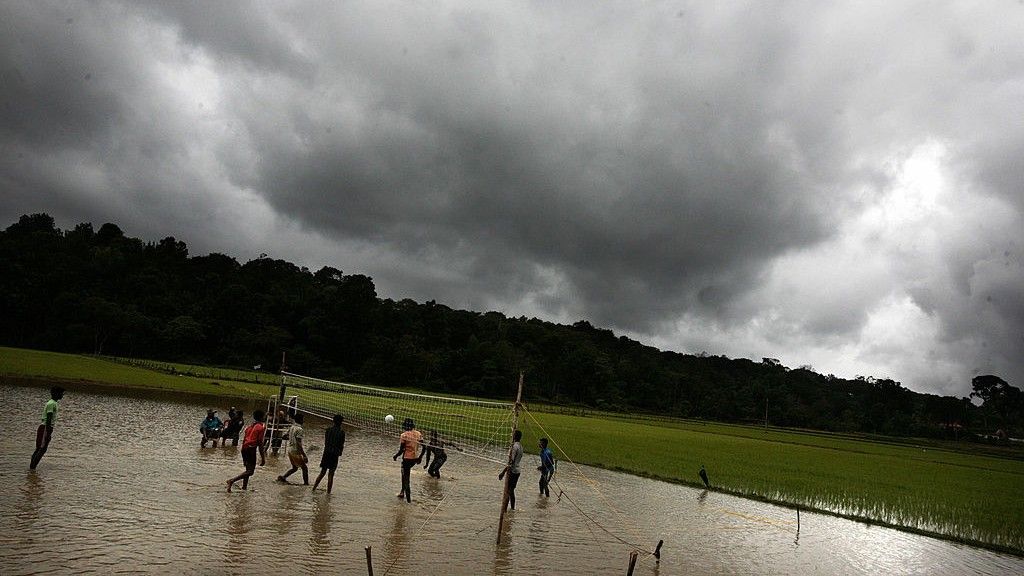
An abnormally cold patch of water in the North Atlantic Ocean has triggered changes in the Indian summer monsoon via the jet stream winds, new research suggests.
Live Science — 17 June 2026
Text:
32
0
0
An abnormally cold patch of water in the North Atlantic Ocean has triggered changes in the Indian summer monsoon via the jet stream winds, new researc
Read Full Story at Live Science →
⚡ Quickyla Analysis
Original editorial context — not sourced from the article above
The discovery of a "cold blob" in the North Atlantic—an anomalous patch of chilled seawater—unsettlingly reorders our understanding of global climate interconnections. While remote oceanic anomalies may seem distant from the monsoon-soaked fields of South Asia, this research reveals a direct meteorological bridge: the jet stream, that high-altitude river of wind, is being steered by the cold blob’s thermal contrast, altering monsoon timing and intensity across the Indian subcontinent. For more than a billion people whose livelihoods depend on predictable monsoon rains—farmers, energy planners, and urban water managers—this disruption is not merely academic. It threatens food security, freshwater supplies, and economic stability in one of the world’s most populous regions.
The North Atlantic cold blob itself is a relatively recent phenomenon, linked to the slowdown of Atlantic Meridional Overturning Circulation (AMOC), a critical ocean conveyor that carries warm water north and returns colder water south. While scientists debate whether this slowdown is driven by natural variability or human-induced warming, its climatic footprint is undeniable. The jet stream’s wavering path—once a steadier highway—now bends erratically, pulling moisture away from traditional monsoon routes and redirecting it toward Europe or the Arabian Peninsula. Historical records show that such jet stream shifts have coincided with droughts in India and floods in Pakistan, but never before with such a clearly identifiable oceanic trigger in the Atlantic.
What remains uncertain is whether this cold blob is a temporary anomaly or the start of a long-term regime shift. Climate models disagree on the persistence of AMOC weakening and its downstream effects. If the blob persists, South Asia could face more frequent monsoon failures or, paradoxically, extreme rainfall events as storm tracks become more erratic. Early warning systems, crop insurance, and water infrastructure in India, Pakistan, and Bangladesh must prepare for greater volatility—not just in rainfall totals, but in seasonal timing, a critical factor for agriculture.
This story underscores a broader truth: the climate crisis is not a series of isolated disasters but a cascade of feedbacks. A cooling patch in the far North Atlantic can ripple across monsoon systems thousands of miles away, reshaping economies and ecosystems. It demands not only scientific vigilance but urgent adaptation from societies least equipped to absorb such shocks.
Sources

🔬 Science
'Astonishing': James Webb telescope spots the most chemically primitive galaxy in the ancient universe

🔬 Science
El Niño Is Underway

🔬 Science
Astronomers gaze into the 'Crystal Ball Nebula' and see a vision of our dying sun — Space photo of the week

🔬 Science
Bacteria uncover distinct strategy to import rare sugar polymers, crystal structures show

🔬 Science
NASA Awards Contract for Johnson Space Center Infrastructure

🔬 Science
Repairing DNA damage: Scientists discover a surprising new benefit of melatonin

