Black Eye Galaxy
This March 20, 2026, image of Messier 64, or the Black Eye Galaxy, is a composite view from NASA’s Hubble Space Telescope and James Webb Space Telescope. It shows Messier 64 captured at near- and mid…
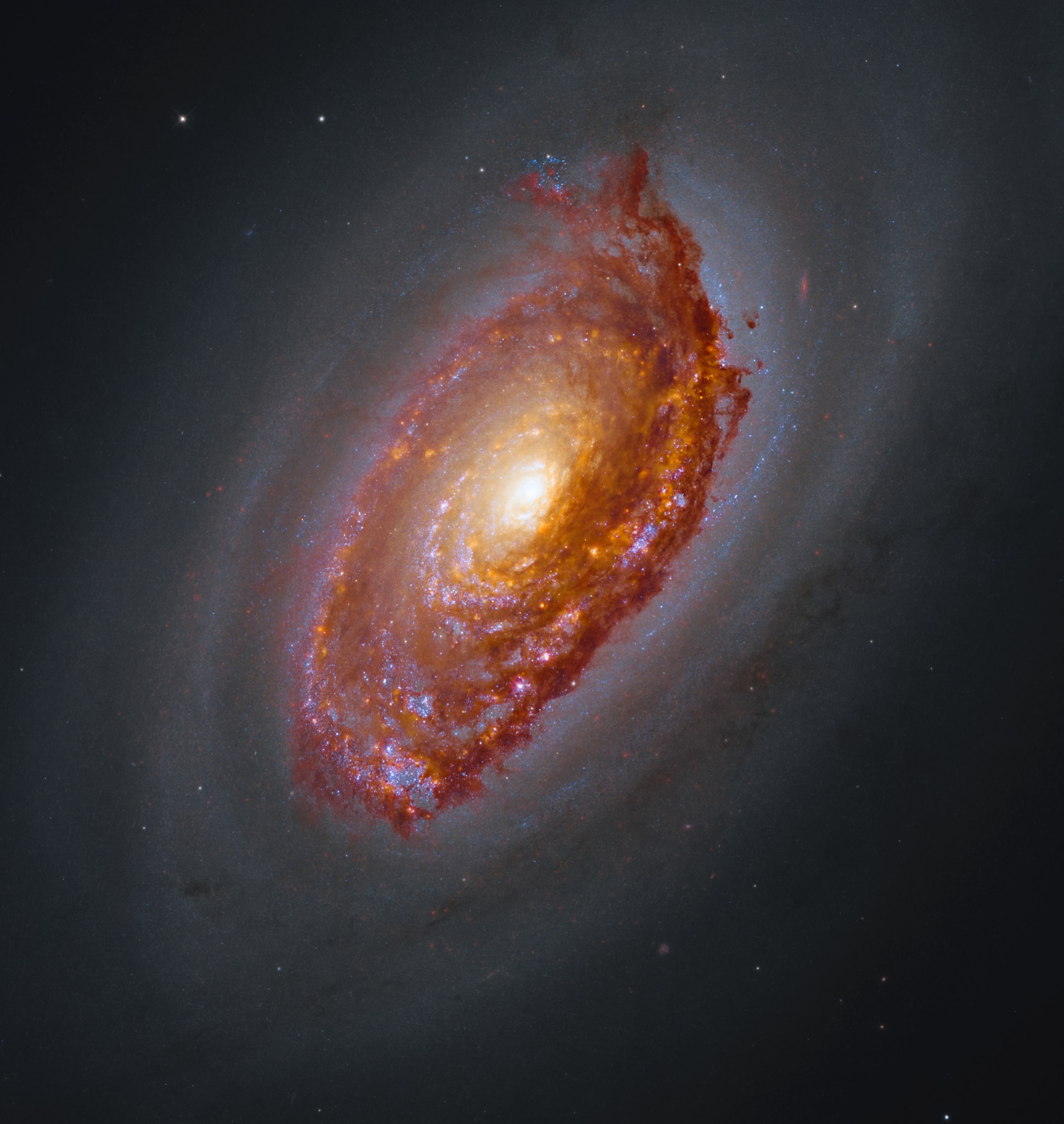
This March 20, 2026, image of Messier 64, or the Black Eye Galaxy, is a composite view from NASA’s Hubble Space Telescope and James Webb Space Telesco
Read Full Story at NASA →Why This Matters
The Black Eye Galaxy's latest composite image represents more than just a stunning visual—it marks a pivotal moment in astrophysical collaboration. By combining Hubble’s visible-light legacy with Webb’s infrared precision, astronomers can now dissect the galaxy’s violent past with unprecedented clarity, offering clues about how such dramatic features form in galactic collisions.
Background Context
The Black Eye Galaxy’s dark, dusty absorption lane—earning it the "evil eye" nickname—has long puzzled scientists since its 1779 discovery by Edward Pigott. Modern observations suggest this disruption stems from a merger with a smaller satellite galaxy, though the exact timeline and dynamics remain debated. Webb’s recent mid-infrared data may finally resolve whether the galaxy’s core is still reeling from the impact.
What Happens Next
Researchers will now pore over the combined data to model the galaxy’s star-forming regions and dark matter distribution, potentially revising theories of galactic evolution. If Webb detects unexpected molecular signatures in the dust lane, it could force a reevaluation of how such features persist over billions of years. The public’s engagement with these images may also shape future funding priorities for space-based observatories.
Bigger Picture
This image underscores the accelerating pace of multi-wavelength astronomy, where telescopes now work in tandem to peel back cosmic mysteries. As Webb and Hubble continue their joint missions, such collaborations could redefine our understanding of galaxy interactions—bridging gaps between ancient collisions and modern star formation. It also highlights the growing role of citizen science in processing and interpreting these vast datasets.







