🌍 World News
Live
Bolivia signs $20m deal with US to fight drug trafficking, foreign ministry says
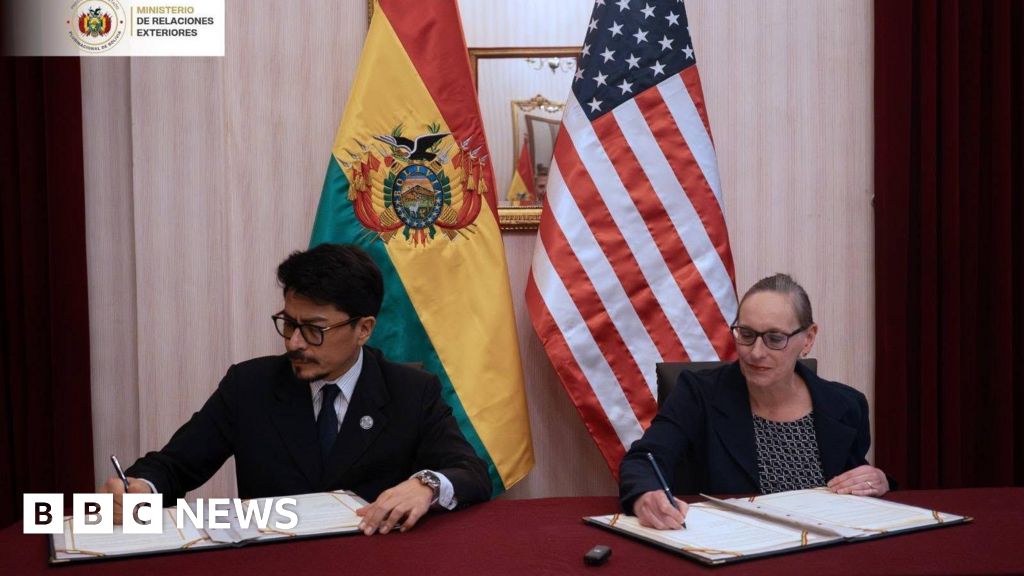
Bolivia says it has signed a new co-operation deal with the US to combat drug trafficking. The foreign ministry said that under the agreement, the US would provide up to $20m (£15m) to train and equ…
BBC World News — 17 June 2026
Text:
21
0
0
Bolivia says it has signed a new co-operation deal with the US to combat drug trafficking. The foreign ministry said that under the agreement, the US
Read Full Story at BBC World News →
⚡ Quickyla Analysis
Original editorial context — not sourced from the article above
The $20 million agreement between Bolivia and the United States to counter drug trafficking marks more than just another line item in bilateral cooperation—it underscores a fragile but deliberate shift in a relationship long strained by ideological and political tensions. Bolivia, once a leading coca producer and a vocal critic of U.S. anti-narcotics policies under Evo Morales, has now pivoted toward closer security collaboration with Washington. This deal suggests a quiet recalibration in La Paz’s approach to drug control, possibly reflecting internal pressures from rising coca cultivation and shifting regional dynamics that make traditional allies like Venezuela and Cuba less reliable partners.
For decades, U.S.-Bolivia counter-narcotics efforts have been contentious. The 2008 expulsion of the U.S. ambassador and DEA agents under Morales was a symbolic break, reflecting Bolivia’s rejection of Washington’s “war on drugs” framework. Yet today’s agreement signals an acknowledgment that drug trafficking—fueled by global demand and porous borders—cannot be managed unilaterally. The funds, earmarked for training and equipment, may help Bolivia address its role as the world’s third-largest coca producer, a status it regained after legal cultivation expanded post-Morales. Whether that translates into measurable reductions in cocaine flows to international markets remains to be seen, especially given the persistent challenge of trafficking networks that span porous borders with Brazil and Peru.
Critically, the deal arrives at a moment when Latin America’s drug policies are in flux. Countries like Colombia and Mexico are experimenting with decriminalization and harm reduction, while others, including Bolivia, still rely on eradication and interdiction. The U.S. funding could reinforce a militarized approach, but it also opens space for dialogue on alternative strategies—though such shifts would require deeper trust between the two governments. Open questions persist: Will the aid reach frontline communities or be siphoned by corrupt officials? Can Bolivia balance U.S. security assistance with its constitutional commitment to indigenous coca practices? And how will regional blocs like the Community of Latin American and Caribbean States respond to what some may see as a return to U.S. influence?
Ultimately, this deal is a microcosm of Latin America’s enduring struggle to reconcile sovereignty with external partnerships in the fight against drugs—a cycle of cooperation and conflict that shows no sign of ending.
Sources

🌍 World News
Agitators outside Delaney Hall set up organized logistics operation before Newark protests began

🌍 World News
Man fleeing police attacked by alligator before continuing his getaway, Louisiana authorities say
🌍 World News
US crude exports hit record high in May as Iran war tightens global oil supplies

🌍 World News
French doctors sound alarm over drinking water pollution

🌍 World News
Iran, Kuwait, Bahrain hit: Is the war in the Gulf escalating again?

🌍 World News
Four people trapped in flooded cave in Laos pulled to safety


