🕌 Religion & Faith
Live
Catholic rally celebrating nation’s founding offers a vision of America’s future
(RNS) — The Zeale for America 250 rally offered a window into a movement that blends Catholic devotion, conservative activism and Trump-era politics into a single narrative of American history and na…
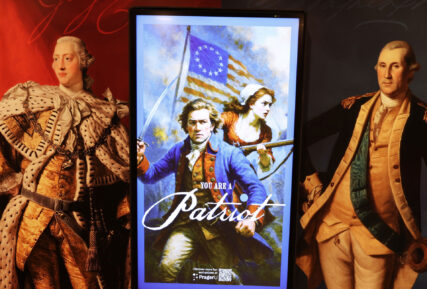
Religion News Service — 16 June 2026
Text:
44
0
0
(RNS) — The Zeale for America 250 rally offered a window into a movement that blends Catholic devotion, conservative activism and Trump-era politics i
Read Full Story at Religion News Service →
⚡ Quickyla Analysis
Original editorial context — not sourced from the article above
The Zeal for America 250 rally—a Catholic-led event celebrating the nation’s founding—reveals a growing fusion of religious identity, political ideology, and historical revisionism in American conservatism. More than a ceremonial gathering, the rally signals an effort to recast the nation’s founding through a distinctly Catholic and nationalist lens, one that emphasizes religious heritage over secular pluralism. This vision, though framed as a return to foundational values, carries implications for how future generations might interpret American identity, particularly in debates over education, immigration, and the role of religion in public life.
Historians and political observers have long noted the cyclical nature of American nostalgia, where movements seek to reclaim a mythologized past to justify present-day goals. What distinguishes this moment is the prominence of Catholic integralism—a tradition advocating for the close alignment of church and state—in shaping the narrative. While the U.S. has long been home to politically engaged Catholics, the current movement appears less about institutional Catholicism and more about weaponizing religious symbolism to advance a nationalist agenda. The rally’s focus on America’s Christian roots contrasts with the country’s legal separation of church and state, raising questions about how such rhetoric might influence policy, particularly in education, where battles over curricula and historical education are already contentious.
The event also underscores the evolving relationship between the Catholic Church and conservative politics. Traditionally, American Catholics have been a politically diverse bloc, but today’s fusion of Catholic devotion with Trump-aligned nationalism suggests a narrowing of that diversity. The rally’s emphasis on tradition and order aligns with broader trends in global Christian nationalism, where religious identity is increasingly tied to political power.
Open questions remain: Will this movement gain traction beyond its core audience, or will it remain a niche phenomenon? How will younger, more secular Catholics respond to this framing of their faith? And perhaps most critically, what happens when the historical record fails to align with the narrative being advanced? The answers could reshape not just American conservatism but the very definition of what it means to be American.
Sources

🕌 Religion & Faith
Defense Department rejiggers list of recognized religions after backlash, narrows it to 30

🕌 Religion & Faith
Odiong guilty in Texas: Questions remain for several Church leaders
🕌 Religion & Faith
Trump’s latest attack on Leo XIV isn’t really about the pope

🕌 Religion & Faith
Pope Leo XIII updates just war theory
🕌 Religion & Faith
Photos of the Week: Ebola responses, end of Hajj

🕌 Religion & Faith
High hopes, many challenges for Bangladesh’s first Indigenous Catholic MP

