CHIME telescope independently maps ancient hydrogen, advancing dark energy research
CHIME independently mapped ancient hydrogen using only its own data, eliminating the need for external telescope verification. This capability offers a cost-effective method to study dark energy and …
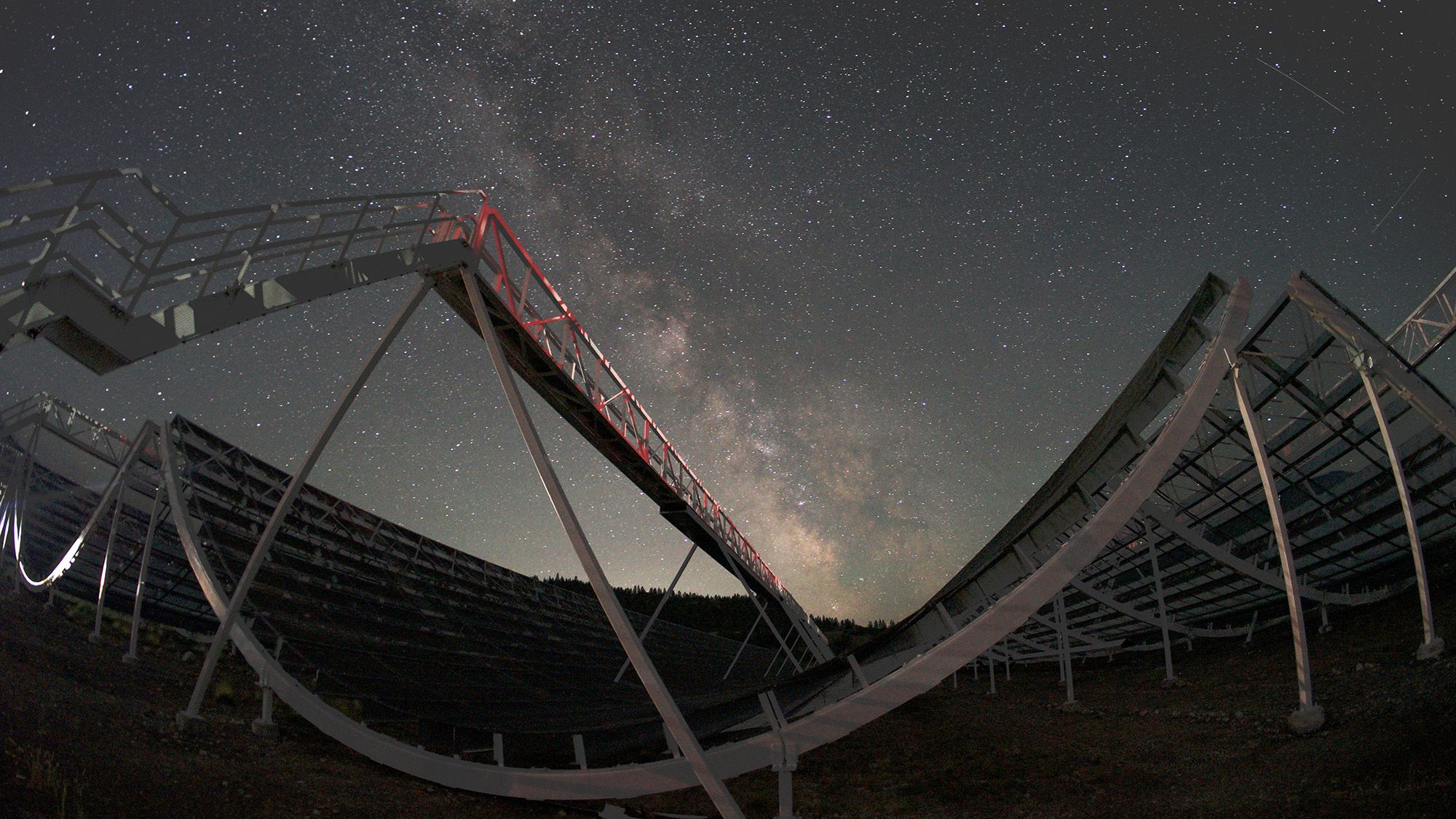
The Canadian Hydrogen Intensity Mapping Experiment (CHIME) has proven it can chart ancient hydrogen gas using only its own data, a claim confirmed in a study published on September 28 in The Astrophysical Journal. The result, after seven years of work, shows the telescope can independently map the distribution of hydrogen across the sky without needing other observatories. This new capability could give scientists a cheaper way to probe dark energy, the force driving the universe’s accelerating expansion.
CHIME had previously relied on cross‑checks with other telescopes to validate its observations. The team used 94 nights of data collected in 2019, running the signal through repeated tests to rule out errors. The signal remained consistent, giving confidence that the detected radio waves were real hydrogen from the distant universe. By eliminating external verification, the experiment demonstrates that CHIME alone can serve as a reliable tracer of matter in the cosmos.
The paper reports that about 2 % of hydrogen in the early universe is neutral, a figure that aligns with measurements from other instruments. The detected signal originates from gas as far back as 3 billion years after the Big Bang, when the universe was much younger. The researchers say this agreement confirms CHIME’s ability to map hydrogen distribution accurately and independently.
If CHIME can reliably chart hydrogen across time, it could become a powerful tool for studying how the universe’s expansion varies. The new method could cut costs and speed up research into dark energy, a major unsolved problem in cosmology. The team plans to analyze seven more years of observations, which may reveal finer details of cosmic history and help explain the accelerating expansion.
Read Full Story at Live Science →