🌱 Environment
Live
Colombia Passes First-Ever National Law Requiring Beef to Be Traced Back to Its Origins
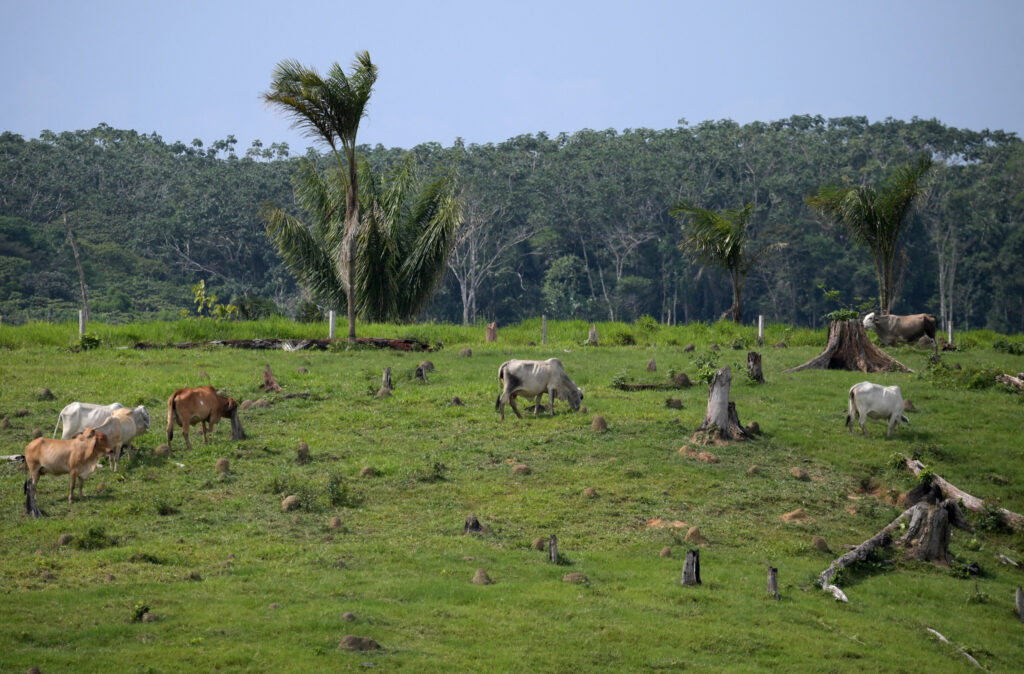
Colombia this month enacted a landmark law designed to stop deforestation connected to cattle ranching, a move that environmental groups say could provide a model for the wider Amazon region, where l…
Inside Climate News — 18 June 2026
Text:
29
0
0
Colombia this month enacted a landmark law designed to stop deforestation connected to cattle ranching, a move that environmental groups say could pro
Read Full Story at Inside Climate News →
⚡ Quickyla Analysis
Original editorial context — not sourced from the article above
Colombia’s new law mandating traceability for beef represents more than just another regulatory step—it’s a potential turning point in the global fight against deforestation, particularly in the Amazon basin. For decades, cattle ranching has been the primary driver of forest loss in Colombia and neighboring countries, where vast tracts of land are cleared for pasture, often illegally. By requiring every cut of beef to be linked back to its origin, the government is attempting to disrupt a supply chain that has long operated in the shadows, where environmental violations are obscured by opaque land ownership and weak enforcement. This isn’t just about transparency; it’s about accountability, forcing producers, distributors, and retailers to confront the environmental cost of their operations.
The law arrives at a critical juncture. Colombia has lost nearly 20% of its Amazon forest cover since 2000, with cattle ranching responsible for roughly 80% of deforestation in the region. While previous policies have targeted deforestation—including a 2018 ban on new agricultural permits in protected areas—enforcement has been inconsistent. This measure, however, shifts the burden of proof onto the industry itself, making it harder for illegal land grabs to be whitewashed into legitimate supply chains. If successful, it could set a precedent for Brazil, where beef and soy linked to Amazon deforestation have long drawn international criticism, and for other Amazon nations grappling with similar challenges.
Yet questions remain. Will the government have the resources to enforce such a sweeping system, or will loopholes persist in remote regions where oversight is weak? How will smaller producers, who lack the infrastructure for traceability, adapt? And crucially, will consumers and corporations—especially in export markets—demand the same standards, creating market pressure that complements regulation?
The law also reflects a broader shift in global agricultural policy, where traceability is becoming a cornerstone of sustainability efforts. From the EU’s deforestation-free supply chain regulations to growing corporate net-zero pledges, the message is clear: the days of unchecked land conversion for livestock are numbered. How Colombia navigates this transition could determine whether its forests survive—or whether the world’s appetite for beef continues to carve them down.
Sources

🌱 Environment
Erin Brockovich criticizes Microsoft data center secrecy in Utah

🌱 Environment
Rescues in eastern Syria after the Euphrates River bursts its banks

🌱 Environment
Indonesians mark 20 years since mud volcano eruption swallowed up entire communities in East Java

🌱 Environment
Biden’s Clean Drinking Water Plan Is Being Rebranded as MAHA

🌱 Environment
Heat is Killing Wildlife Across the Animal Kingdom. A New Forecasting Tool May Help
🌱 Environment
Trump’s EPA Unlawfully Cancelled Environmental Justice Grants, Judge Rules

