Colorful, Chaotic Jupiter
NASA’s Juno spacecraft captured this color-enhanced view of Jupiter’s northern hemisphere during its 61st close flyby of the giant planet on May 12, 2024. Citizen scientist Gary Eason made this image…
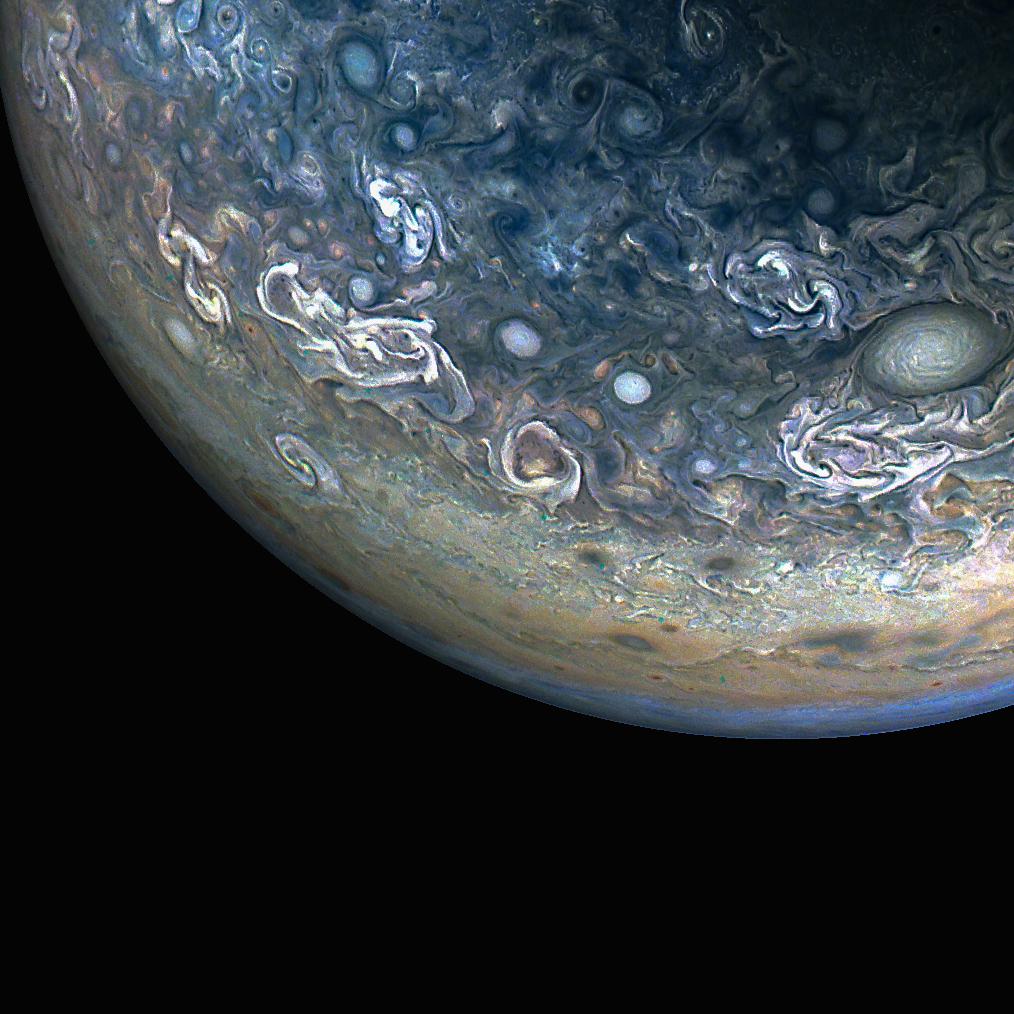
NASA’s Juno spacecraft captured this color-enhanced view of Jupiter’s northern hemisphere during its 61st close flyby of the giant planet on May 12, 2
Read Full Story at NASA →Why This Matters
The image captures Jupiter’s turbulent atmosphere in unprecedented detail, offering a glimpse into the planet’s dynamic weather systems and internal composition. These observations help scientists refine models of gas giants, which in turn could reshape our understanding of exoplanet atmospheres and the formation of solar systems. Beyond science, the collaboration between NASA and citizen scientists like Gary Eason underscores the growing role of public participation in cutting-edge research.
Background Context
Juno’s mission, launched in 2011, was designed to survive Jupiter’s harsh radiation belts long enough to study the planet’s core, magnetic field, and polar regions. Its extended mission phase, now in its sixth year of close flybys, allows for deeper dives into atmospheric phenomena like the cyclones at Jupiter’s poles. The spacecraft’s JunoCam, though not a scientific instrument, has become a bridge between NASA’s data and public engagement, turning raw data into accessible visuals.
What Happens Next
Scientists will likely use this image to probe the interactions between Jupiter’s storm systems and its internal heat, potentially uncovering new clues about the planet’s magnetic field. Further analysis may reveal shifts in atmospheric patterns, which could inform models of Earth’s own weather extremes. Meanwhile, the success of citizen science in processing Juno’s data may prompt NASA to expand such collaborations in future missions.
Bigger Picture
Jupiter serves as a natural laboratory for studying fluid dynamics and magnetospheres, phenomena that extend far beyond our solar system. The rise of citizen science in planetary exploration reflects a broader democratization of space research, where amateurs and professionals alike contribute to discoveries. As missions like Juno push the boundaries of what we know, they also inspire the next generation of scientists and engineers to engage with the cosmos.







