Czech government causes alarm with plan to scrap license fee
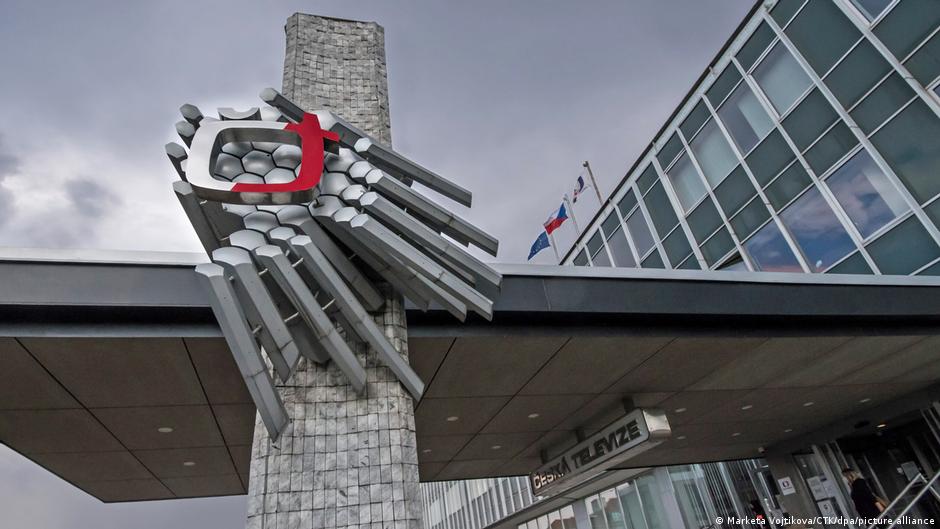
In their campaign ahead of last autumn's election, the populist and far-right parties that now make up Czechia 's coalition government promised a revamp of Czech Television (CT) and Czech Radio (CRo)
DW World — 19 June 2026
Text:
11
0
0
In their campaign ahead of last autumn's election, the populist and far-right parties that now make up Czechia 's coalition government promised a reva
Read Full Story at DW World →
⚡ Quickyla Analysis
Original editorial context — not sourced from the article above
The Czech government’s proposal to scrap the public broadcasting license fee—a decades-old system that funds Czech Television and Czech Radio—signals more than just a budgetary shift; it reflects a deeper political battle over the country’s media landscape and institutional independence. Introduced as part of a broader coalition agreement between populist and far-right parties, the plan has ignited concerns that public service media could be weaponized or defunded to align with government narratives. The license fee, though often criticized for its flat-rate structure, has historically insulated Czech public broadcasters from direct political interference, a safeguard that many in Central Europe see as increasingly fragile. Countries like Hungary and Poland have already eroded public media autonomy under similarly populist leaderships, raising questions about whether Prague is following the same playbook.
Behind the move lies a familiar tension: the tension between market-driven efficiency and the public service mandate. Proponents argue the fee is an anachronistic tax unfair to households, while critics warn that eliminating it without a sustainable alternative risks turning Czech public broadcasters into propaganda tools or pushing them toward commercial pressures. The government’s broader rhetoric about “cleaning up” media bias—echoing narratives used elsewhere in Europe—suggests this is not merely an economic reform but a cultural one, aimed at reshaping how citizens perceive their national institutions.
What happens next could hinge on parliamentary arithmetic and public backlash. If the fee is abolished, the government may propose a replacement funding model, perhaps through state budget allocations that invite greater scrutiny over editorial control. Alternatively, the debate could stall amid coalition infighting, as populist partners jockey for influence without fully committing to a radical overhaul. Either way, the outcome will be watched closely in Brussels and beyond, where the EU has repeatedly flagged media pluralism concerns in member states. For now, the story is less about the fee itself and more about whether Czechia will join a worrying regional trend: the gradual dismantling of one of democracy’s most vital checks—an independent public broadcaster.
Sources

🌍 World News
Man fleeing police attacked by alligator before continuing his getaway, Louisiana authorities say
🌍 World News
US crude exports hit record high in May as Iran war tightens global oil supplies

🌍 World News
Agitators outside Delaney Hall set up organized logistics operation before Newark protests began

🌍 World News
French doctors sound alarm over drinking water pollution

🌍 World News
Iran, Kuwait, Bahrain hit: Is the war in the Gulf escalating again?

🌍 World News
Four people trapped in flooded cave in Laos pulled to safety

