🌍 World News
Live
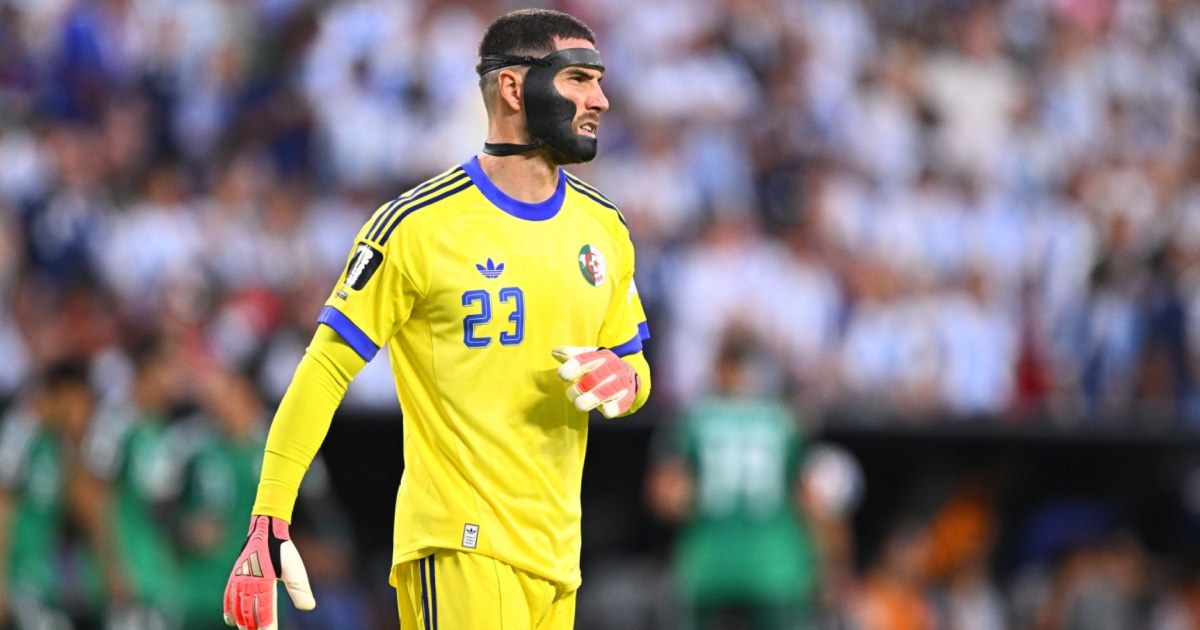
De Zinedine a Luca: otro Zidane pisa el escenario más grande del fútbol
El apellido Zidane volvió a resonar en una Copa Mundial. Luca Zidane debutó con Argelia y siguió los pasos de su legendario padre, Zinedine, al presentarse en la máxima vitrina del fútbol, escribiend…
NBC News — 16 June 2026
Text:
26
0
0
El apellido Zidane volvió a resonar en una Copa Mundial. Luca Zidane debutó con Argelia y siguió los pasos de su legendario padre, Zinedine, al presen
Read Full Story at NBC News →
⚡ Quickyla Analysis
Original editorial context — not sourced from the article above
The debut of Luca Zidane for Algeria in a World Cup match carries more than just symbolic weight—it underscores the enduring legacy of a family dynasty while highlighting the fluid, often boundary-blurring nature of national identity in modern football. Zinedine Zidane, the former France and Real Madrid icon, became a global symbol of elegance and control on the pitch, but his son’s decision to represent Algeria—his father’s ancestral homeland—reflects a broader trend in which players with dual heritage navigate loyalties shaped by ancestry, opportunity, and personal conviction. Algeria’s World Cup participation itself was hard-won, given the nation’s footballing history marked by resilience and underdog triumphs, making Luca’s inclusion part of a narrative that blends legacy with fresh ambition.
What makes this moment particularly intriguing is the unspoken tension between heritage and performance. Luca, despite his surname, is not merely trading on his father’s name; his pathway to the Algerian squad reflects a calculated choice within a system where dual nationals often face scrutiny over their allegiances. Algeria, like many nations with diaspora connections, has increasingly looked beyond its borders for talent, drawing players whose roots lie elsewhere but whose footballing education aligns with the country’s competitive ethos. This pragmatic approach has paid dividends—Algeria’s 2014 World Cup run, built partly on dual-national players, proved that identity can be secondary to efficiency on the global stage.
The bigger question is whether Luca’s emergence signals a generational shift or remains an isolated case. Will more players with illustrious footballing lineages follow a similar route, or does the Zidane name’s global recognition make this an outlier? Moreover, as football’s globalized pipeline expands, nations with limited developmental resources may increasingly rely on such cross-border talent pools, raising ethical debates about migration and opportunity in the sport. For now, Luca Zidane’s presence is a reminder that in the modern game, lineage and legacy are as much about narrative as they are about performance—where the pitch becomes a stage for stories that transcend borders.
Sources

🌍 World News
Man fleeing police attacked by alligator before continuing his getaway, Louisiana authorities say
🌍 World News
US crude exports hit record high in May as Iran war tightens global oil supplies

🌍 World News
Agitators outside Delaney Hall set up organized logistics operation before Newark protests began

🌍 World News
French doctors sound alarm over drinking water pollution

🌍 World News
Iran, Kuwait, Bahrain hit: Is the war in the Gulf escalating again?

🌍 World News
Four people trapped in flooded cave in Laos pulled to safety

