🏛️ Politics
Live
Energy bills, business rates and HS2: What are Burnham's potential policies?
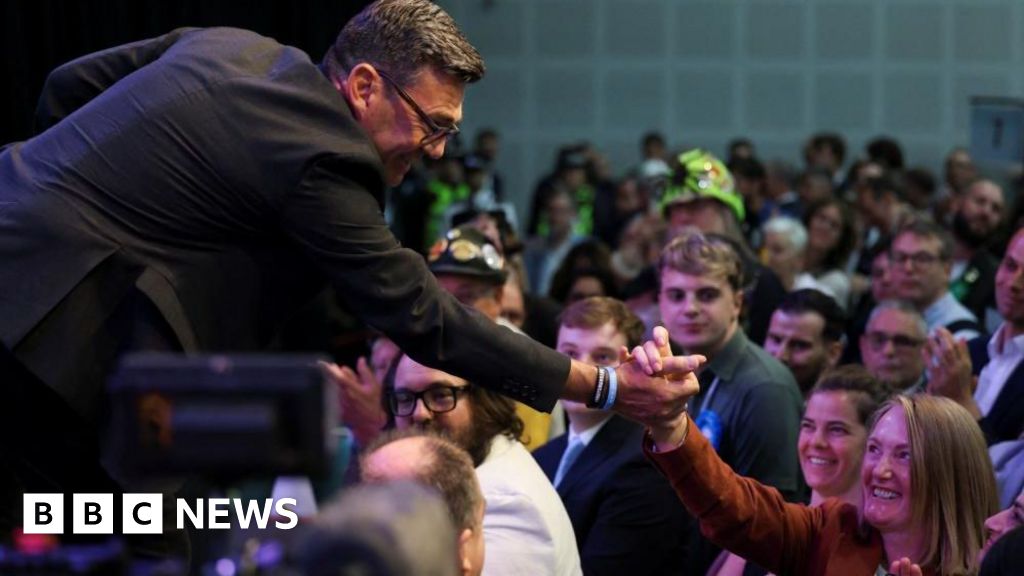
Andy Burnham's victory in the Makerfield by-election means there is now a real prospect he will challenge Sir Keir Starmer for the leadership of the Labour Party - and the country. During the by-elec
BBC Politics — 19 June 2026
Text:
10
0
0
Andy Burnham's victory in the Makerfield by-election means there is now a real prospect he will challenge Sir Keir Starmer for the leadership of the L
Read Full Story at BBC Politics →
⚡ Quickyla Analysis
Original editorial context — not sourced from the article above
Andy Burnham’s unexpected victory in the Makerfield by-election has transformed the political landscape, injecting fresh uncertainty into Labour’s leadership contest and the party’s broader strategy. While Keir Starmer remains the favourite to retain the leadership, Burnham’s presence introduces a credible alternative—one rooted in a more regionally focused, interventionist approach to economic policy. His potential challenge signals a deeper ideological tension within Labour: the tension between a cautious, electability-first approach and a bolder, more redistributive vision that prioritises local economic empowerment. If Burnham were to mount a serious leadership bid, it would force Labour to confront whether its current trajectory aligns with its traditional working-class base or if it risks appearing too centralised and technocratic.
The policies Burnham has hinted at—including aggressive measures to tackle energy bills, reform business rates, and reconsider HS2—reflect a broader frustration with Westminster’s detachment from regional economies. His emphasis on localised solutions chimes with growing demands for devolution, particularly in northern England, where economic stagnation has fuelled resentment toward London-centric policymaking. This is not just a Labour internal debate but part of a wider realignment in British politics, where voters increasingly expect tangible economic relief rather than abstract ideological promises. The Conservative Party’s struggles to address cost-of-living pressures have left an opening for Labour to adopt more interventionist measures, but Burnham’s potential rise also raises questions about whether this would be a tactical shift or a fundamental rethinking of Labour’s economic model.
What comes next depends on whether Burnham can galvanise support beyond his traditional northern strongholds and whether Starmer’s leadership remains resilient in the face of mounting Labour backbench pressure. If Burnham’s policies gain traction, they could reshape Labour’s electoral calculus ahead of the next general election. Alternatively, they might expose divisions within the party that could weaken its appeal to undecided voters. The bigger question is whether Labour can afford to ignore the growing demand for economic fairness—or whether Burnham’s challenge will force the party to confront its own identity crisis before the country does.
Sources

🏛️ Politics
Secretary of State Marco Rubio faces questions about Iran war on Capitol Hill

🏛️ Politics
"Fujimori never again!" Protesters fill streets of Lima ahead of Peru presidential elections

🏛️ Politics
US not 'turning back' on Asia allies, but expects them to boost defence, says Hegseth

🏛️ Politics
Trump: Reports US, Iran stopped speaking ‘false and erroneous’

🏛️ Politics
Pence: There’s ‘clearly” been an effort to ‘rewrite’ Jan. 6 history

🏛️ Politics
Washington, Silicon Valley brace for AI job losses

