🌍 World News
Live
Equatorial Guinea government resigns after failing to meet targets
Equatorial Guinea's government has resigned after failing to meet its objectives, Vice-President Teodoro Nguema Obiang Mangue said. Obiang, who is also the son of President Teodoro Obiang Nguema Mba…
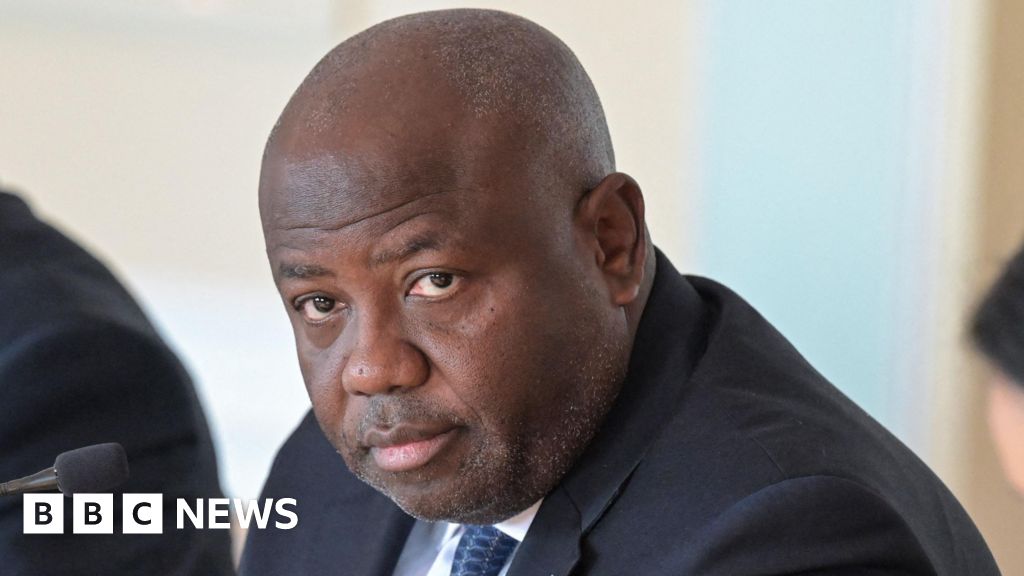
BBC World News — 17 June 2026
Text:
18
0
0
Equatorial Guinea's government has resigned after failing to meet its objectives, Vice-President Teodoro Nguema Obiang Mangue said. Obiang, who is al
Read Full Story at BBC World News →
⚡ Quickyla Analysis
Original editorial context — not sourced from the article above
The resignation of Equatorial Guinea’s government underscores the deepening fissures in a regime long insulated by oil wealth and familial rule. For decades, the Obiang dynasty has maintained power through a mix of repression and patronage, leveraging the country’s hydrocarbon resources to suppress dissent while distributing just enough wealth to keep elites and security forces aligned. Yet the mass resignation—even if nominally symbolic—signals that even the most entrenched authoritarian systems face limits when economic mismanagement and unmet public expectations collide. The fact that the move was announced by Teodoro Nguema Obiang Mangue, the vice president and the president’s son, suggests internal fractures within the ruling circle. Whether this represents a genuine power struggle or a calculated reshuffle to deflect blame remains unclear, but it reflects the regime’s growing difficulty in sustaining its usual strategies of control.
Equatorial Guinea’s economic struggles are not new, but their political consequences are becoming harder to ignore. The country’s oil boom in the 1990s and 2000s fueled rapid GDP growth, yet that wealth never trickled down meaningfully. Corruption remains endemic, infrastructure outside the capital is underdeveloped, and youth unemployment is rampant. The government’s failure to meet targets—likely tied to plummeting oil prices, mismanagement, or both—has eroded the social contract that once kept the population quiescent. The Obiang regime has long relied on a combination of repression and selective welfare to maintain stability, but as resources dwindle, so too does its ability to buy loyalty.
Looking ahead, the resignation raises critical questions about succession and stability. President Obiang, 82 and in power since 1979, has no clear heir, and his son’s ascent has been marred by scandals, including past corruption allegations. If the resignation is part of a broader purge or a bid to consolidate power under a new figurehead, the regime may tighten control further, risking even greater unrest. Alternatively, if dissatisfaction within the elite is real, it could signal the beginning of a more volatile transition. Either way, Equatorial Guinea’s troubles are part of a broader trend across resource-dependent authoritarian states, where economic strain and generational change are testing the durability of long-standing regimes. The world will be watching to see whether the Obiang dynasty can adapt—or if its time is finally running out.
Sources

🌍 World News
Agitators outside Delaney Hall set up organized logistics operation before Newark protests began

🌍 World News
Man fleeing police attacked by alligator before continuing his getaway, Louisiana authorities say
🌍 World News
US crude exports hit record high in May as Iran war tightens global oil supplies

🌍 World News
French doctors sound alarm over drinking water pollution

🌍 World News
Iran, Kuwait, Bahrain hit: Is the war in the Gulf escalating again?

🌍 World News
Four people trapped in flooded cave in Laos pulled to safety


