🌍 World News
Live
España tropieza y los favoritos siguen sin despegar
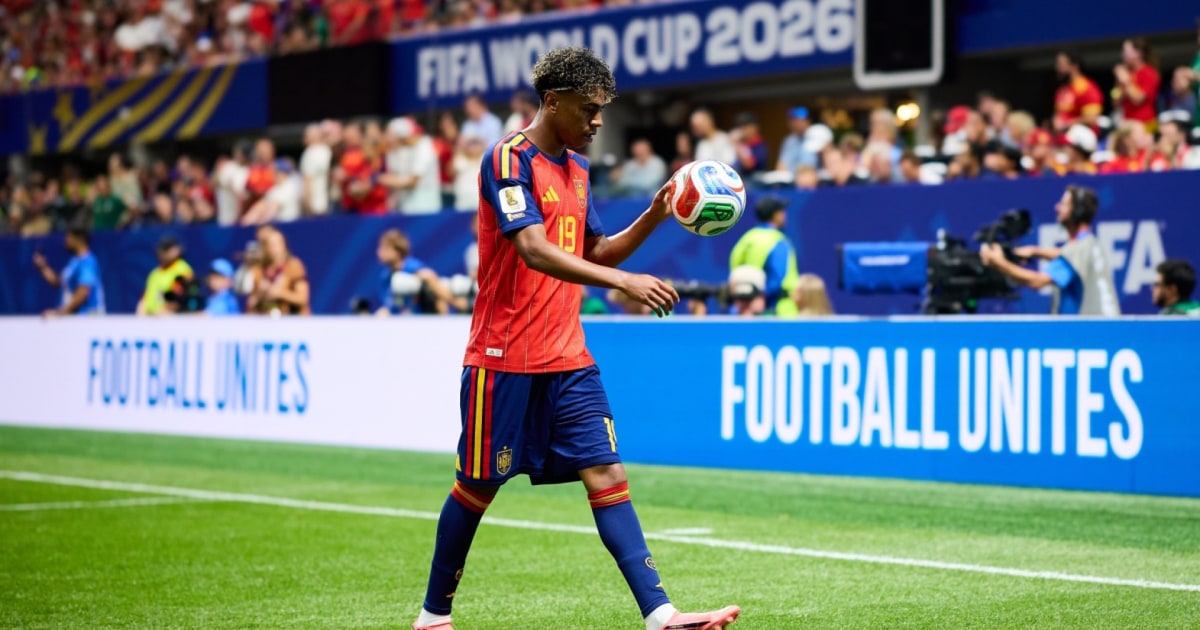
España no pudo vencer a Cabo Verde en su debut mundialista. Bélgica y Uruguay también cedieron puntos en una jornada llena de sorpresas en la Copa del Mundo 2026. Jun. 16, 2026
NBC News — 15 June 2026
Text:
17
0
0
España no pudo vencer a Cabo Verde en su debut mundialista. Bélgica y Uruguay también cedieron puntos en una jornada llena de sorpresas en la Copa del
Read Full Story at NBC News →
⚡ Quickyla Analysis
Original editorial context — not sourced from the article above
The opening day of the 2026 World Cup delivered a jolt to football’s conventional wisdom, and none felt it more keenly than Spain. Against a disciplined Cabo Verde side making its first-ever appearance on the global stage, La Roja—long hailed as the tournament’s most technically gifted team—struggled to impose its rhythm, settling instead for a draw that exposed both tactical rigidity and deeper psychological questions. The result wasn’t just an upset; it was a signal that the era of predictable favorites may be over.
This match mattered less for Cabo Verde’s history-making debut than for what it revealed about Spain’s identity under new leadership. After years of dominating possession-based football, the team’s inability to break down compact defenses suggests a fundamental shift in tactical landscapes. The absence of clear-cut chances and the midfield’s hesitancy under pressure hint at a squad still adjusting to a post-Busquets generation, where the luxury of control is no longer guaranteed. For rival nations, it’s a reminder that the World Cup has never been a mere exhibition of technical superiority—it demands resilience against physicality, adaptability in unfamiliar conditions, and the mental fortitude to convert dominance into goals.
The ripple effects extend beyond Spain. Belgium, another "favorite" with a golden generation nearing its final cycle, also stumbled against a determined underdog, while Uruguay’s reliance on defensive pragmatism over attacking flair left them vulnerable to counterattacks. These results underscore a broader trend: the erosion of the traditional "big three" (Spain, Germany, Brazil) that once dictated World Cup narratives, replaced instead by a more fractured competition where even elite teams can be exposed by tactical ingenuity or sheer determination.
What comes next is uncertain. Will Spain rediscover its composure, or has the psychological damage already set in? Can Belgium’s aging stars regroup, or is this the beginning of their decline? The answers will depend not just on individual brilliance but on how these teams adapt to a tournament where the margin for error has never been thinner. One thing is clear: the 2026 World Cup has already rewritten the script, and no team—no matter how favored—can afford to take its path to glory for granted.
Sources

🌍 World News
Man fleeing police attacked by alligator before continuing his getaway, Louisiana authorities say
🌍 World News
US crude exports hit record high in May as Iran war tightens global oil supplies

🌍 World News
Agitators outside Delaney Hall set up organized logistics operation before Newark protests began

🌍 World News
French doctors sound alarm over drinking water pollution

🌍 World News
Iran, Kuwait, Bahrain hit: Is the war in the Gulf escalating again?

🌍 World News
Four people trapped in flooded cave in Laos pulled to safety

