🌍 World News
Live
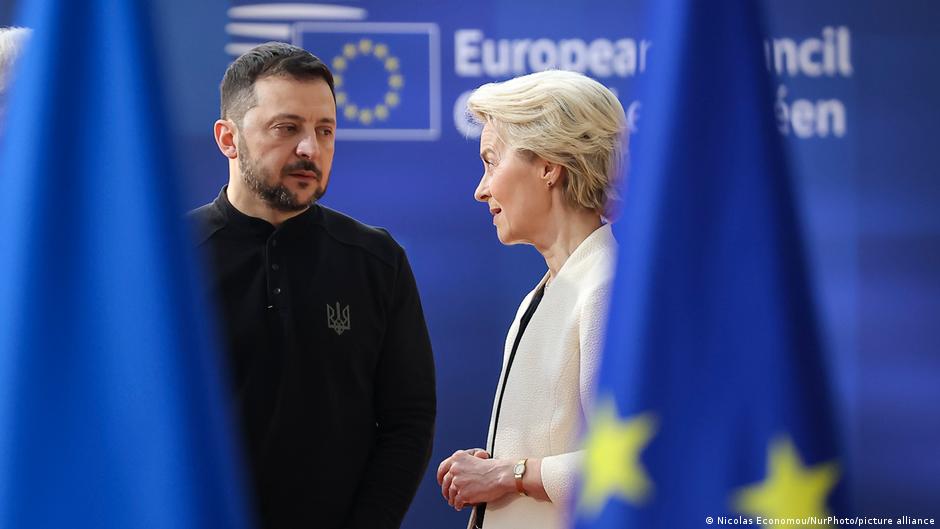
EU, Ukraine start formal accession talks after Orban delay
The EU and Ukraine on Monday formally opened the first stage of accession negotiations with a view to Kyiv one day joining the 28-member bloc. Russia's full-scale invasion of Ukraine in 2022 turboch…
DW World — 15 June 2026
Text:
14
0
0
The EU and Ukraine on Monday formally opened the first stage of accession negotiations with a view to Kyiv one day joining the 28-member bloc. Russia
Read Full Story at DW World →
⚡ Quickyla Analysis
Original editorial context — not sourced from the article above
The formal launch of EU accession talks with Ukraine marks a pivotal moment not just for Kyiv’s geopolitical trajectory but for the bloc’s own identity and strategic direction. While the headlines focus on the ceremonial start of negotiations, the deeper significance lies in what this decision signals about Europe’s long-term commitment to Ukraine amid a brutal war—and how it reshapes the continent’s economic and security calculus. For Ukraine, these talks are more than bureaucratic steps; they represent a lifeline in a conflict where territorial integrity and sovereignty hang in the balance. Membership, even if years away, offers Ukraine a shield against Russian aggression by anchoring its future in the EU’s legal and political frameworks, deterring further destabilization and providing a clear alternative to Moscow’s sphere of influence.
Yet the path forward is fraught with challenges that extend beyond Ukraine’s control. The EU’s own unity has been tested by Hungary’s prolonged resistance, a reminder that enlargement is never just a technical process but a political minefield where national interests, historical grievances, and strategic calculations collide. Hungary’s demands—often framed in terms of “sovereignty” and “neutrality”—highlight broader tensions within the bloc about how to balance enlargement with internal cohesion, particularly as the EU grapples with its own fatigue over further expansion. The talks also force a reckoning with the EU’s capacity to absorb a country still mired in war, with significant reforms required in governance, corruption control, and economic stability—areas where progress has been uneven despite wartime urgency.
What happens next will depend on two critical factors: the pace of Ukraine’s reforms and the durability of European resolve. Negotiations are expected to unfold in stages, with early rounds focused on technical alignment before tackling contentious issues like agricultural subsidies or judicial independence. Meanwhile, Russia’s war grinds on, and Kyiv’s ability to maintain momentum in reforms while under fire will be closely scrutinized. For the EU, the talks serve as a test of its credibility as a global actor—can it deliver on its promise of solidarity, or will enlargement become another casualty of internal divisions? The answer will shape not just Ukraine’s fate but the EU’s role in a world where multipolarity and great-power competition demand clearer lines between allies and adversaries.
Sources

🌍 World News
Man fleeing police attacked by alligator before continuing his getaway, Louisiana authorities say
🌍 World News
US crude exports hit record high in May as Iran war tightens global oil supplies

🌍 World News
Agitators outside Delaney Hall set up organized logistics operation before Newark protests began

🌍 World News
French doctors sound alarm over drinking water pollution

🌍 World News
Iran, Kuwait, Bahrain hit: Is the war in the Gulf escalating again?

🌍 World News
Four people trapped in flooded cave in Laos pulled to safety

