Fears of All Out War Grow as US-Iran Strikes Continue to Intensify
Concerns of a return to an all-out war are growing as the United States and Iran trade a new round of attacks in a second day of strikes. It comes as President Donald Trump says he would "bomb the s-…
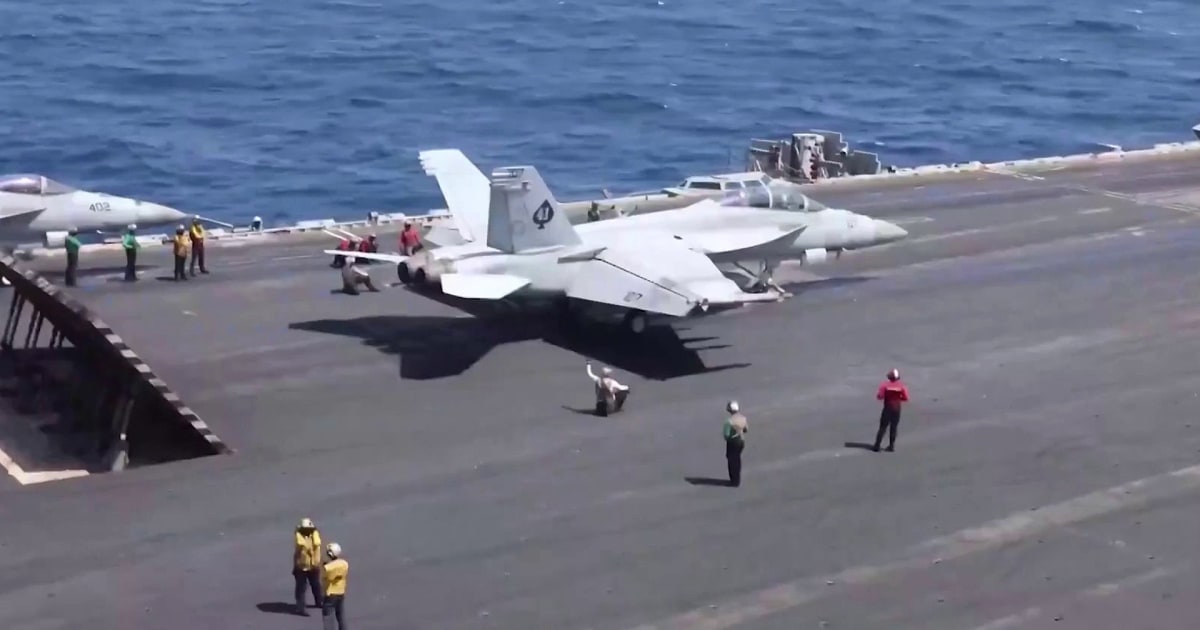
Concerns of a return to an all-out war are growing as the United States and Iran trade a new round of attacks in a second day of strikes. It comes as
Read Full Story at NBC News →Why This Matters
The escalation between the U.S. and Iran isn't just another flare-up in the Middle East—it risks unraveling decades of fragile deterrence that has kept the region from descending into direct conflict. The stakes are existential for global energy markets, already strained by geopolitical tensions, where even a limited strike could trigger supply shocks reminiscent of the 1970s oil crises. Beyond oil, the psychological impact of an all-out war would reshape alliances, redraw battle lines, and force nations to pick sides in a conflict that has long simmered in the shadows.
Background Context
Iran and the U.S. have been locked in a shadow war since the 1979 revolution, where proxies and covert operations often replaced direct confrontation. The 2020 drone strike that killed Qassem Soleimani marked a rare moment of overt aggression, but the current escalation suggests a new phase—one where both sides appear willing to test the other’s threshold for retaliation. Meanwhile, Iran’s nuclear program, now reportedly closer than ever to weapons-grade enrichment, has added a layer of urgency that wasn’t present even during the Obama-era JCPOA negotiations.
What Happens Next
The next 48 hours will reveal whether this cycle of strikes spirals into a broader conflict or if de-escalatory channels—like backchannel negotiations or third-party mediation—can regain traction. Watch for signals from regional players like Saudi Arabia and Israel, whose calculus on Iran could shift dramatically if the U.S. appears to be pulling back from a direct confrontation. Meanwhile, the European Union’s ability to broker a diplomatic off-ramp will be tested, as its past efforts to salvage the Iran nuclear deal have repeatedly collapsed under pressure from hardliners on both sides.
Bigger Picture
This escalation reflects a broader erosion of the post-Cold War order in the Middle East, where traditional alliances are fraying and new power vacuums are emerging. The U.S.’s willingness to engage in direct strikes—even under a president known for his unpredictability—signals a shift away from the "maximum pressure" strategy of the past toward a more kinetic approach. Iran, meanwhile, is leveraging its proxies and cyber capabilities to counter American military superiority, a tactic that risks drawing regional states into a conflict







