💻 Technology
Live
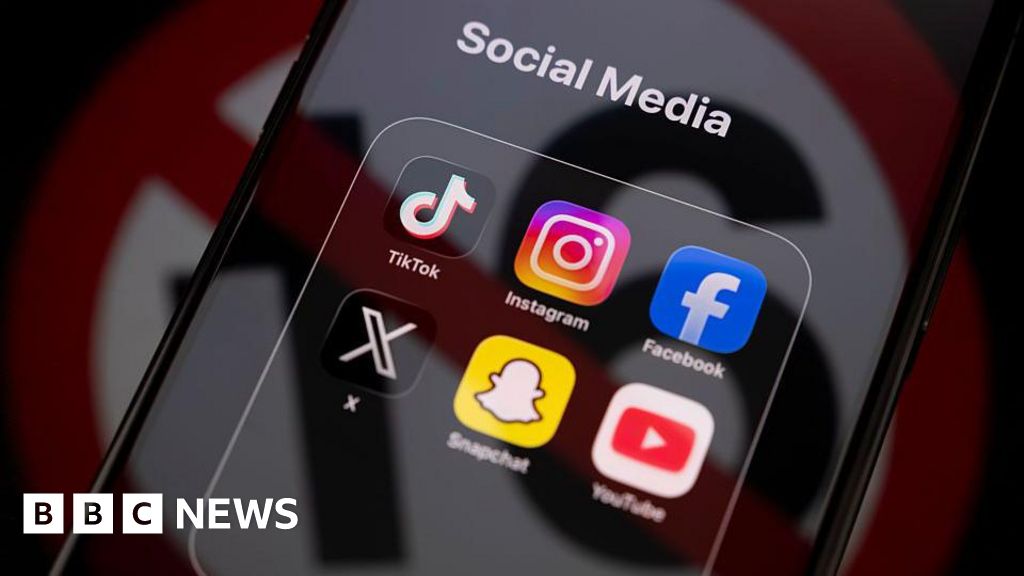
Five big questions about the UK's under-16s social media ban
After the government's announcement on Monday, we know a social media ban is coming for under-16s in the UK . However, details on which apps are and are not included, besides those named by the gove…
BBC Technology — 16 June 2026
Text:
27
0
0
After the government's announcement on Monday, we know a social media ban is coming for under-16s in the UK . However, details on which apps are and
Read Full Story at BBC Technology →
⚡ Quickyla Analysis
Original editorial context — not sourced from the article above
The UK government’s proposed ban on social media for under-16s is not merely another regulatory tweak—it reflects a growing global reckoning with the psychological and developmental toll of digital platforms on young people. While the move targets the most vulnerable demographic, its implications ripple far beyond childhood. The ban signals a potential shift in how governments balance innovation with protection, raising questions about enforcement, corporate responsibility, and whether this is the start of a broader digital curtailment.
The UK is not alone in its concerns. The European Union’s Digital Services Act and the U.S. Surgeon General’s advisory on social media’s mental health risks underscore a transatlantic consensus: unchecked digital exposure harms young minds. Yet the UK’s approach diverges by using age as a hard boundary rather than relying on parental controls or platform accountability. This could set a precedent, emboldening other nations to adopt similar measures—or sparking backlash from free-speech advocates and tech lobbying groups who argue such bans infringe on autonomy.
What remains unclear is the ban’s practicality. Will it apply to all platforms, including gaming-adjacent apps like Discord or Roblox, which often function as social networks? How will age verification work without compromising privacy? The government’s vague assurances so far suggest these details are still in flux, leaving parents, educators, and tech companies in limbo. Meanwhile, the mental health crisis among teens—exacerbated by algorithmic feeds and cyberbullying—demands urgent action, but heavy-handed regulation risks pushing risky behavior underground or into less monitored corners of the internet.
The bigger question is whether this is a stopgap measure or the first domino in a broader digital segregation. If under-16s are barred from mainstream platforms, will we see a parallel rise in age-restricted alternatives? Could this accelerate the fragmentation of the internet into “adult” and “child” spheres, altering how young people socialize and learn online? As governments worldwide grapple with these dilemmas, the UK’s experiment will be closely watched—not just for its immediate impact, but for the precedents it sets in a digital age where the lines between safety and surveillance are increasingly blurred.
Sources

💻 Technology
You can now beat ChatGPT Codex rate limits, if you have friends

💻 Technology
Meta is reportedly developing an AI pendant

💻 Technology
Cash App made a magic wand for contactless payments

💻 Technology
Coders are refusing to work without AI — and that could come back to bite them

💻 Technology
Hackers hijacked Instagram accounts by tricking Meta AI support chatbot into granting access

💻 Technology
Asus gives the ROX Xbox Ally the OLED screen it deserves

