Friendship or leverage: Why is Xi Jinping going to North Korea?
For Chinese leader Xi Jinping, North Korea is the neighbour China can neither control nor afford to lose. The two sides often describe their relationship as one "forged in blood", a reference to the…
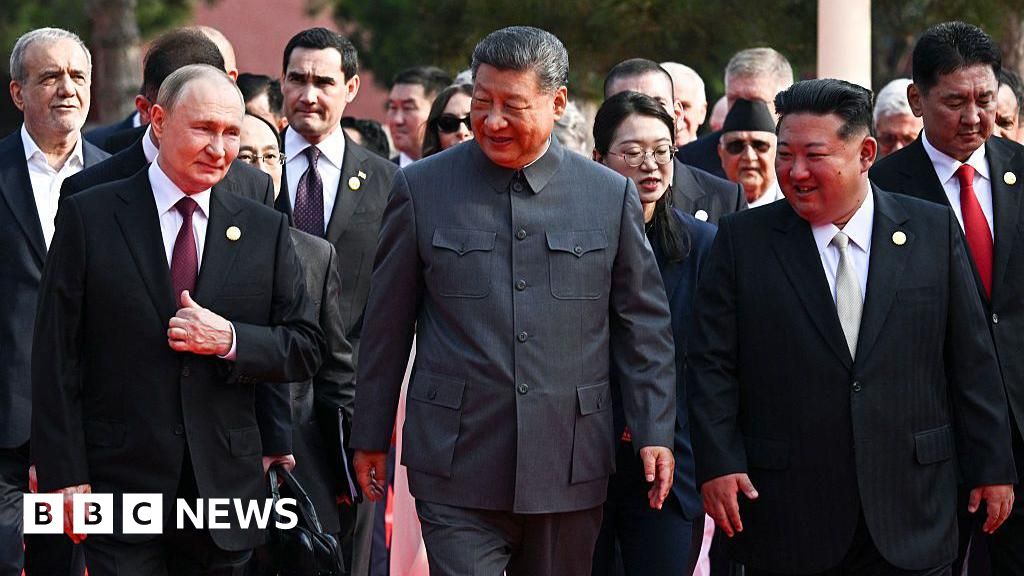
For Chinese leader Xi Jinping, North Korea is the neighbour China can neither control nor afford to lose. The two sides often describe their relation
Read Full Story at BBC World News →Why This Matters
Xi Jinping’s visit to Pyongyang is less about diplomacy than about reasserting Beijing’s influence over a regime that has historically defied international pressure. For China, this trip is a strategic necessity to prevent North Korea from drifting further into Russia’s orbit—a risk that could reshape Northeast Asian geopolitics. The timing, coming amid U.S. efforts to isolate both Moscow and Pyongyang, underscores Beijing’s calculation that maintaining even a fragile alliance with Kim Jong Un is preferable to losing control over the Korean Peninsula entirely.
Background Context
China and North Korea’s relationship has been marked by mutual dependence since the Korean War, but it has also been fraught with tension—Beijing has repeatedly failed to rein in Pyongyang’s nuclear ambitions, despite its status as North Korea’s largest trade partner and provider of food and fuel. The "blood" metaphor in their rhetoric belies a pragmatic reality: China tolerates Kim’s regime to avoid a collapse that could flood its borders with refugees or bring U.S.-aligned forces to its doorstep. Meanwhile, North Korea’s isolation has deepened its reliance on Beijing, making Xi’s leverage as much about deterrence as it is about diplomacy.
What Happens Next
Expect a carefully staged display of solidarity, with Xi likely to emphasize economic cooperation and security assurances while avoiding any concrete commitments on denuclearization. The real test will be whether North Korea reciprocates with restraint on missile tests or nuclear provocations in the coming months—a move that could signal whether Beijing’s influence is growing or simply being acknowledged. If the visit yields no tangible concessions, it will reinforce doubts about China’s ability to shape Pyongyang’s behavior, potentially emboldening both Kim Jong Un and his rivals in Washington and Seoul.
Bigger Picture
This trip reflects a broader shift in China’s foreign policy, where economic leverage and strategic patience are increasingly used to counter U.S. containment efforts across Asia. It also highlights the erosion of unipolar frameworks in global affairs, as Beijing and Pyongyang navigate a multipolar world where traditional alliances are no longer the sole drivers of geopolitics. The visit may further complicate U.S.-China negotiations on other fronts, demonstrating that Beijing remains willing to defy Washington’s preferences when its core interests are at stake.





