Giant fire tornadoes could clean up oil spills faster with less pollution
Researchers have shown that controlled fire whirls can clean up oil spills faster and more cleanly than traditional burning methods. The spinning flames consumed up to 95% of the oil, cut soot emissi…
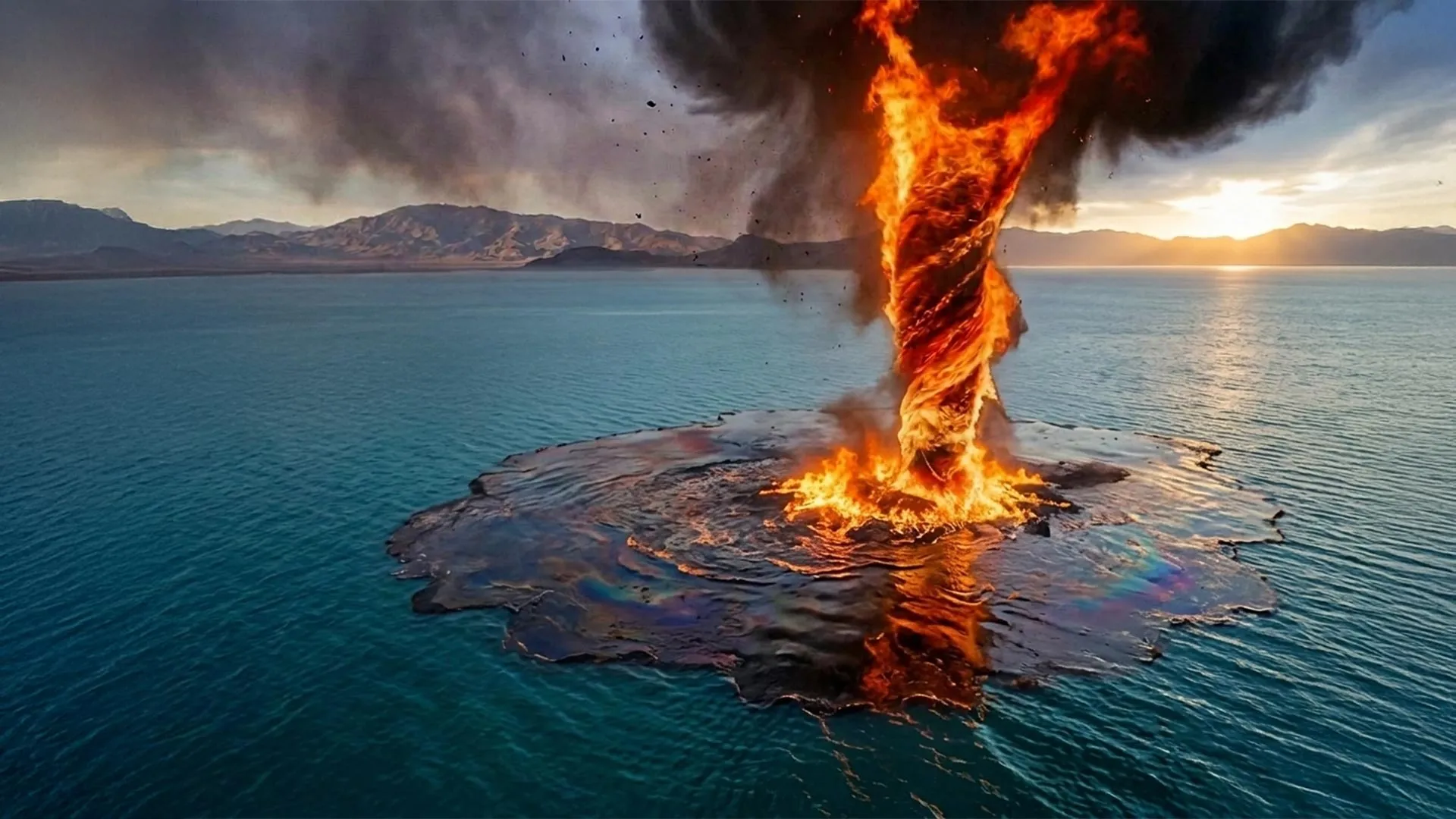
Researchers have shown that controlled fire whirls can clean up oil spills faster and more cleanly than traditional burning methods. The spinning flam
Read Full Story at ScienceDaily →Why This Matters
The discovery of controlled fire tornadoes as a tool for oil spill cleanup represents a paradigm shift in environmental crisis response, merging physics with ecological urgency. Unlike conventional methods that often leave behind hazardous residues, these spinning flames could redefine spill mitigation by minimizing secondary pollution while accelerating remediation—a critical advantage in an era of heightened environmental regulation and public scrutiny.
Background Context
Traditional oil spill burning, or "in-situ burning," has been used since the 1960s but faces criticism for high particulate emissions and incomplete combustion. Prior attempts to contain or enhance these burns often relied on mechanical barriers or chemical dispersants, neither of which addresses the core inefficiency of flame stability. The new research builds on decades of fire whirl studies, including their destructive role in wildfires, to harness their intensity for controlled cleanup.
What Happens Next
Commercial deployment will likely hinge on refining the technique’s scalability and safety protocols, particularly in turbulent marine environments. Regulatory bodies may fast-track pilot programs, but public skepticism around "controlled burning" could slow adoption. Meanwhile, competing technologies like robotic dispersant systems or bio-remediation may pressure researchers to prove fire whirls’ superiority in real-world conditions.
Bigger Picture
This innovation aligns with a growing trend of repurposing natural phenomena—like fire whirls—for human benefit, mirroring advancements in storm energy harnessing or volcanic ash capture. It also underscores a broader shift toward "destructive efficiency" in environmental tech, where rapid, high-energy solutions are prioritized over incremental fixes in high-stakes crises.







