🕌 Religion & Faith
Live
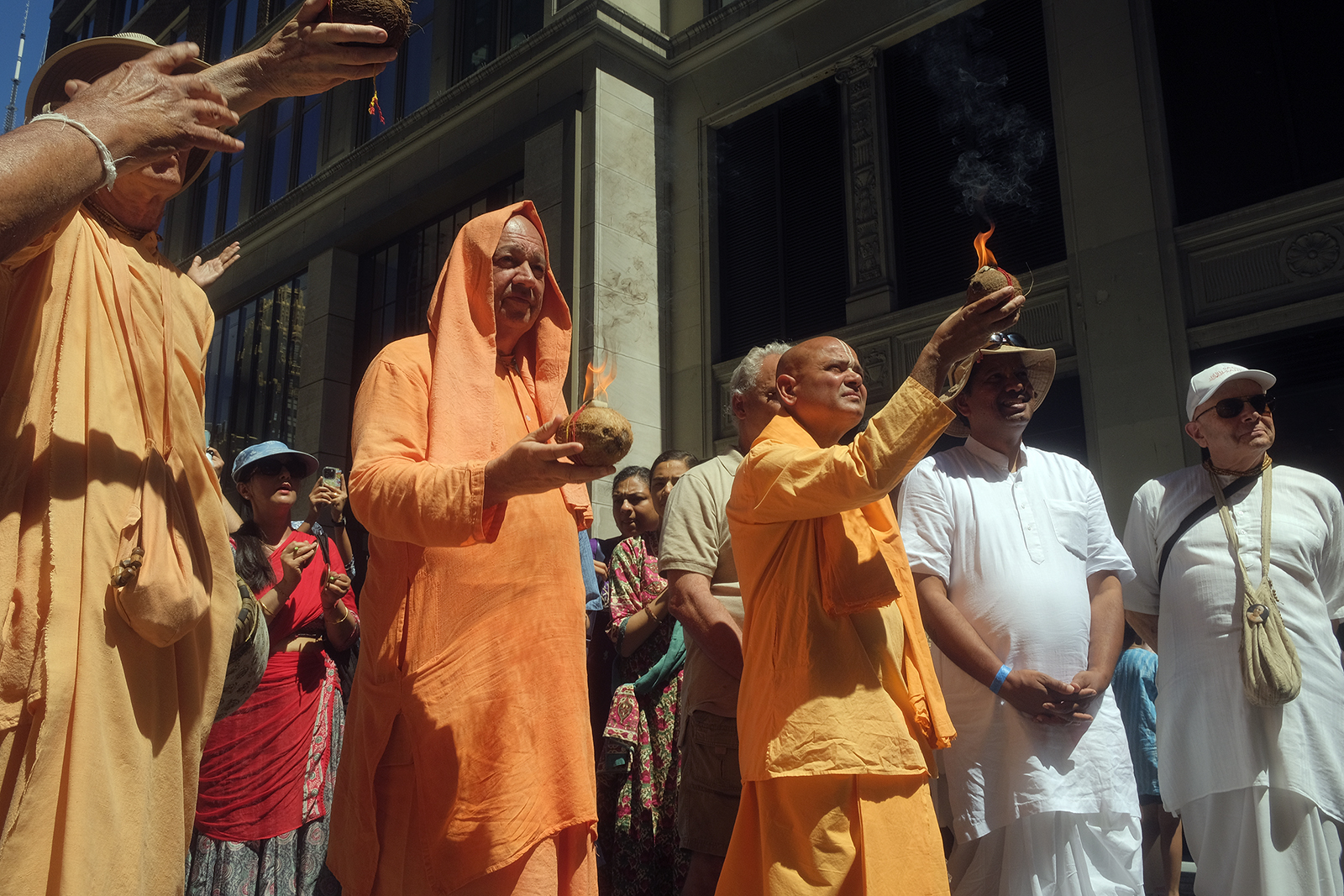
Hare Krishnas celebrate a 50-year milestone with a parade of chariots in Manhattan
(RNS) — More than 25,000 devotees of the International Society of Krishna Consciousness (ISKCON) attended the parade, according to organizers.
Religion News Service — 15 June 2026
Text:
43
0
0
(RNS) — More than 25,000 devotees of the International Society of Krishna Consciousness (ISKCON) attended the parade, according to organizers. This r
Read Full Story at Religion News Service →
⚡ Quickyla Analysis
Original editorial context — not sourced from the article above
The sight of 25,000 devotees parading through Manhattan in vibrant chariots, chanting and dancing, marks more than just a half-century milestone for ISKCON—it signals the enduring, often underappreciated presence of Hinduism in America’s cultural and religious landscape. While Vedic traditions like yoga and meditation have long been mainstreamed, ISKCON’s public demonstrations of devotion, with its colorful deities, vegetarian feasts, and call-and-response *Hare Krishna* mantras, remain a striking counterpoint to the more privatized spirituality of modern American life. The parade’s scale underscores how a movement born in the countercultural ferment of the 1960s—when figures like George Harrison popularized its chants—has evolved into a permanent fixture, blending devotion with outreach in one of the world’s most secular urban centers.
What’s less visible in such events is the movement’s internal evolution. ISKCON’s early years were marked by idealism and, at times, controversy, from clashes with authorities over communal living to debates over leadership and gender roles. The organization has since professionalized, with temples now operating as both spiritual hubs and cultural ambassadors, hosting interfaith dialogues and humanitarian initiatives like food distribution. Yet tensions persist: splinter groups and critiques over its founder Bhaktivedanta Swami Prabhupada’s legacy—particularly his views on caste and gender—continue to shape its identity. The Manhattan parade, then, isn’t just a celebration but a reaffirmation of ISKCON’s adaptability, using spectacle to assert its relevance in an era where religion often competes with digital distractions for attention.
Looking ahead, the movement’s next chapter may hinge on its ability to navigate generational shifts. Will younger, born-and-raised American devotees reshape its traditions, or will ISKCON double down on its Vedic orthodoxy? Meanwhile, its engagement with broader social issues—climate activism, LGBTQ+ inclusion, and racial justice—could determine whether it remains a niche spiritual practice or deepens its roots as a force for progressive religious pluralism. For now, the chariots rolling down Fifth Avenue serve as a reminder that faith, even in its most exuberant forms, is never static.
Sources

🕌 Religion & Faith
Defense Department rejiggers list of recognized religions after backlash, narrows it to 30

🕌 Religion & Faith
Odiong guilty in Texas: Questions remain for several Church leaders

🕌 Religion & Faith
Trump’s latest attack on Leo XIV isn’t really about the pope

🕌 Religion & Faith
Pope Leo XIII updates just war theory
🕌 Religion & Faith
Photos of the Week: Ebola responses, end of Hajj

🕌 Religion & Faith
High hopes, many challenges for Bangladesh’s first Indigenous Catholic MP

