Heat breaks the rules at the nanoscale and scientists used it to their advantage
Scientists used nanoscale gold metamaterials to supercharge heat transfer across tiny gaps, achieving up to four times more energy flow than similar conventional systems. The breakthrough could lead …
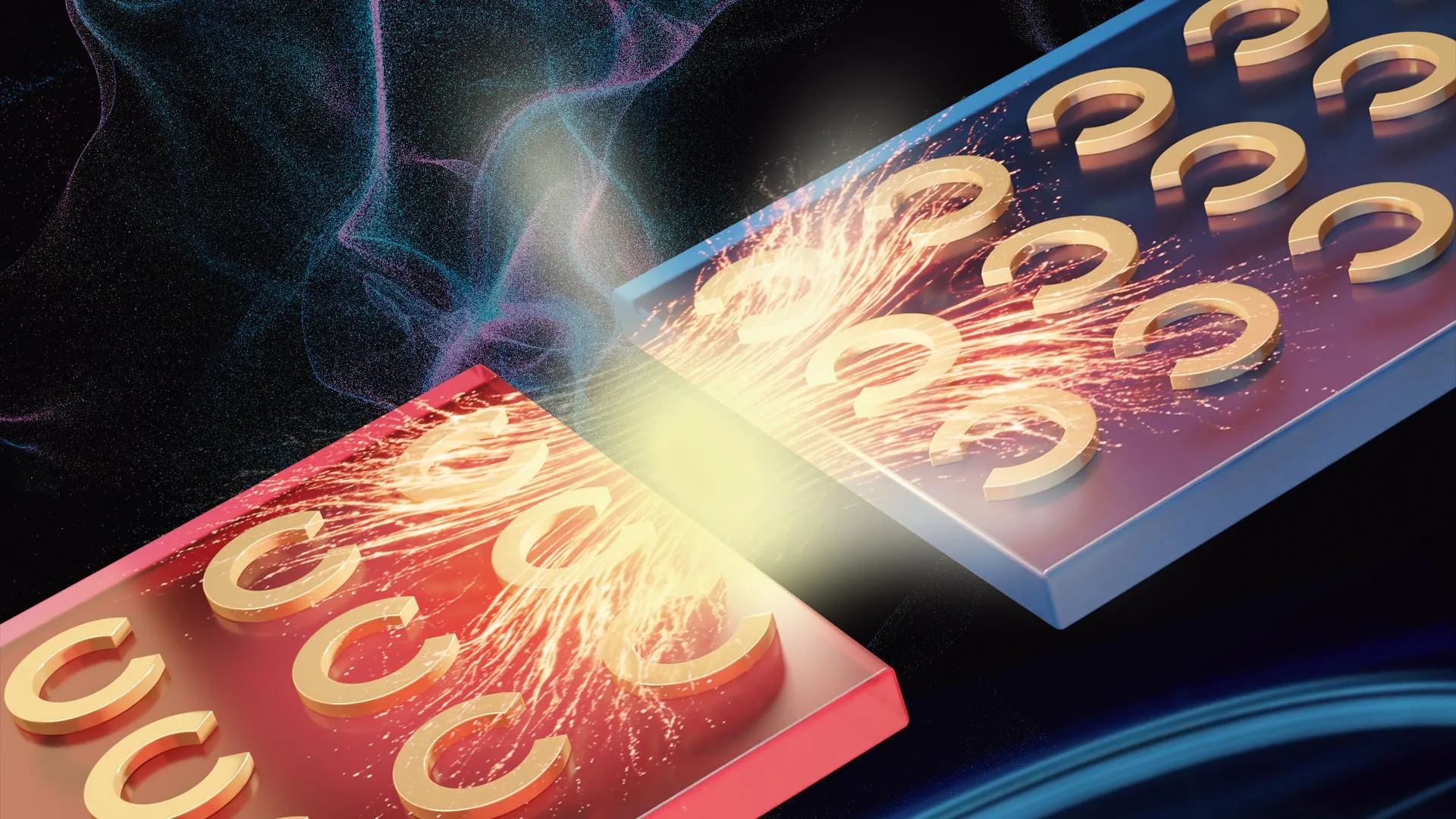
Scientists used nanoscale gold metamaterials to supercharge heat transfer across tiny gaps, achieving up to four times more energy flow than similar c
Read Full Story at ScienceDaily →Why This Matters
This discovery challenges a century-old assumption in thermal physics—that heat transfer through vacuum gaps is fundamentally limited by radiation laws. By exploiting nanoscale gold metamaterials, researchers not only bypassed these constraints but demonstrated a tunable system, opening doors to ultra-efficient energy systems where heat management could rival electrical conductivity in precision.
Background Context
Thermal engineering has long operated under Planck’s law, which restricts near-field radiative heat transfer to exponential decay beyond certain distances. Prior breakthroughs, like carbon nanotubes, pushed boundaries but faced scalability challenges. The use of metamaterials—engineered structures with properties not found in nature—represents a paradigm shift, merging nanotechnology with classical thermodynamics in ways that were once dismissed as impossible.
What Happens Next
Expect rapid prototyping of thermal management systems where heat flow is actively controlled, from microprocessors to energy storage. The next phase may involve integrating these metamaterials into commercial devices, but hurdles remain in scaling production costs and testing long-term stability under extreme conditions. Collaborations between materials scientists and semiconductor engineers could accelerate adoption—but patent races and proprietary designs may slow universal accessibility.
Bigger Picture
This aligns with a broader shift toward "programmable matter," where materials are designed to adapt their behavior on demand. As energy efficiency becomes non-negotiable, innovations in thermal regulation could rival those in photovoltaics or superconductivity. The convergence of nanotech, AI-driven material design, and quantum-scale engineering signals a new era where the invisible forces of heat are no longer passive constraints but dynamic tools.






