🌍 World News
Live
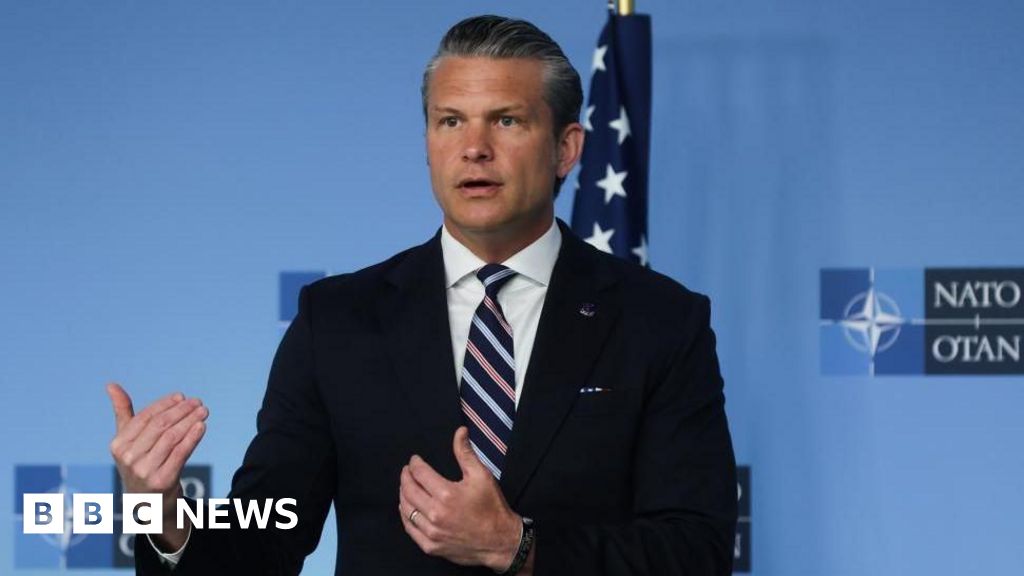
Hegseth says some Nato allies will fail as he announces US review of Europe forces
US Defense Secretary Pete Hegseth has severely criticised some of America's Nato allies, while announcing a six-month review of US forces in Europe. "Some countries will fail, and others will pass w…
BBC World News — 18 June 2026
Text:
29
0
0
US Defense Secretary Pete Hegseth has severely criticised some of America's Nato allies, while announcing a six-month review of US forces in Europe.
Read Full Story at BBC World News →
⚡ Quickyla Analysis
Original editorial context — not sourced from the article above
The announcement of a US review of American forces in Europe under Defense Secretary Pete Hegseth signals a potential turning point in transatlantic defense relations, one that could reshape the strategic calculus of NATO at a time when its cohesion is already under strain. While NATO has long grappled with uneven defense spending among members, Hegseth’s blunt suggestion that some allies may "fail" introduces a new layer of uncertainty—one that frames readiness not just as a budgetary issue, but as a binary test of commitment. This rhetoric, however hyperbolic, reflects deeper tensions: the US is increasingly frustrated with European allies who have yet to meet the 2014 Wales Summit pledge to dedicate 2% of GDP to defense, even as Russia’s war in Ukraine has underscored the continent’s strategic vulnerability. The review itself may not lead to immediate troop withdrawals, but it signals a shift in Washington’s patience, raising questions about whether the US could scale back its security guarantees if allies are deemed insufficiently invested.
For many European nations, this comes at a moment of fragile consensus. Countries like Germany and Italy have made incremental increases in defense spending, yet domestic political constraints—including populist resistance to higher military budgets—have limited progress. Meanwhile, Poland and the Baltic states stand out as exceptions, not only meeting the 2% target but often exceeding it, while others lag behind. Hegseth’s comments risk exacerbating these divisions, particularly in an election year where both the US and Europe face political headwinds that could further strain alliances. The review also arrives as NATO prepares for its 75th anniversary summit in Washington, where the alliance will need to address not just military readiness, but the broader question of how to deter Russian aggression without over-relying on American leadership.
What remains unclear is whether this review is a negotiating tactic—pressuring Europe to do more—or a prelude to a more assertive US posture. If the latter, it could accelerate calls for a European defense union, though such efforts have historically been stymied by sovereignty concerns and differing threat perceptions. The coming months will reveal whether this is a moment of reckoning or merely another chapter in the long-standing debate over burden-sharing. Either way, the message is clear: the rules of the transatlantic security game may be about to change.
Sources

🌍 World News
Man fleeing police attacked by alligator before continuing his getaway, Louisiana authorities say
🌍 World News
US crude exports hit record high in May as Iran war tightens global oil supplies

🌍 World News
Agitators outside Delaney Hall set up organized logistics operation before Newark protests began

🌍 World News
French doctors sound alarm over drinking water pollution

🌍 World News
Iran, Kuwait, Bahrain hit: Is the war in the Gulf escalating again?

🌍 World News
Four people trapped in flooded cave in Laos pulled to safety

