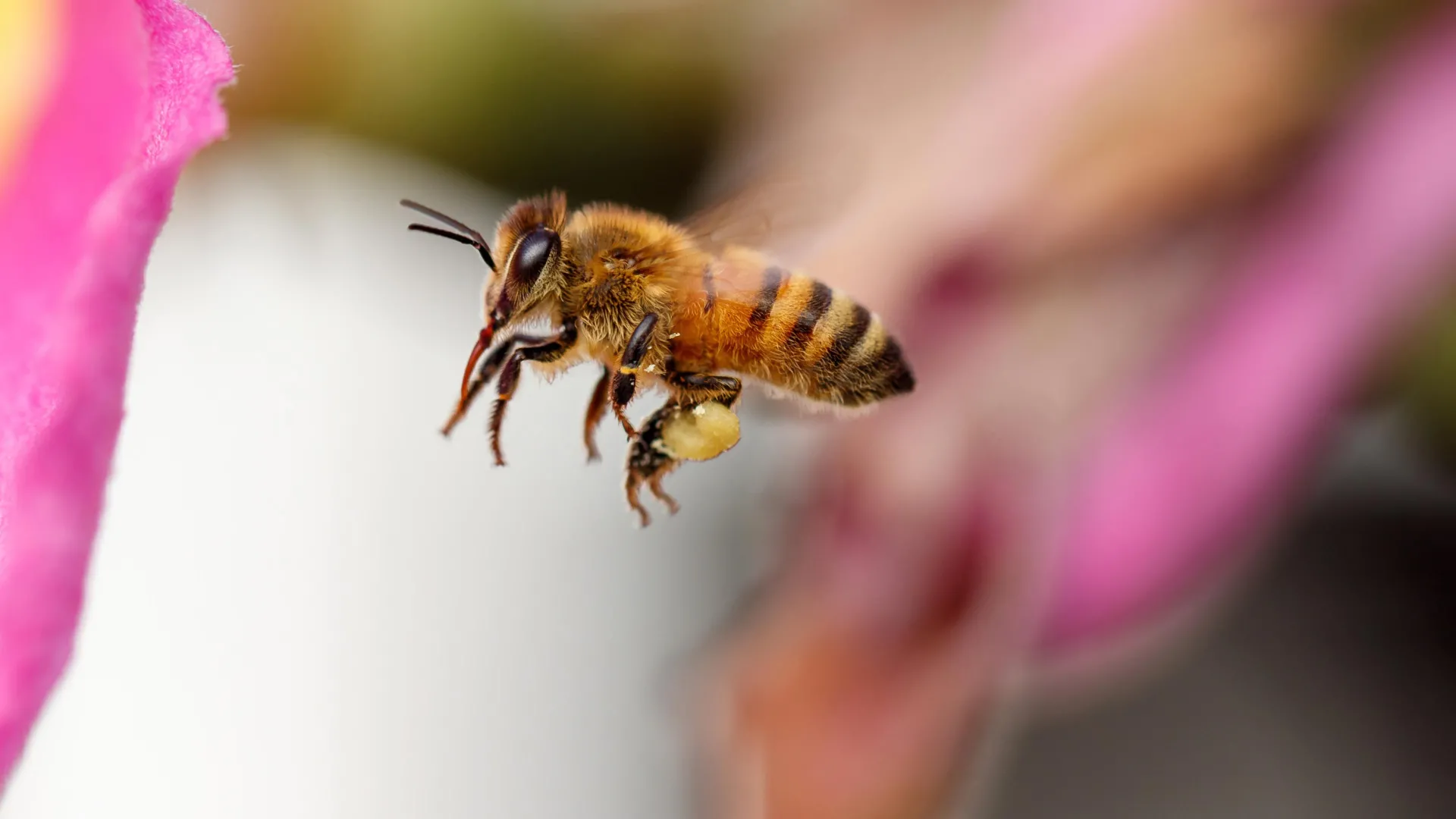
Honey bees have their own personal flight paths and fly them with stunning precision
Researchers tracked honey bees in the wild using a drone-based system and found that each bee follows its own highly consistent flight path. Some repeated their routes so precisely that they flew onl…
ScienceDaily — 14 June 2026
Text:
16
0
0
Researchers tracked honey bees in the wild using a drone-based system and found that each bee follows its own highly consistent flight path. Some repe
Read Full Story at ScienceDaily →
⚡ Quickyla Analysis
Original editorial context — not sourced from the article above
The discovery that honey bees maintain and navigate their own personal flight paths with striking precision underscores a deeper, often overlooked dimension of insect behavior—one that challenges conventional assumptions about how these creatures interact with their environments. While it’s well known that bees perform waggle dances to communicate food sources, their ability to memorize and repeatedly follow exact aerial routes suggests a level of spatial cognition far more sophisticated than previously recognized. This finding matters not just for entomology, but for broader discussions about animal navigation, memory, and even the potential for machine learning inspired by biological systems.
The research builds on earlier studies that hinted at structured foraging behaviors in bees, but the use of drone-based tracking in natural settings provides a new layer of evidence. Unlike lab-based experiments, which often strip away environmental complexity, these observations capture how bees adapt their routes to terrain, wind patterns, and resource distribution. The precision of these paths—some bees flying the same route within centimeters over multiple days—raises questions about how they encode spatial information. Is this learned behavior, genetic predisposition, or a combination of both? The answer could reshape understanding of insect intelligence and their role in ecosystems, particularly as pollinators facing habitat loss and climate change.
What happens next is equally intriguing. If bees rely on these routes, could disruptions—like pesticide exposure or habitat fragmentation—erode their navigational reliability, further threatening their survival? Conversely, could insights from bee flight patterns inform drone design or traffic management in crowded airspaces? The study also leaves open questions about how colonies coordinate these individual paths without centralized control, a phenomenon that mirrors decentralized systems in nature and technology alike.
More broadly, this research fits into a growing trend of recognizing animal behavior as a model for resilience and efficiency. From ants optimizing foraging trails to birds recalibrating migration routes, these patterns reveal adaptive strategies honed over millennia. As human-made systems grow increasingly complex, studying such biological precision could offer unexpected solutions—if we’re paying attention.
Sources

🔬 Science
'Astonishing': James Webb telescope spots the most chemically primitive galaxy in the ancient universe

🔬 Science
El Niño Is Underway

🔬 Science
Astronomers gaze into the 'Crystal Ball Nebula' and see a vision of our dying sun — Space photo of the week

🔬 Science
Bacteria uncover distinct strategy to import rare sugar polymers, crystal structures show

🔬 Science
NASA Awards Contract for Johnson Space Center Infrastructure

🔬 Science
Repairing DNA damage: Scientists discover a surprising new benefit of melatonin

