Hubble captures M88’s fast dive through Virgo Cluster
Hubble’s image shows Messier 88’s bright core and star-forming regions, but its 250 km/s plunge through the Virgo Cluster is stripping its star-forming gas, likely turning it into a gas-poor “red and…
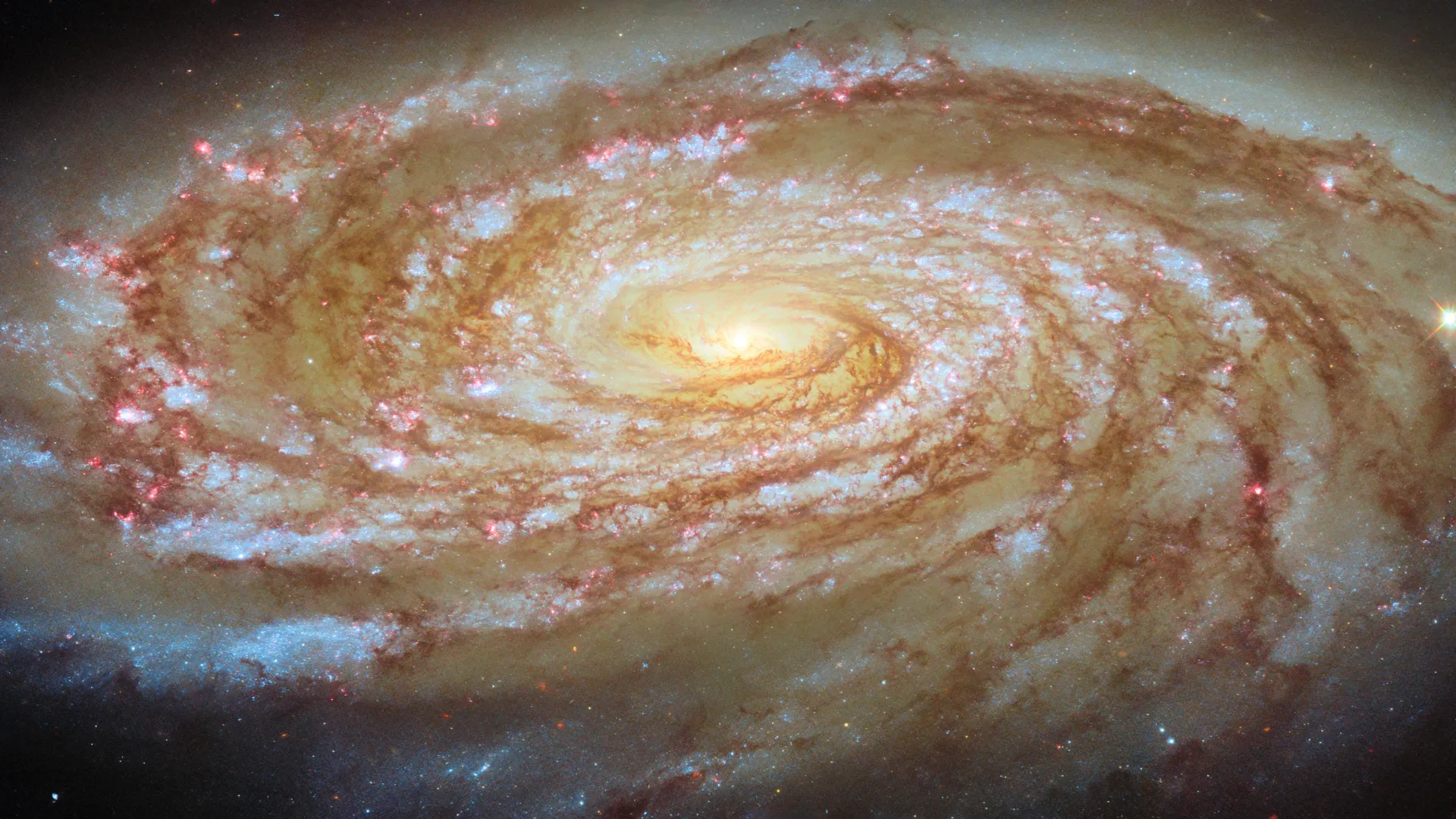
A stunning spiral galaxy called Messier 88 is racing through the Virgo Cluster at over 250 kilometers per second, a high-speed plunge that will dramat
Read Full Story at Science Daily →Why This Matters
The fate of Messier 88 offers a rare glimpse into the violent processes shaping galaxies across the cosmos, where gravitational forces act as both sculptors and destroyers. This observation underscores how even well-studied galaxies can serve as laboratories for understanding the life cycles of star systems amid the chaos of galactic clusters. Beyond its scientific value, it challenges assumptions about galactic resilience, revealing that no system is immune to the relentless pull of its environment.
Background Context
The Virgo Cluster, our nearest massive galaxy cluster, is a cosmic battleground where galaxies engage in a high-speed dance of collisions, mergers, and gas deprivation. Unlike isolated galaxies, those within clusters like Virgo are constantly bombarded by intracluster gas and gravitational tides that can strip them of their star-forming material. Messier 88, once a vibrant spiral galaxy, now faces a slow but inevitable transformation—one that mirrors the fate of countless others lost to the cluster’s harsh conditions.
What Happens Next
Astronomers will closely monitor Messier 88’s transition, searching for signs of its stellar population evolving from blue, star-forming regions to older, redder stars. The galaxy’s core may survive longer than its outer arms, but its eventual fate as a "red and dead" system seems sealed. Meanwhile, this case raises questions about whether other galaxies in the Virgo Cluster are undergoing similar strip-mining—and how future telescopes might detect these processes in action.
Bigger Picture
Galactic transformations like M88’s highlight the dynamic, often destructive nature of the universe, where density and motion dictate survival. As new telescopes probe deeper into these processes, they may reveal how common such stripping is across cosmic time—offering clues to the evolution of galaxies in our own cosmic neighborhood. This phenomenon also serves as a reminder that even in the void of space, galaxies are never truly alone; their fates are intertwined with the gravitational and gaseous fabric of the cosmos.







