🔬 Science
Live
Hubble Glimpses Merging Galaxy Clusters
This NASA Hubble Space Telescope image features a galaxy cluster, called CL0016+1609 or MACS J0018.5+1626, that is very bright at X-ray wavelengths and is one of the most extensively studied clusters…
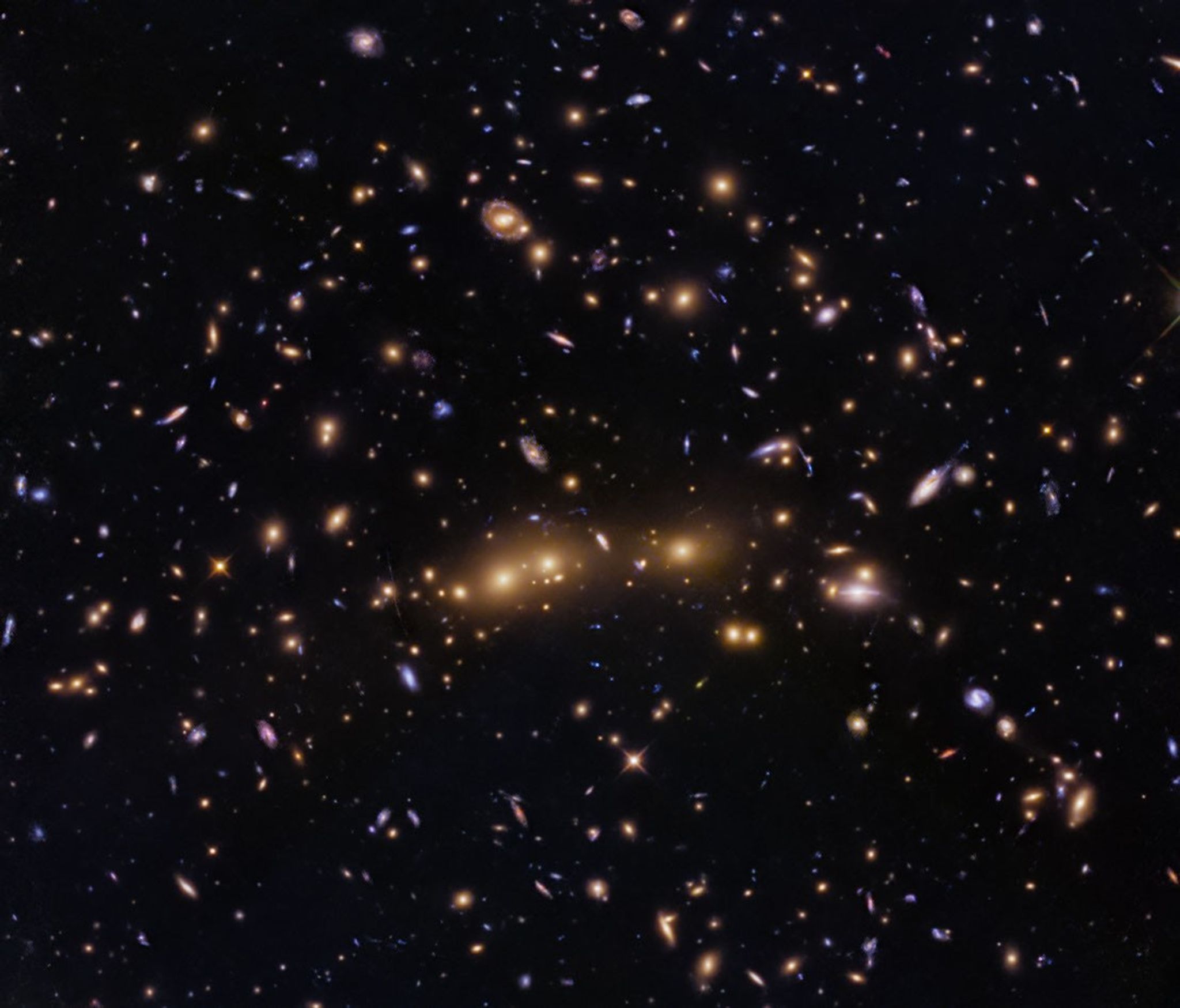
NASA — 18 June 2026
Text:
22
0
0
This NASA Hubble Space Telescope image features a galaxy cluster, called CL0016+1609 or MACS J0018.5+1626, that is very bright at X-ray wavelengths an
Read Full Story at NASA →
⚡ Quickyla Analysis
Original editorial context — not sourced from the article above
The latest Hubble Space Telescope observations of merging galaxy clusters like CL0016+1609 (or MACS J0018.5+1626) offer more than just a stunning cosmic spectacle—they provide critical insights into the fundamental forces shaping our universe. These collisions between massive clusters, some of the most energetic events since the Big Bang, serve as natural laboratories for studying dark matter, the elusive substance that makes up roughly 85% of the universe’s matter yet remains invisible. Because dark matter doesn’t emit, absorb, or reflect light, its behavior during such mergers—where it interacts differently than ordinary matter—helps scientists map its distribution and understand its role in cosmic structure formation. The fact that Hubble can capture these events in such detail underscores the telescope’s enduring value, even as newer instruments like the James Webb Space Telescope come online.
This particular merger is significant because it challenges long-held assumptions about how galaxy clusters evolve. Traditionally, astronomers expected the hot gas between galaxies (the intracluster medium) to slow down during collisions due to electromagnetic interactions, while dark matter, being collisionless, would pass through unimpeded. Yet observations of CL0016+1609 suggest a more complex dynamic, with gas and dark matter decoupling in unexpected ways. Such discrepancies could hint at new physics, perhaps even revised models of gravity or previously unconsidered properties of dark matter itself.
What remains unclear is how frequently these mergers occur and whether their behavior is consistent across different cosmic epochs. If future studies reveal similar anomalies in other clusters, it might force a reevaluation of the standard cosmological model. Additionally, the role of magnetic fields—often overlooked in these collisions—could emerge as a key factor in explaining the observed discrepancies. As Hubble continues to peer deeper into the universe, and next-generation telescopes join the effort, these merging clusters will likely remain at the forefront of astrophysical research, offering clues to some of the most profound questions about the cosmos.
Sources

🔬 Science
'Astonishing': James Webb telescope spots the most chemically primitive galaxy in the ancient universe

🔬 Science
El Niño Is Underway

🔬 Science
Astronomers gaze into the 'Crystal Ball Nebula' and see a vision of our dying sun — Space photo of the week

🔬 Science
Bacteria uncover distinct strategy to import rare sugar polymers, crystal structures show

🔬 Science
NASA Awards Contract for Johnson Space Center Infrastructure

🔬 Science
Repairing DNA damage: Scientists discover a surprising new benefit of melatonin

