🔬 Science
Live
Hubble Sees Swarm of Galaxies
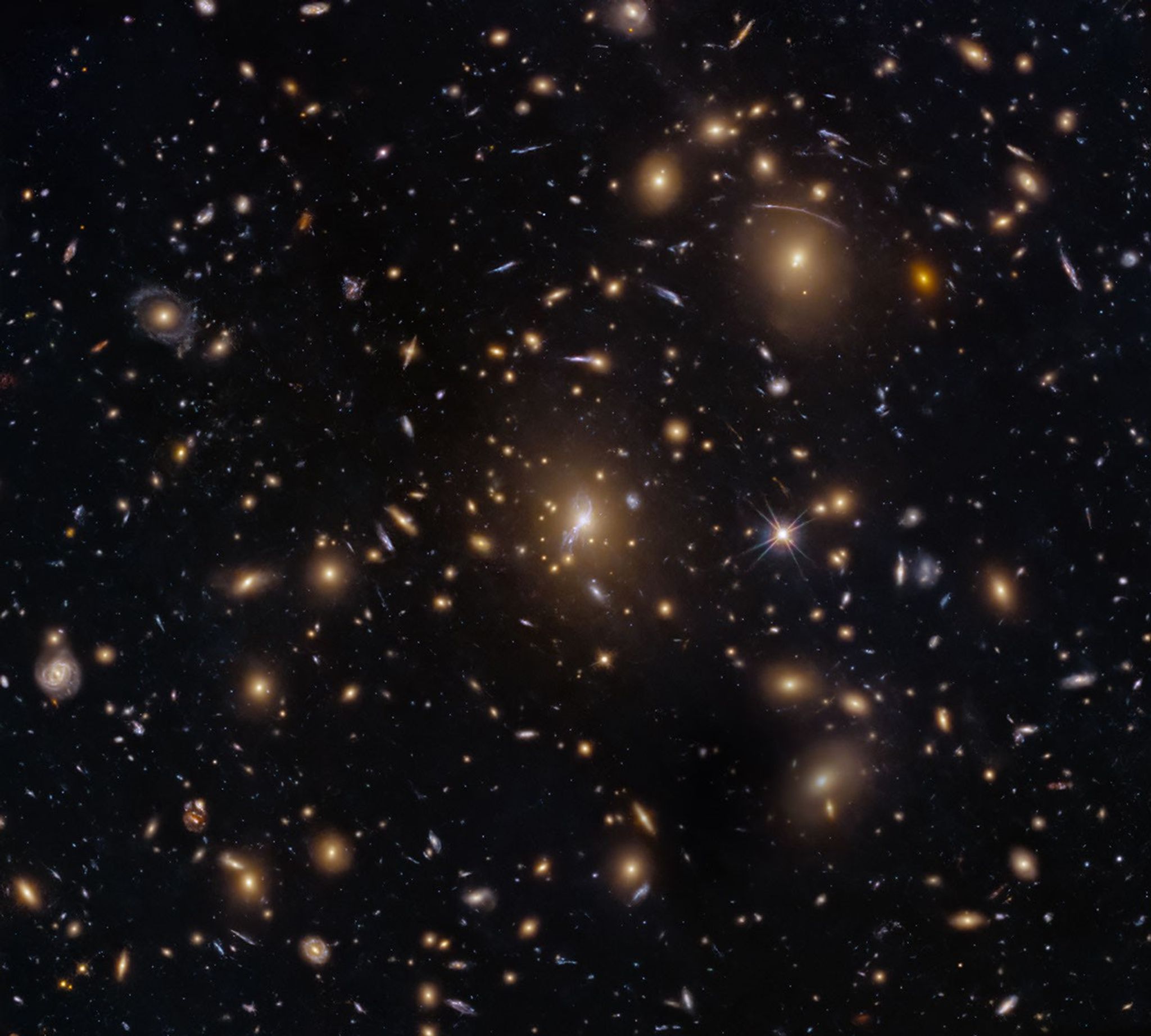
Looking somewhat like a swarm of bees returning to their hive, this NASA Hubble Space Telescope image released on June 12, 2026, features the galaxy cluster MACS0329-0211. Galaxy clusters like MACS03…
NASA — 17 June 2026
Text:
19
0
0
Looking somewhat like a swarm of bees returning to their hive, this NASA Hubble Space Telescope image released on June 12, 2026, features the galaxy c
Read Full Story at NASA →
⚡ Quickyla Analysis
Original editorial context — not sourced from the article above
The latest image from the Hubble Space Telescope, capturing the galaxy cluster MACS0329-0211 as a swirling, luminous swarm, is more than a striking astronomical snapshot—it’s a window into the universe’s most violent and creative forces. Galaxy clusters like MACS0329-0211 are the universe’s largest gravitationally bound structures, acting as cosmic laboratories where dark matter, superheated gas, and hundreds of galaxies interact in ways that challenge our understanding of astrophysics. This particular cluster, with its dense core and distorted arcs of light—gravitational lensing effects bending distant galaxies into eerie, elongated shapes—offers a rare opportunity to study not just the visible matter but the invisible scaffolding of dark matter that holds it all together.
What makes MACS0329-0211 especially intriguing is its role as a gravitational magnifying glass. The cluster’s immense mass warps spacetime itself, bending light from background galaxies into ghostly, multiple images. Astronomers rely on these distortions to peer deeper into the cosmos than telescopes alone could manage, effectively turning galaxy clusters into natural observatories. The image’s release also coincides with renewed scrutiny of dark matter’s role in shaping these structures—a question that has grown more urgent as observations increasingly suggest dark matter behaves differently at extreme scales than predicted by standard models.
Looking ahead, the next phase of this research will likely hinge on complementary data from the James Webb Space Telescope and upcoming gravitational wave observatories. Webb’s infrared capabilities could uncover cooler, dimmer galaxies hidden within the cluster, while gravitational wave detectors might reveal whether these massive structures formed through violent mergers or more gradual accretion. The unresolved tension between dark matter simulations and real-world observations—particularly the "too big to fail" problem, where some dwarf galaxies should persist but don’t—could find new clues in clusters like MACS0329-0211. For now, the image serves as a reminder: the universe’s most dramatic spectacles are often the ones that force us to rethink what we think we know.
Sources

🔬 Science
'Astonishing': James Webb telescope spots the most chemically primitive galaxy in the ancient universe

🔬 Science
El Niño Is Underway

🔬 Science
Astronomers gaze into the 'Crystal Ball Nebula' and see a vision of our dying sun — Space photo of the week

🔬 Science
Bacteria uncover distinct strategy to import rare sugar polymers, crystal structures show

🔬 Science
NASA Awards Contract for Johnson Space Center Infrastructure

🔬 Science
Repairing DNA damage: Scientists discover a surprising new benefit of melatonin

