Hubble Sees Swarm of Galaxies
Looking somewhat like a swarm of bees returning to their hive, this NASA Hubble Space Telescope image features the galaxy cluster MACS0329-0211.
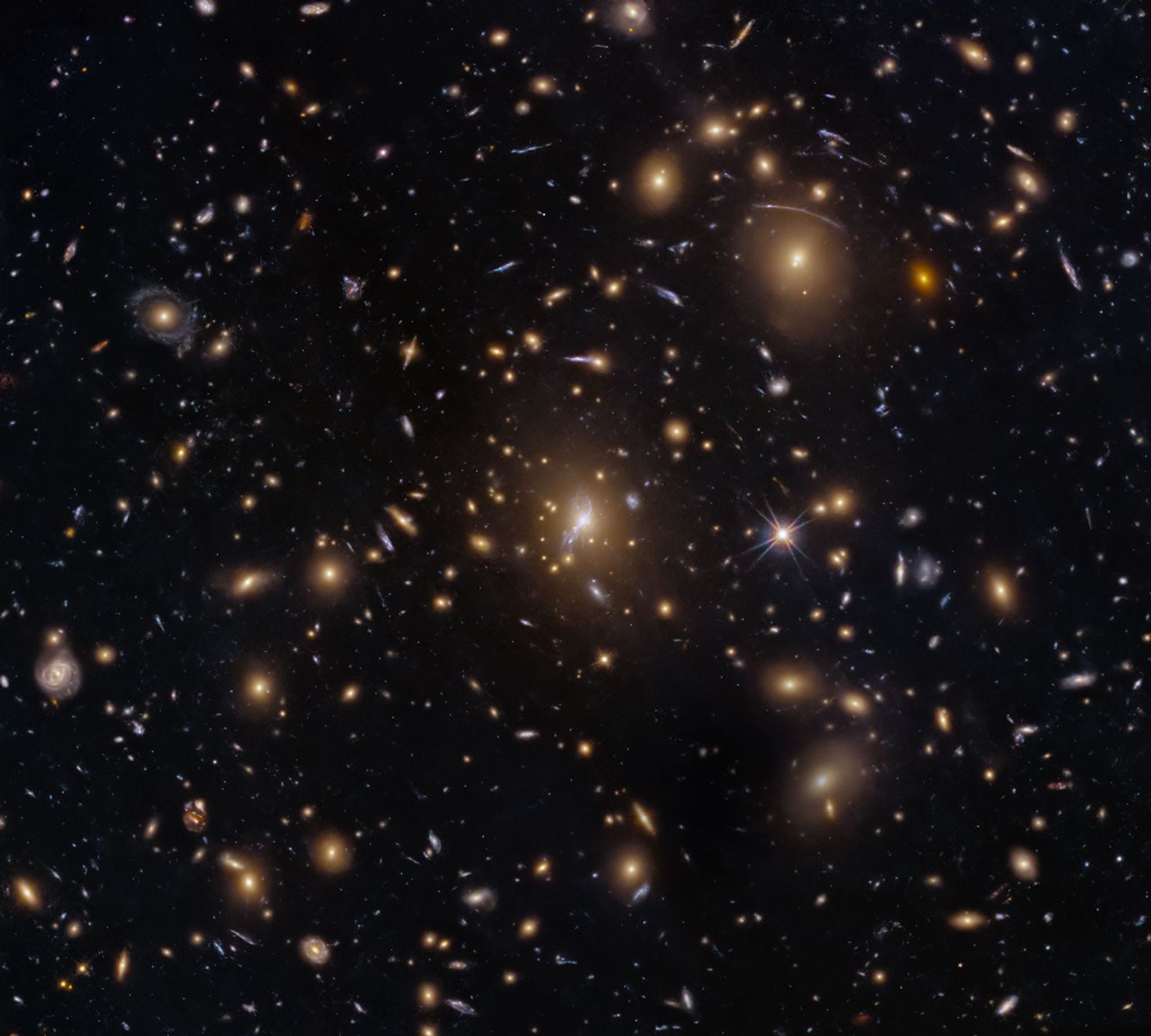
Looking somewhat like a swarm of bees returning to their hive, this NASA Hubble Space Telescope image features the galaxy cluster MACS0329-0211. This
Read Full Story at NASA →Why This Matters
This Hubble image isn't just a cosmic curiosity—it's a window into the universe's most violent and transformative events. Galaxy clusters like MACS0329-0211 are the universe's largest gravitationally bound structures, serving as cosmic laboratories where dark matter, superheated gas, and galaxies collide in a dance of extreme physics. Understanding their formation and evolution offers critical clues about the fundamental forces shaping our universe, including the enigmatic nature of dark energy.
Background Context
Galaxy clusters have long been pivotal in astrophysics, but their study gained momentum in the 20th century as telescopes like Hubble revealed their role as gravitational lenses, bending light from distant galaxies into magnified arcs. MACS0329-0211, part of the Massive Cluster Survey (MACS), was specifically targeted because its dense core amplifies light from background galaxies, offering astronomers a rare glimpse into the early universe's most distant and faintest objects.
What Happens Next
The next frontier lies in combining Hubble's optical observations with data from the James Webb Space Telescope, which captures infrared light and can peer behind the veil of dust and gas obscuring these clusters. Researchers will also monitor MACS0329-0211 for signs of gravitational wave events—ripples in spacetime caused by merging supermassive black holes—potentially linking these clusters to some of the universe's most energetic phenomena.
Bigger Picture
This swarm of galaxies reflects a broader shift in astronomy toward multi-messenger observations, where telescopes across the electromagnetic spectrum and instruments detecting gravitational waves work in concert. As technology advances, such images will not only refine our understanding of dark matter and cosmic evolution but also challenge theories of galaxy formation, pushing the boundaries of what we know about the universe's structure and destiny.







