Humanoid robots 'the future' of car making, says BMW
BMW will deploy humanoid robots, Aeon, at its Leipzig plant this summer for car manufacturing, integrating with human workers due to their adaptable size and dexterity. Aeon, equipped with 21 sensors…
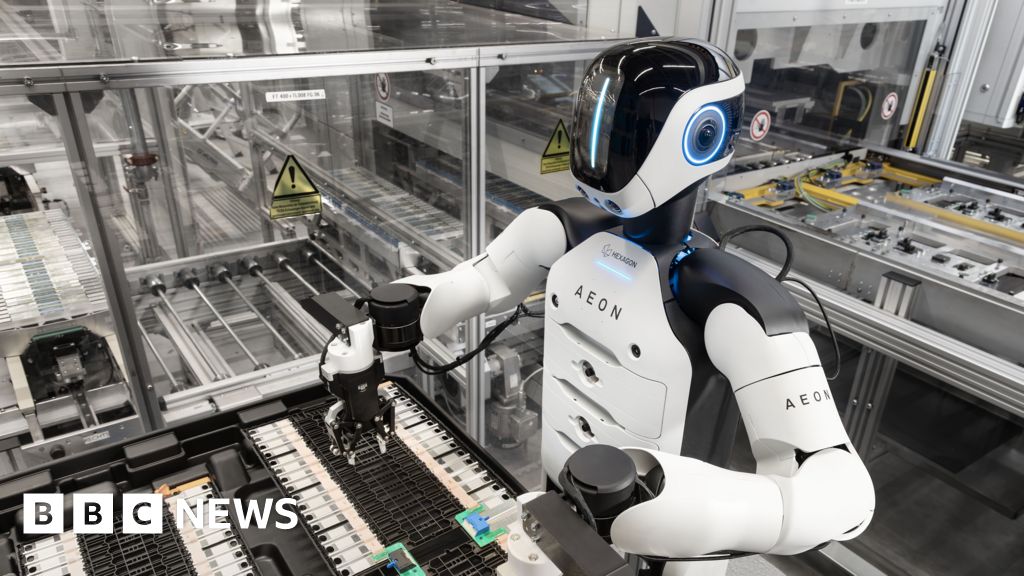
BMW is set to deploy humanoid robots in car manufacturing at its Leipzig plant this summer, marking a significant shift in European automotive product
Read Full Story at BBC Business →Why This Matters
The deployment of humanoid robots like Aeon at BMW's Leipzig plant signals a pivotal moment in industrial automation, where machines are no longer confined to repetitive tasks but are being designed to collaborate directly with human workers. This shift underscores a broader industry-wide reckoning with labor shortages, rising production costs, and the need for precision in an increasingly competitive automotive market.
Background Context
BMW has long been a pioneer in robotics, integrating automation into its assembly lines since the 1980s, but the adoption of humanoid robots marks a departure from conventional industrial arms toward more flexible, human-like machines. The Leipzig plant’s history as a key hub for electric vehicle production—home to the i4 and iX1 models—makes it an ideal testing ground for next-generation automation, where dexterity and adaptability are critical.
What Happens Next
If Aeon’s deployment proves successful, BMW could scale up humanoid robot deployment across other plants, potentially reducing reliance on traditional automation where human oversight remains essential. Regulatory scrutiny over workplace safety and job displacement may intensify, while competitors like Tesla and Mercedes could accelerate their own humanoid robotics programs. The long-term question hinges on whether these machines can handle the variability of real-world manufacturing without stifling innovation.
Bigger Picture
This move aligns with a growing trend where humanoid robots are transitioning from experimental prototypes to practical industrial tools, driven by advancements in AI and sensor technology. As global supply chains face pressure to localize production and meet sustainability goals, flexible automation could redefine manufacturing’s role in the economy, blurring the lines between human and machine collaboration in ways previously confined to science fiction.



