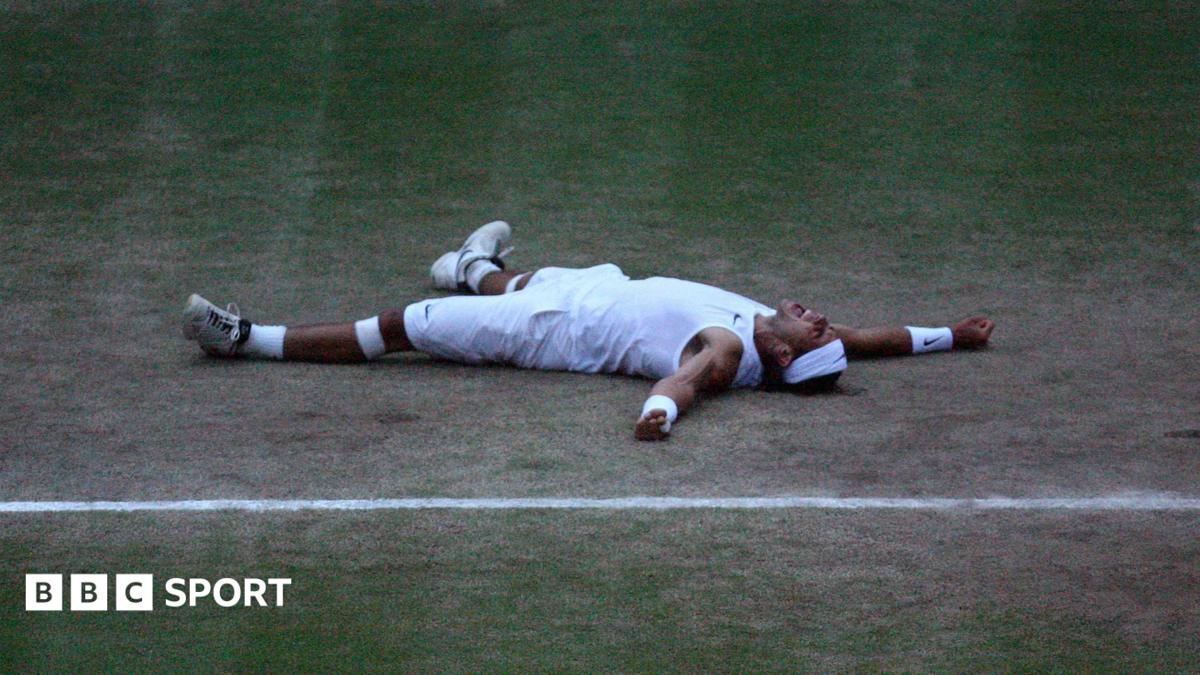
'I never imagined something like this' - Nadal reflects on Wimbledon 2008 win
It remains arguably the greatest men's match ever played. The drama, the quality, the implications of victory for either Rafael Nadal or Roger Federer - it all contributed to an unforgettable master…
BBC Sport — 18 June 2026
Text:
14
0
0
The drama, the quality, the implications of victory for either Rafael Nadal or Roger Federer - it all contributed to an unforgettable masterpiece whic
Read Full Story at BBC Sport →
⚡ Quickyla Analysis
Original editorial context — not sourced from the article above
The legacy of Wimbledon 2008 transcends mere sports history, standing as a cultural touchstone where tennis collided with myth. That final between Rafael Nadal and Roger Federer was more than a match; it was a referendum on the future of the sport itself. At the time, Federer was the undisputed king of grass, his elegance and precision having redefined modern tennis. Nadal, the relentless counterpuncher, had only recently begun his ascent to dominance. Their clash wasn’t just about a title—it was about the soul of tennis in an era when tradition and innovation were locked in combat. The five-set thriller, played under the threat of rain and the weight of expectations, crystallized a moment when tennis’s old guard and its rising force collided in a way that would reverberate for years.
What makes 2008 significant beyond the result is how it reshaped perceptions of greatness. Before that final, Federer was often seen as the inevitable heir to Pete Sampras’s Wimbledon legacy, a player whose artistry seemed untouchable. Nadal’s victory shattered that narrative, proving that raw intensity and physicality could triumph over poetic precision. It also marked the beginning of a rivalry that would come to define an era, one that extended well beyond those hallowed grass courts. The match’s endurance in collective memory speaks to its rarity—a sporting event so transcendent that it transcends its own context, becoming a symbol of resilience and transformation.
Looking ahead, the question lingers: Could such a contest ever be repeated? Modern tennis has prioritized athleticism over endurance, with players often peaking in shorter bursts. The five-hour endurance test of 2008 feels increasingly like an anomaly in an era of faster, more explosive play. Yet the match’s legacy endures in how it redefined ambition for future generations. Nadal’s win didn’t just secure a title; it redefined what was possible, setting a standard that young players still aspire to. The open question remains whether the sport will ever produce another moment where the stakes feel as cosmic—or if we’ve entered an age where such epics are relics of a bygone era.
Sources
⚽ Sports
Don’t underestimate young athletes — the NAACP boycott plan could actually work

⚽ Sports
The football fans who went to a World Cup and loved it so much, they stayed
⚽ Sports
Barcelona Is Reportedly Pushing For Roony Bardghji’s Summer Exit

⚽ Sports
Arkansas baseball can't overcome pitching, defensive flaws as 2026 season ends
⚽ Sports
English clubs monitoring Marseille midfielder Tochukwu Nnadi’s situation

⚽ Sports
Egypt to hold open training session for 'limited' number of fans in Spokane ahead of World Cup


