Catholic Relief Services details Lake Chad Basin crisis in interview
The Lake Chad Basin has shrunk by 90% since the 1960s, displacing 2.5 million people and leaving 11 million facing acute hunger due to drought, extremist violence, and poor governance. Without urgent
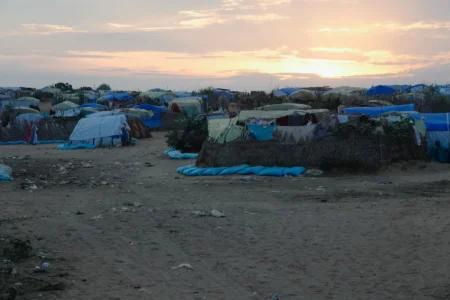
**Catholic Relief Services warns of collapsing ecosystems and deepening poverty in Lake Chad Basin** The Lake Chad Basin is on the brink of a humanit
Read Full Story at Crux Now →Why This Matters
The Lake Chad Basin crisis is not merely an environmental disaster but a geopolitical powder keg reshaping security dynamics across West and Central Africa. As climate change exacerbates water scarcity, the resulting displacement and food insecurity are fueling recruitment for armed groups and cross-border conflicts that destabilize fragile states like Nigeria, Niger, Chad, and Cameroon.
Background Context
The basin’s dramatic shrinkage—from 25,000 square kilometers in the 1960s to a fraction of that today—stems from a convergence of climatic shifts, unsustainable agricultural practices, and the over-extraction of groundwater. Decades of poor governance and weak regional cooperation have left communities with little resilience against the dual pressures of drought and insurgency, particularly from groups like Boko Haram.
What Happens Next
The next two years will likely see either a critical escalation in humanitarian needs or a coordinated breakthrough in regional adaptation strategies. Aid organizations warn that without scaled-up investment in water infrastructure and conflict mediation, the basin could become a permanent zone of humanitarian crisis, with spillover effects on migration routes and global security.
Bigger Picture
This crisis mirrors broader patterns where climate stressors intersect with governance failures, creating cyclical emergencies in the Global South. As temperatures rise and fertile land dwindles, the Lake Chad Basin serves as a case study for how ecological collapse can accelerate state fragility and transnational threats, demanding urgent innovation in both climate resilience and international cooperation.