In far West Texas, the threat of land seizures for a border wall has families on edge
What is clear is that the federal government has threatened to seize land along broad swaths of the Rio Grande away from parks.
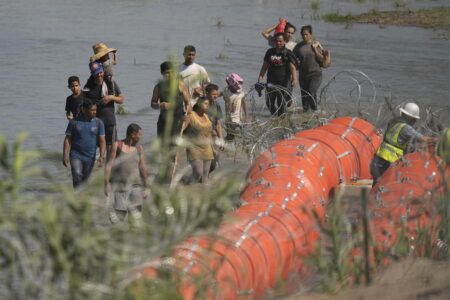
Crux Now — 16 June 2026
Text:
21
0
0
What is clear is that the federal government has threatened to seize land along broad swaths of the Rio Grande away from parks. This report comes fro
Read Full Story at Crux Now →
⚡ Quickyla Analysis
Original editorial context — not sourced from the article above
The prospect of federal land seizures in far West Texas to expand border wall construction isn’t just a local issue—it’s a microcosm of deeper tensions over federal authority, private property rights, and environmental stewardship in a region where the land itself is often as contentious as the policies imposed upon it. For decades, the U.S.-Mexico border has been a patchwork of competing interests: ranching families whose ancestors settled these rugged, arid stretches long before the border was even demarcated; conservationists fighting to protect fragile ecosystems like Big Bend National Park; and now, a federal government increasingly willing to use eminent domain to advance border security at the expense of long-standing land tenure. The Rio Grande Valley, where the river carves a natural boundary through some of the most remote and ecologically significant terrain in the country, has become a flashpoint not just for immigration debates but for who ultimately controls the land—and what that control costs.
What makes this situation particularly fraught is the historical ambiguity of land ownership in the region. Much of the territory along the Rio Grande was never formally surveyed or titled before the Treaty of Guadalupe Hidalgo in 1848, leaving generations of families to occupy and cultivate land under informal arrangements that later generations assumed would hold legal weight. The federal government’s willingness to threaten seizures—even over private or state-owned parcels—reflects a broader shift in how border security is prioritized over individual rights, a trend accelerated by the 2006 Secure Fence Act and subsequent expansions under both Democratic and Republican administrations. Yet this isn’t just about walls; it’s about the erosion of a frontier mentality that long defined West Texas, where land was a source of both pride and survival.
The open question now is whether legal challenges, political shifts, or public outcry could force a reconsideration of these seizures—or if the government’s determination to fortify the border will override local resistance. Meanwhile, environmental groups warn that construction could irreparably damage critical habitats, while ranchers fear the loss of generational livelihoods. As climate change tightens its grip on the Southwest, the stakes grow even higher: water rights, land use, and the very survival of rural communities are increasingly tangled in national security narratives. The outcome here may set a precedent for how far the federal government is willing to go in the name of border control—and who gets left behind in the process.
Sources

🕌 Religion & Faith
Defense Department rejiggers list of recognized religions after backlash, narrows it to 30

🕌 Religion & Faith
Odiong guilty in Texas: Questions remain for several Church leaders
🕌 Religion & Faith
Trump’s latest attack on Leo XIV isn’t really about the pope

🕌 Religion & Faith
Pope Leo XIII updates just war theory
🕌 Religion & Faith
Photos of the Week: Ebola responses, end of Hajj

🕌 Religion & Faith
High hopes, many challenges for Bangladesh’s first Indigenous Catholic MP

