In speech to Spanish parliament, pope demands respect for the dignity of all people
Pope Leo XIV is flanked by Francina Armengol, President of the Congress of Deputies of Spain, as he arrives to meet with members of the Spanish Parliament at the Congress of Deputies, in Madrid, Mond…
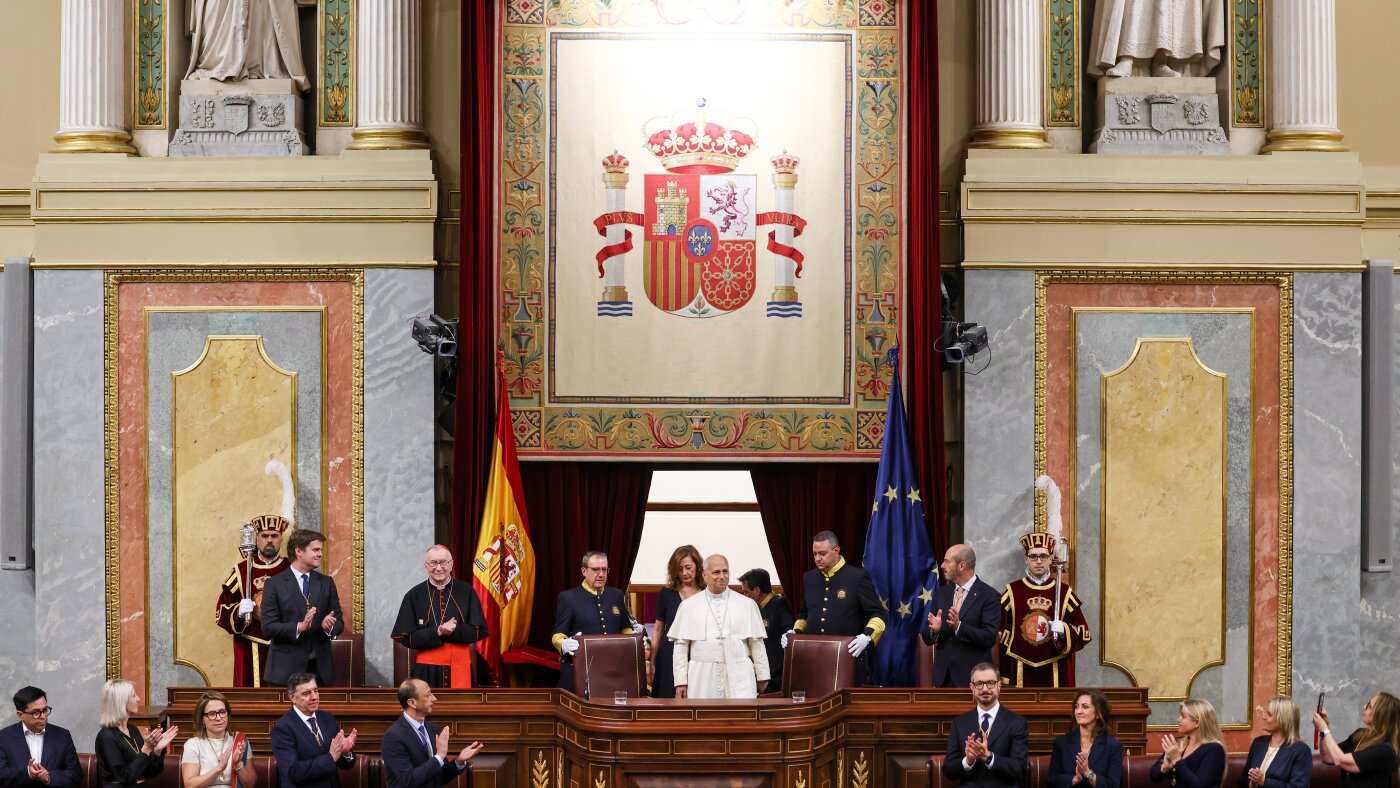
Pope Leo XIV is flanked by Francina Armengol, President of the Congress of Deputies of Spain, as he arrives to meet with members of the Spanish Parlia
Read Full Story at NPR News →Why This Matters
The Pope’s address to Spain’s parliament carries symbolic weight far beyond ecumenical diplomacy, signaling a deliberate reinforcement of moral authority in a nation where secularism and identity politics are increasingly in tension. For a country grappling with debates over immigration, gender rights, and historical memory, his call for "dignity for all" frames these controversies as moral imperatives rather than political disputes, elevating the stakes for policymakers.
Background Context
Spain’s political landscape has been roiled in recent years by disputes over national identity, including regional separatist movements in Catalonia and the Basque Country, as well as contentious reforms addressing gender recognition and historical reconciliation. The Church, though less influential than in past decades, retains cultural and institutional clout, particularly in education and social welfare sectors, where its positions often clash with progressive legislation.
What Happens Next
Expect political factions to interpret the Pope’s remarks through competing lenses—conservative groups may cite them to challenge pro-choice or LGBTQ+ policies, while progressives could argue for a more pluralistic reading that includes migrants and marginalized communities. The government’s response will reveal whether it views the speech as a challenge to its agenda or an opportunity to recast its policies in moral terms aligned with Catholic social teaching.
Bigger Picture
This intervention reflects a broader pattern of religious leaders inserting themselves into secular governance debates, from Latin America to Europe, where institutions face pressure to reconcile tradition with rapid social change. It also underscores how aging European populations, with their attendant anxieties over cultural continuity, are turning to spiritual figures to articulate visions of society that bridge generational divides.





