🌍 World News
Live
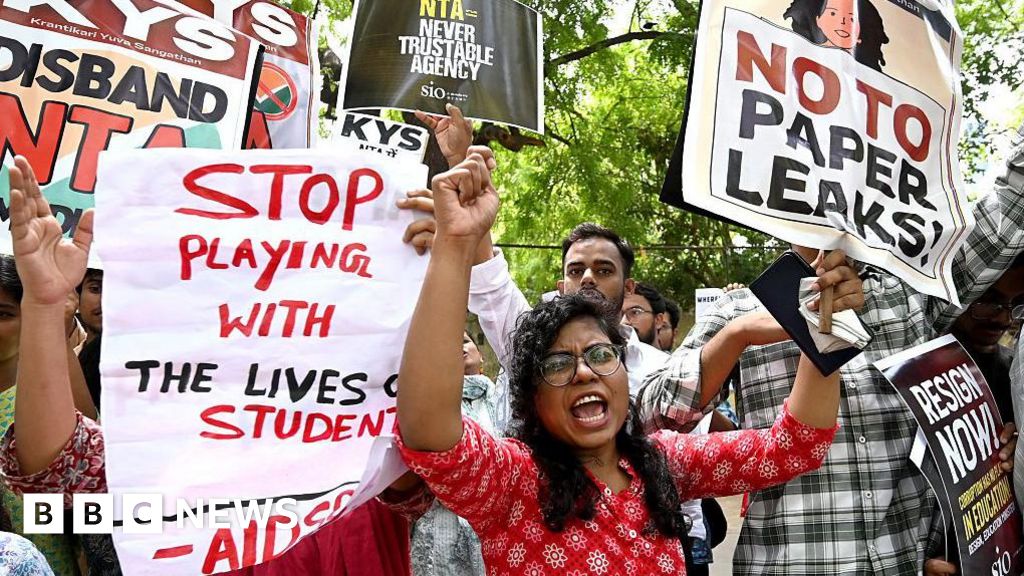
India temporarily bans Telegram over exam paper leak concerns
India has temporarily blocked the Telegram app over concerns it may be used for cheating, days before a crucial medical entrance exam is set to be reheld. Millions of students will retake the Nation…
BBC World News — 16 June 2026
Text:
32
0
0
India has temporarily blocked the Telegram app over concerns it may be used for cheating, days before a crucial medical entrance exam is set to be reh
Read Full Story at BBC World News →
⚡ Quickyla Analysis
Original editorial context — not sourced from the article above
The Indian government’s decision to temporarily block Telegram ahead of a high-stakes medical entrance exam reflects deeper anxieties over digital security in an era where instant messaging platforms have become both lifelines and liabilities. Beyond the immediate concern over exam paper leaks, this move underscores a broader tension between technological convenience and institutional control. Telegram, with its encrypted messaging and user-friendly channels, has long been a double-edged sword in India—used by activists, businesses, and students alike, but also exploited for illicit coordination. The government’s action suggests a willingness to disrupt digital ecosystems when they clash with the state’s imperative to maintain fair examinations, a cornerstone of India’s fiercely competitive education system.
This isn’t the first time Indian authorities have targeted messaging apps in response to exam malpractice. In recent years, similar bans have been imposed on other platforms during exams, often citing concerns over question paper leaks spreading via private groups or public channels. The urgency here is heightened by the re-examination of the NEET-UG, India’s most coveted medical entrance test, which has been marred by allegations of irregularities and cheating in previous years. The government’s move signals a preemptive strike against potential security breaches, even if it means collateral disruption for millions of users who rely on Telegram for legitimate purposes.
What remains unclear is whether this ban will achieve its intended purpose—or merely push malpractice underground. Historically, such crackdowns have led to a cat-and-mouse game, with users migrating to alternative platforms or employing workarounds like VPNs. The temporary nature of the ban also raises questions about its long-term effectiveness and the government’s broader strategy for securing high-stakes exams in a digital-first society.
More broadly, this episode fits into a growing global trend where governments grapple with balancing digital freedom and institutional integrity. As countries tighten controls over online spaces—whether to combat misinformation, curb dissent, or, in this case, prevent cheating—the question of proportionality looms large. For India, where education is both a social equalizer and a pressure cooker of competition, the stakes couldn’t be higher.
Sources

🌍 World News
Man fleeing police attacked by alligator before continuing his getaway, Louisiana authorities say
🌍 World News
US crude exports hit record high in May as Iran war tightens global oil supplies

🌍 World News
Agitators outside Delaney Hall set up organized logistics operation before Newark protests began

🌍 World News
French doctors sound alarm over drinking water pollution

🌍 World News
Iran, Kuwait, Bahrain hit: Is the war in the Gulf escalating again?

🌍 World News
Four people trapped in flooded cave in Laos pulled to safety

