James Webb telescope detects most distant dormant black hole, invisible in all wavelengths and weighing as much as 6 billion suns
JWST found a black hole hiding in a galaxy more than 10 billion light-years away from Earth, and used a cosmic magnifying glass to determine its mass.
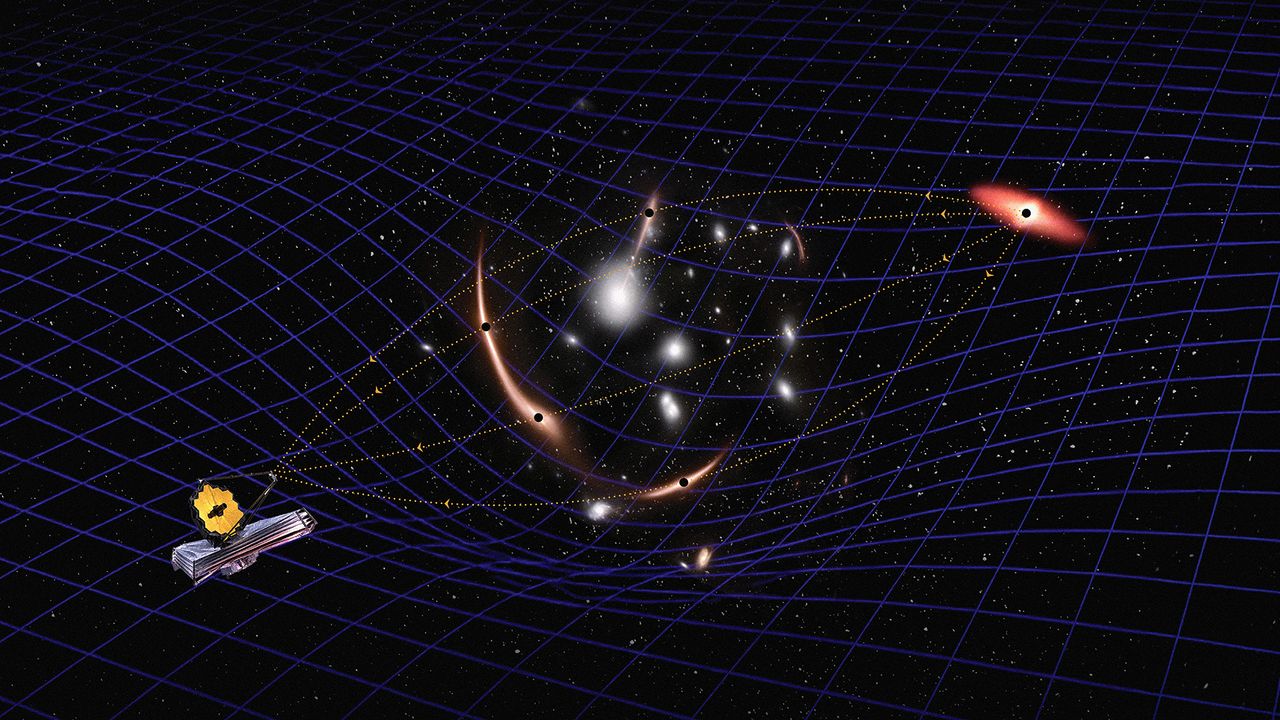
JWST found a black hole hiding in a galaxy more than 10 billion light-years away from Earth, and used a cosmic magnifying glass to determine its mass.
Read Full Story at Live Science →Why This Matters
The detection of a dormant supermassive black hole at such an early cosmic epoch challenges conventional models of galaxy evolution, suggesting dormant giants may be far more common in the young universe than previously assumed. This discovery pushes the boundaries of how we understand black hole growth, merger history, and the interplay between these invisible cosmic engines and their host galaxies over billions of years. It also underscores the unparalleled sensitivity of the James Webb Space Telescope in uncovering phenomena hidden from even the most powerful ground-based observatories.
Background Context
Supermassive black holes were once thought to grow gradually through mergers and gas accretion, but recent evidence—including this find—indicates that some may reach colossal sizes in unexpectedly short timeframes. The early universe was a violent place, yet dormant black holes, especially those invisible across most wavelengths, have remained elusive due to their lack of active accretion disks or jets. Gravitational lensing, as used in this discovery, has emerged as a critical tool to study such obscured objects, effectively turning galaxy clusters into natural telescopes.
What Happens Next
Follow-up observations will focus on characterizing the black hole’s immediate environment and searching for similar dormant giants in other lensed galaxies to determine if this is an isolated anomaly or part of a broader population. Astronomers will also refine models of early black hole seeding, testing whether such massive objects could have formed directly from collapsing gas clouds rather than through stellar remnants. Meanwhile, JWST’s successor instruments, like the Roman Space Telescope, may reveal whether these "stealth" black holes are outliers or a hidden norm.
Bigger Picture
This discovery aligns with a growing trend in astrophysics: the realization that the universe’s most extreme objects often lurk in plain sight, detectable only through innovative techniques like gravitational lensing or infrared surveys. It also reflects a shift toward studying "dormant" phases of cosmic phenomena, revealing that activity is not always the defining trait of a black hole’s influence. As JWST continues to peer deeper into cosmic history, such findings may force a rewrite of textbooks on galaxy formation and the lifecycle of supermassive black holes.







