JWST pinpoints most distant fast radio burst 10 billion light-years away
JWST identified the host galaxy of FRB 20240304B, the most distant fast radio burst yet, located over 10 billion light-years away. This discovery reveals that such energetic events existed when the u…
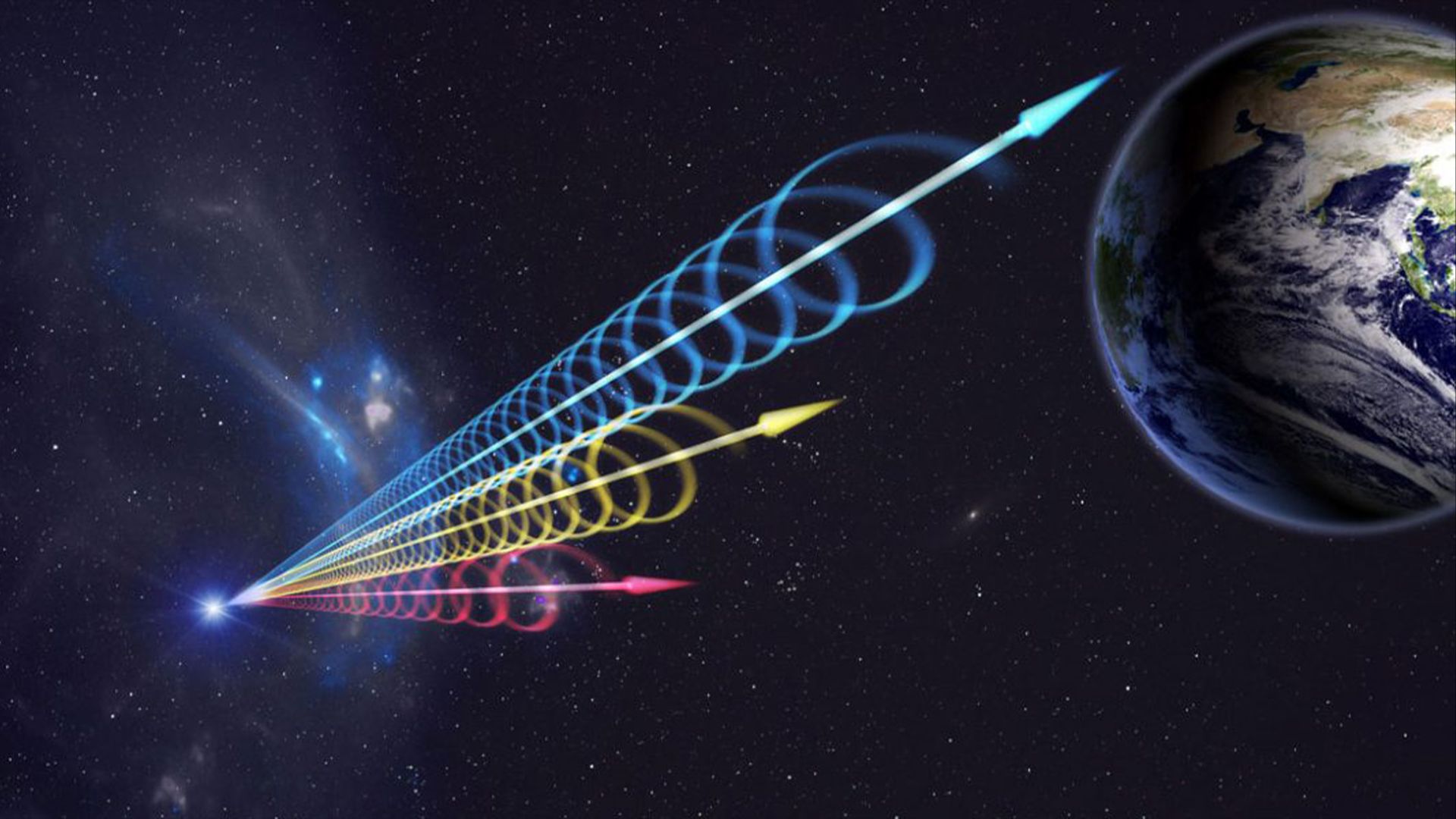
James Webb Space Telescope (JWST) has pinpointed the most distant fast radio burst (FRB) ever recorded, a brief, intense radio flash named FRB 20240304B that came from more than 10 billion light‑years away. The burst was first detected by MeerKAT, a 64‑antenna radio array in South Africa, and its precise sky coordinates were later confirmed by JWST’s near‑infrared instruments.
Fast radio bursts are millisecond‑long pulses of radio energy whose origins remain a mystery. Thousands of FRBs have been catalogued, but their short duration and the faintness of their host galaxies make them hard to study. FRB 20240304B pushes the frontier, more than doubling the previous distance record for an FRB and showing that these events were already happening when the universe was only about three billion years old. The discovery was published in the journal *Science* on October 8.
JWST’s role was decisive. After MeerKAT identified the burst’s position, JWST’s Near‑Infrared Camera captured a very deep image of the field, revealing a faint galaxy exactly where the burst was expected. JWST’s Near‑Infrared Spectrograph then measured the galaxy’s light, finding signatures of hydrogen and oxygen but very little heavier elements—a metal‑poor environment. The galaxy is also actively forming stars. These traits suggest the burst might be linked to a magnetar, a highly magnetized neutron star that can form after a supernova. Ground‑based telescopes had seen nothing in the area, because the galaxy was too dim for their instruments; JWST’s sensitivity made the detection possible.
The finding opens a new window on the early universe. By locating host galaxies of distant FRBs, astronomers can study the conditions that produce these powerful bursts and use them as probes of the intergalactic medium. JWST’s Director’s Discretionary Time program, which gave the team priority access to the telescope, proved essential for this time‑sensitive observation. Future studies will aim to find more high‑redshift FRBs, test the magnetar hypothesis, and refine our understanding of how the first generations of stars shaped the cosmos.
Read Full Story at Live Science →