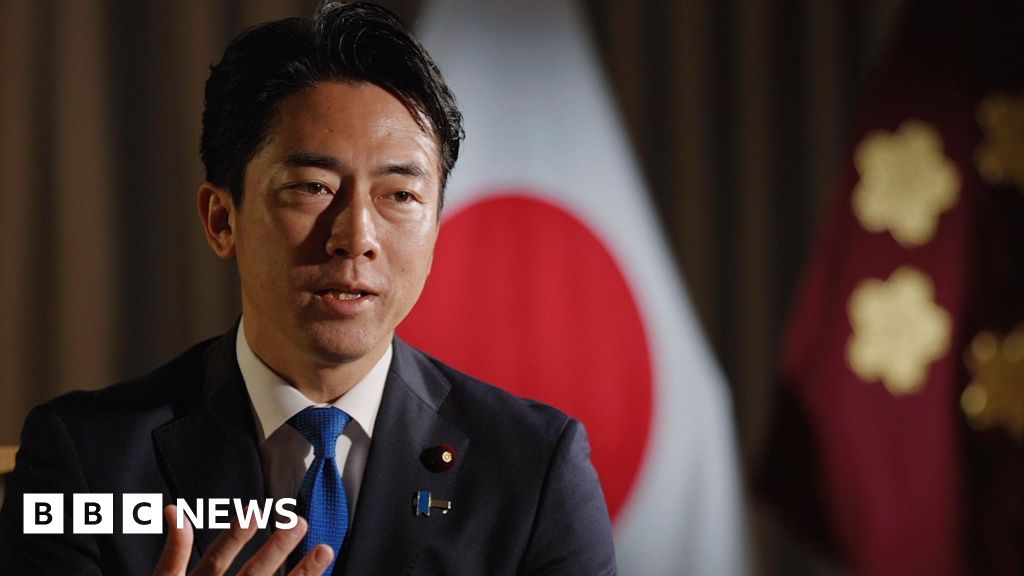
Japan ramping up defence is 'critical' to prevent war, Defence Minister Koizumi tells BBC
Japan must "strengthen its defence capabilities", Defence Minister Shinjiro Koizumi has told the BBC, emphasising the need to revisit the pacifist posture that has defined the country since World War…
BBC World News — 17 June 2026
Text:
32
0
0
Japan must "strengthen its defence capabilities", Defence Minister Shinjiro Koizumi has told the BBC, emphasising the need to revisit the pacifist pos
Read Full Story at BBC World News →
⚡ Quickyla Analysis
Original editorial context — not sourced from the article above
Japan’s accelerating military buildup is far more than a regional security adjustment—it marks a tectonic shift in the post-war global order, one that could redefine the balance of power in Asia and beyond. The country’s traditionally pacifist constitution, imposed by American occupation after World War II, has long served as both a moral anchor and a geopolitical constraint. But with China’s military expansion, North Korea’s nuclear provocations, and Russia’s aggressive posture in the Pacific, Tokyo’s calculus is rapidly changing. Defence Minister Shinjiro Koizumi’s remarks to the BBC underscore a growing consensus in Japan that deterrence, not restraint, is now the priority. This isn’t just about self-defense; it’s about signaling to adversaries that aggression carries unacceptable risks—a message aimed as much at Beijing as it is at Washington.
What many outside East Asia may not realize is how deeply Japan’s pacifist identity is embedded in its social and political fabric. Article 9 of its constitution, often called the "peace clause," was not just a legal provision but a national ethos, shaping everything from education to foreign policy for generations. Yet the erosion of this doctrine has been steady. Under former Prime Minister Shinzo Abe, Japan reinterpreted the clause to allow "collective self-defense," enabling military cooperation with allies like the U.S. Now, under current leadership, the push is toward fuller remilitarization—including plans to double defense spending to 2% of GDP and develop strike capabilities that could reach deep into enemy territory. These moves are framed as defensive, but they also reflect a sobering acknowledgment: deterrence requires the means to fight, not just the will to avoid war.
The open question is whether this buildup will stabilize the region or accelerate an arms race. Japan’s neighbors, particularly China, are unlikely to view its military expansion as purely defensive, no matter how Tokyo frames it. Meanwhile, internal debates persist—some argue Japan is merely catching up to regional threats, while others warn of a slippery slope toward remilitarization. The bigger trend, though, is unmistakable: a post-war security architecture that relied on U.S. guarantees and Japanese restraint is fracturing. As Japan redefines its role, the world watches to see whether it will emerge as a more independent military power—or whether this is the first step toward a far more volatile Asia.
Sources

🌍 World News
Man fleeing police attacked by alligator before continuing his getaway, Louisiana authorities say
🌍 World News
US crude exports hit record high in May as Iran war tightens global oil supplies

🌍 World News
Agitators outside Delaney Hall set up organized logistics operation before Newark protests began

🌍 World News
French doctors sound alarm over drinking water pollution

🌍 World News
Iran, Kuwait, Bahrain hit: Is the war in the Gulf escalating again?

🌍 World News
Four people trapped in flooded cave in Laos pulled to safety

