🔬 Science
Live
JWST catches cosmic imposters spoofing faraway galaxies
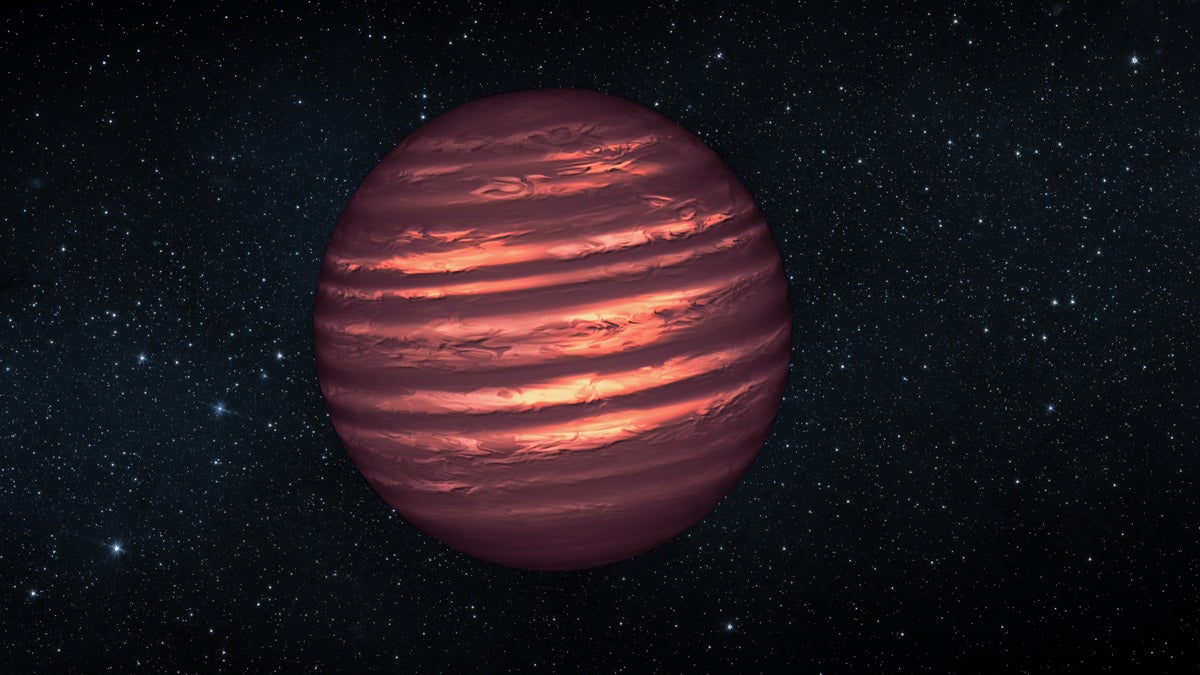
JWST catches cosmic imposters spoofing faraway galaxies The James Webb Space Telescope has found nearby brown dwarfs masquerading as far-distant galaxies. The discovery reinforces how, in astronomy,
Scientific American — 19 June 2026
Text:
21
0
0
The James Webb Space Telescope has found nearby brown dwarfs masquerading as far-distant galaxies. The discovery reinforces how, in astronomy, what yo
Read Full Story at Scientific American →
⚡ Quickyla Analysis
Original editorial context — not sourced from the article above
The James Webb Space Telescope’s latest discovery of nearby brown dwarfs masquerading as distant galaxies isn’t just a quirky cosmic coincidence—it’s a reminder of how easily our most advanced instruments can be fooled by the universe’s deceptive simplicity. These failed stars, which never ignited nuclear fusion, are so faint and red that they blur the line between celestial objects, challenging the very criteria astronomers use to classify the cosmos. The revelation matters because it exposes a fundamental tension in modern astrophysics: our ability to peer deeper into space has outpaced our ability to definitively interpret what we see. As JWST pushes the boundaries of early-universe observations, these "imposters" force scientists to confront the limits of their models—and the potential for mistaken identities to rewrite cosmic history.
This isn’t the first time astronomy has grappled with interlopers. In the 1990s, the Hubble Space Telescope’s deep-field images revealed countless faint galaxies, but follow-up studies later identified some as misclassified stars or even distant quasars. What makes JWST’s findings more unsettling is the telescope’s unprecedented sensitivity to infrared light, where brown dwarfs emit most of their energy. These objects, often dismissed as mere footnotes in galactic surveys, now threaten to contaminate samples of the universe’s earliest galaxies, potentially skewing our understanding of cosmic dawn. The confusion also underscores a deeper issue: the reliance on color and brightness as proxies for distance and age, a method that becomes increasingly unreliable as we probe the universe’s infancy.
The big question now is how severely these imposters will distort our view of the early cosmos. If unchecked, they could lead to overestimates of star formation rates or even false claims about the prevalence of primordial galaxies. Astronomers will likely need to develop new classification tools, perhaps leveraging JWST’s spectroscopic data to separate the genuine from the deceptive. Yet the problem may persist, as future telescopes—like the upcoming Nancy Grace Roman Space Telescope—aim to cast an even wider net across the infrared spectrum, where impostors thrive. This discovery is a humbling lesson in the universe’s capacity to mimic reality, and a reminder that in astronomy, seeing isn’t always believing.
Sources

🔬 Science
'Astonishing': James Webb telescope spots the most chemically primitive galaxy in the ancient universe

🔬 Science
El Niño Is Underway

🔬 Science
Astronomers gaze into the 'Crystal Ball Nebula' and see a vision of our dying sun — Space photo of the week

🔬 Science
Bacteria uncover distinct strategy to import rare sugar polymers, crystal structures show

🔬 Science
NASA Awards Contract for Johnson Space Center Infrastructure

🔬 Science
Repairing DNA damage: Scientists discover a surprising new benefit of melatonin

