🔬 Science
Live
Kim Budil
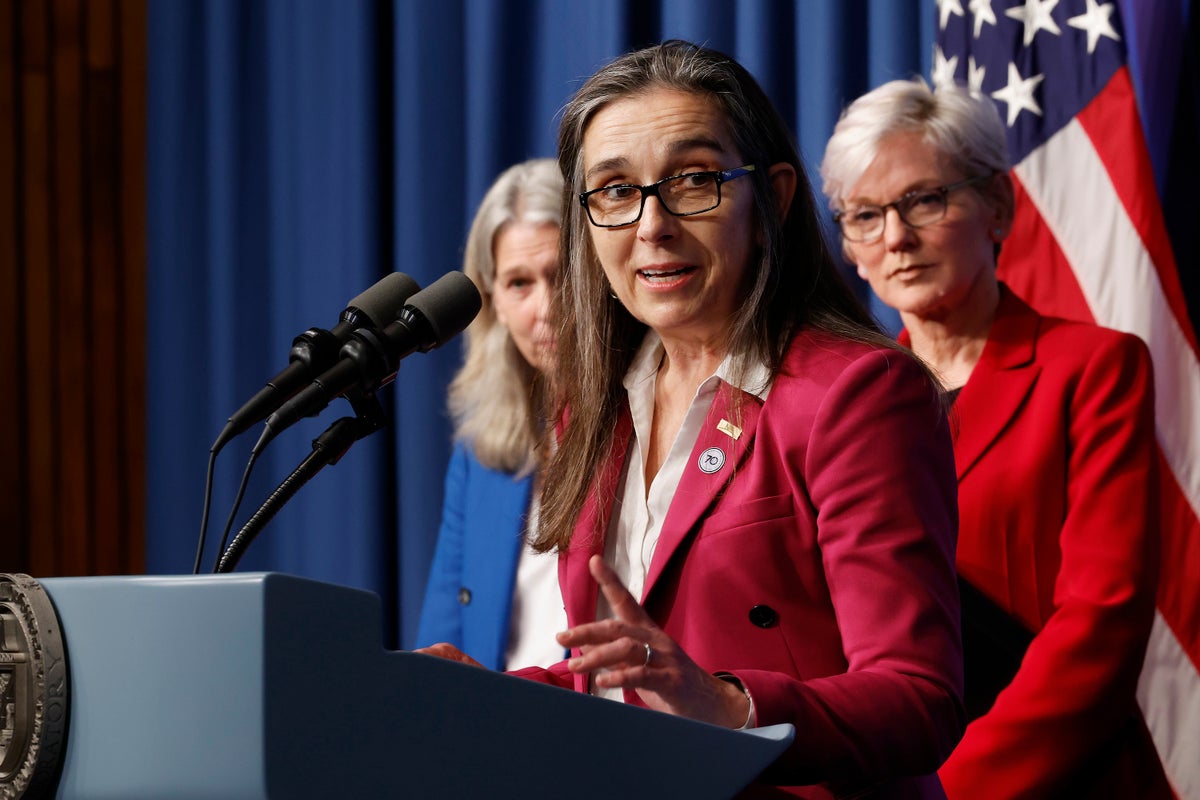
The director of Lawrence Livermore National Laboratory discusses changing the pace of scientific research Kim Budil is an American physicist. She has been director of Lawrence Livermore National Lab…
Scientific American — 16 June 2026
Text:
14
0
0
The director of Lawrence Livermore National Laboratory discusses changing the pace of scientific research Kim Budil is an American physicist. She has
Read Full Story at Scientific American →
⚡ Quickyla Analysis
Original editorial context — not sourced from the article above
Kim Budil’s perspective as director of Lawrence Livermore National Laboratory arrives at a pivotal moment for U.S. scientific leadership, where the pace of discovery is colliding with geopolitical urgency and fiscal constraints. As the first woman to lead the lab in its eight-decade history, her insights carry symbolic weight, but the substance of her remarks underscores a broader reckoning: the nation’s once-unassailable dominance in science and technology is no longer a given. Budil’s focus on accelerating research timelines isn’t merely about administrative efficiency; it reflects a strategic imperative. With China’s rapid advances in fields like quantum computing, hypersonics, and nuclear fusion, and Europe’s coordinated investments in clean energy and AI, the U.S. can no longer afford the leisurely pace that once characterized its national labs. The stakes extend beyond prestige—critical supply chains, energy security, and even nuclear deterrence depend on maintaining a lead in foundational science.
This urgency is amplified by the lab’s dual role as both a steward of nuclear weapons research and a hub for breakthroughs in energy and materials science. The tension between these missions has grown more pronounced as climate change demands faster deployment of carbon-free energy solutions, even as geopolitical instability heightens the need for advanced national security technologies. Budil’s emphasis on changing the pace suggests that the lab is rethinking how it balances secrecy with collaboration, basic research with applied innovation—a shift that could ripple across the entire U.S. scientific ecosystem.
What remains unclear is whether this acceleration can be sustained without eroding the rigor that has long defined national lab research, or whether funding will keep pace with ambition. The Department of Energy’s budget constraints, combined with congressional skepticism about long-term investments, pose real risks. Meanwhile, the lab’s fusion ignition breakthrough in 2022, though historic, remains far from scalable—a reminder that even landmark achievements don’t guarantee immediate practical impact. The question now is whether Budil’s call for speed will translate into a new era of American scientific agility, or if it will instead highlight the structural gaps that still hinder the U.S. in the global race for technological supremacy.
Sources

🔬 Science
El Niño Is Underway

🔬 Science
'Astonishing': James Webb telescope spots the most chemically primitive galaxy in the ancient universe

🔬 Science
Astronomers gaze into the 'Crystal Ball Nebula' and see a vision of our dying sun — Space photo of the week

🔬 Science
NASA Awards Contract for Johnson Space Center Infrastructure

🔬 Science
Bacteria uncover distinct strategy to import rare sugar polymers, crystal structures show

🔬 Science
Putin's quest to avoid the grim reaper: What’s behind the $26 Billion longevity programme?

