King's College team wins access to cutting-edge Google quantum chip
Scientists from King's College London have become the first UK academic research team to gain access to Google's cutting-edge quantum computer chip Willow as part of a scheme launched with the UK's n…
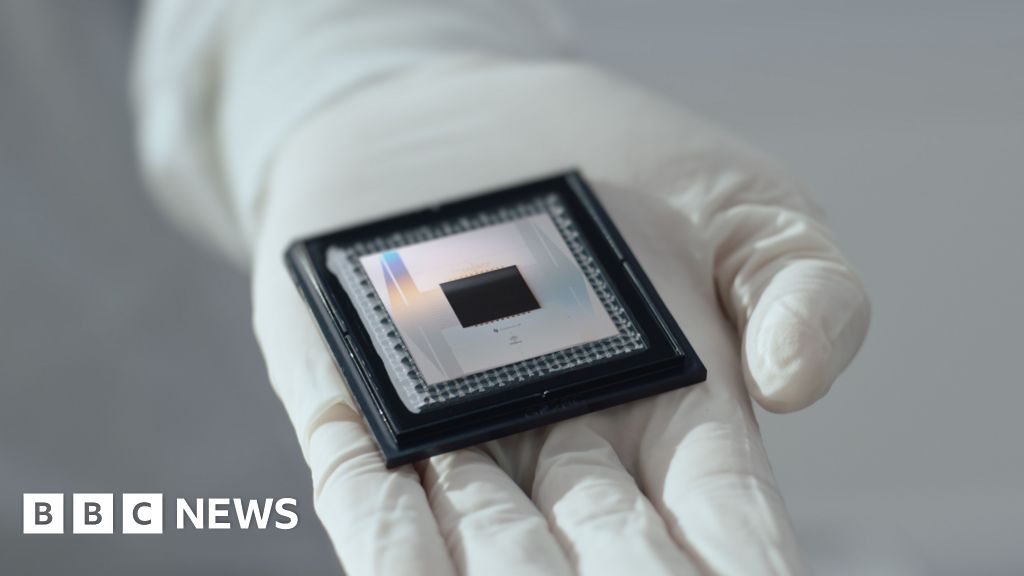
Scientists from King's College London have become the first UK academic research team to gain access to Google's cutting-edge quantum computer chip Wi
Read Full Story at BBC Technology →Why This Matters
The inclusion of UK-based researchers in Google’s quantum computing initiative signals a pivotal moment in global scientific collaboration, potentially accelerating breakthroughs in everything from drug discovery to financial modeling. By granting academic access to Willow, Google is not just advancing its own technological edge but also fostering a competitive research ecosystem that could redefine national innovation strategies. The move underscores how quantum computing is transitioning from theoretical curiosity to a critical tool for solving intractable problems.
Background Context
Quantum computing remains a high-stakes arena dominated by a handful of tech giants, with Google’s 2019 claim of quantum supremacy marking a watershed moment. The UK, meanwhile, has historically lagged in large-scale quantum investments compared to the US and China, despite strong academic foundations. This partnership reflects a strategic pivot, leveraging public-private collaborations to bridge that gap without diverting scarce public funds toward unproven hardware development.
What Happens Next
Expect King’s College researchers to focus on optimization problems where quantum advantage is most plausible, such as material science simulations or cryptographic challenges. The experiment could also pressure other nations to accelerate their quantum access programs, particularly if the UK’s results demonstrate tangible real-world applications. Meanwhile, the success of this collaboration may set a precedent for how tech giants and universities navigate intellectual property in quantum research.
Bigger Picture
This development is part of a broader shift toward "quantum readiness," where nations and corporations alike are hedging bets on a technology that remains years away from mainstream adoption. The race is increasingly not just about hardware superiority but about cultivating the human capital and theoretical frameworks needed to exploit quantum systems once they mature. As access barriers fall, the next decade will likely see an explosion of hybrid quantum-classical solutions, reshaping industries before full-scale quantum computers even arrive.





